Is Hydroponic Spinach Actually Easy to Grow?
Our ranking of the plants that forgive a beginner puts spinach fourth, the beginner guide promises baby leaves in three weeks, and four of our six build plans name it. Then you look for hydroponic spinach in a shop, beside a shelf of hydroponic lettuce, and there is none. A funded research project found out why and named two reasons, neither of them the one you would guess.
Nobody was selling it, and somebody wrote down why
In 2005 Cornell delivered a final report to the New York State Energy Research and Development Authority, under Louis D. Albright, on a commercially viable controlled environment spinach production system. Its abstract opens by saying there is no such thing. Hydroponic spinach, it says, is not produced commercially in the United States today.
Then the sentence this article exists for. Two primary problems, it says, have prevented commercial hydroponic spinach production in this country: uneven and inconsistent seed germination, and frequent early onset of the root rot disease, Pythium aphanidermatum.
Notice what is absent. Yield is not the problem. Once the method was worked out, the report says the baby spinach crop closely matched the productivity achievable in lettuce, on very similar light use efficiency. Spinach even holds two advantages over it. Tipburn is not a major issue, so you can use all the light the year offers, and the bigger seed starts faster.
Seventeen years later nothing had moved. In November 2022 the University of Arkansas announced a screening programme with Bowery Farming, and Ryan Dickson described the position in the present tense. Pythium, he said, is one of the main factors limiting the production of spinach in commercial indoor growing operations. His graduate student Derek Dean added that there is even less published data on resistance in vertical farming systems than in conventional hydroponics.
The seed wants to get wet, and then it wants to get dry
Spinach germination, the report says, has been historically problematical for seed scientists. The percentage is often poor and unpredictable, and getting the seed up together has proved elusive. Part of the cause is mechanical, a thick outer shell called the pericarp. The rest is a piece of seed behaviour that collides head on with how this site tells you to start seeds.
Neither de-hulled nor intact spinach seed, Cornell found, will germinate under water or in very wet media, although it takes the water up perfectly well. Germination beyond that first swelling resumes only when the seed or the medium dries sufficiently, and if the overly wet period runs on too long it impairs the final percentage outright. The seed is not waiting for better conditions. It is being spoiled by the ones it is in.
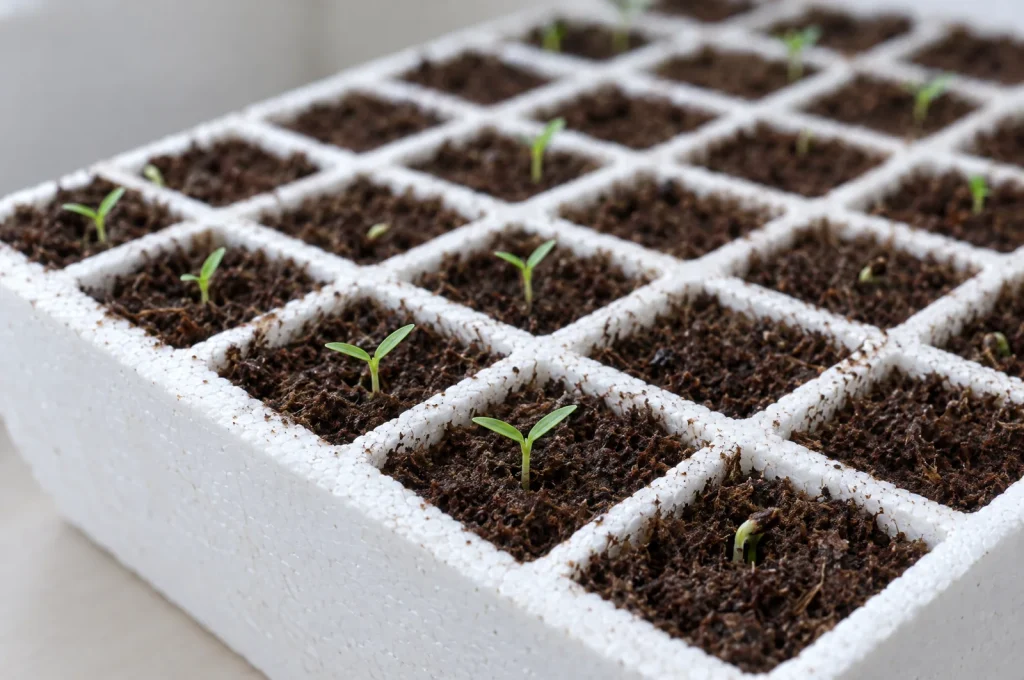
Our article on starting seeds says the thing that matters most is that the cube stays damp without ever being waterlogged. That is sound for every crop in its table except this one, and the table already holds the evidence. Spinach is listed at 7 to 14 days to show, the slowest leafy crop on it. Cornell, with germination solved, takes the first cutting of baby leaves 12 to 16 days from sowing. Our figure for the seed appearing is longer than theirs for the harvest, and the whole gap is this.
Temperature compounds it. The older literature, the report notes, puts optimal spinach germination at 50 to 57F (10 to 14C), where it is also slow. We tell you to hold cubes at 70 to 75F (21 to 24C), correct for everything else. Two things turn out not to matter, and they are the two people fiddle with. Germination held up across pH 4 to 8, and salt only bit above about EC 4.0.
Two days of fiddling buys you ninety four in a hundred
The fix was found by accident. Some germination boxes were left not quite sealed, the seed dried out, and on re-wetting those boxes germinated significantly better than the rest. Pursued properly it became a protocol, and it needs nothing you do not have.
- Line an airtight container with wet paper thick enough to hold a small reservoir. The type did not matter. Newspaper performed as well as laboratory germination blotter.
- Lay the seed in a single layer, every seed touching the paper, seal the lid and leave it nine hours.
- Take the lid off, lay one damp sheet over the seed, and leave it somewhere cool and out of any draught for 24 hours. The paper ends up dry to the touch or barely damp.
- Re-wet it, or sow straight into damp medium. Most of the seed comes up within another 24 hours, together.
Nine hours of soaking gave about 94 seeds in 100 and six hours gave 92. Fifteen to eighteen hours still worked but scattered, so the long soak that feels more thorough is the one to avoid. Cornell then held the sown trays at 77F (25C) in the dark for 48 hours before anything saw a light.
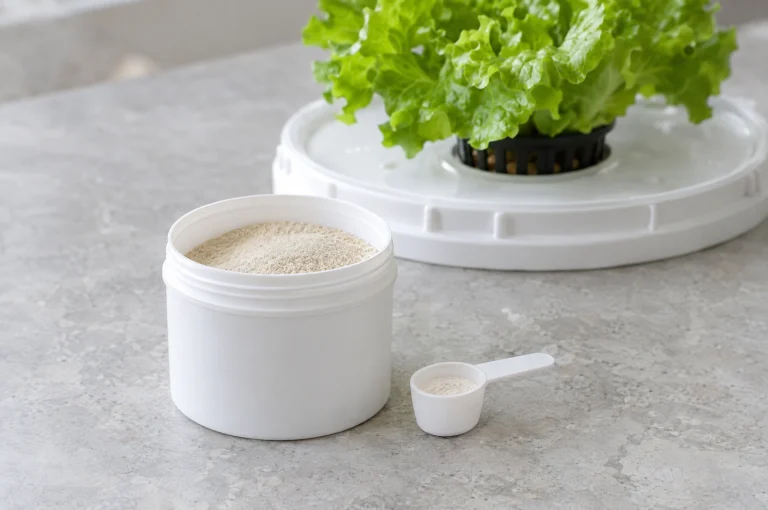
The shortcut is seed with the hull already off, which the report wanted and could not get, there being too little grower interest for anyone to sell it. Two decades on it is easier to find, and our notes on buying seed apply as usual.
The crop calls the thing that kills it
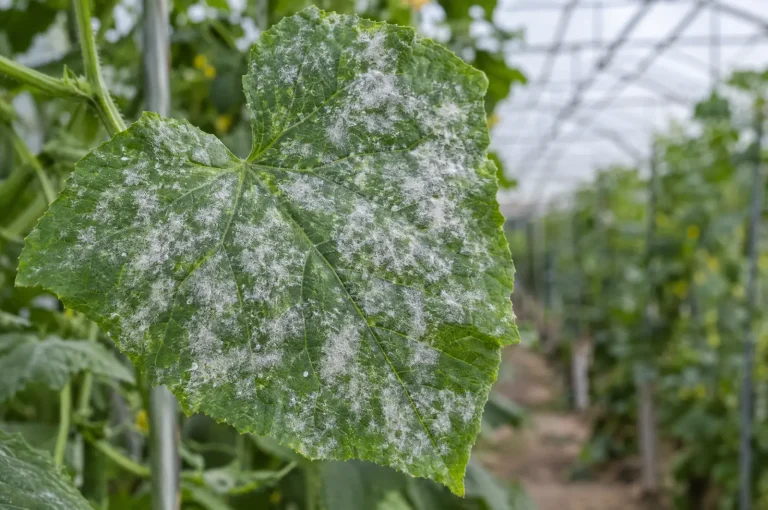
Most leafy salad crops grown hydroponically, the report says, present no problem with root disease at all. Spinach is the exception. The organism is Pythium aphanidermatum, from the same water mould family behind root rot generally, and it travels as swimming spores with two flagella each.
Then the detail that reframes the crop. Spinach, Cornell writes, evidently emits a chemical attractive to those spores, which use their flagella to follow it to its source. The plant advertises. Basil is the only other crop this programme singled out, and basil does not do that.
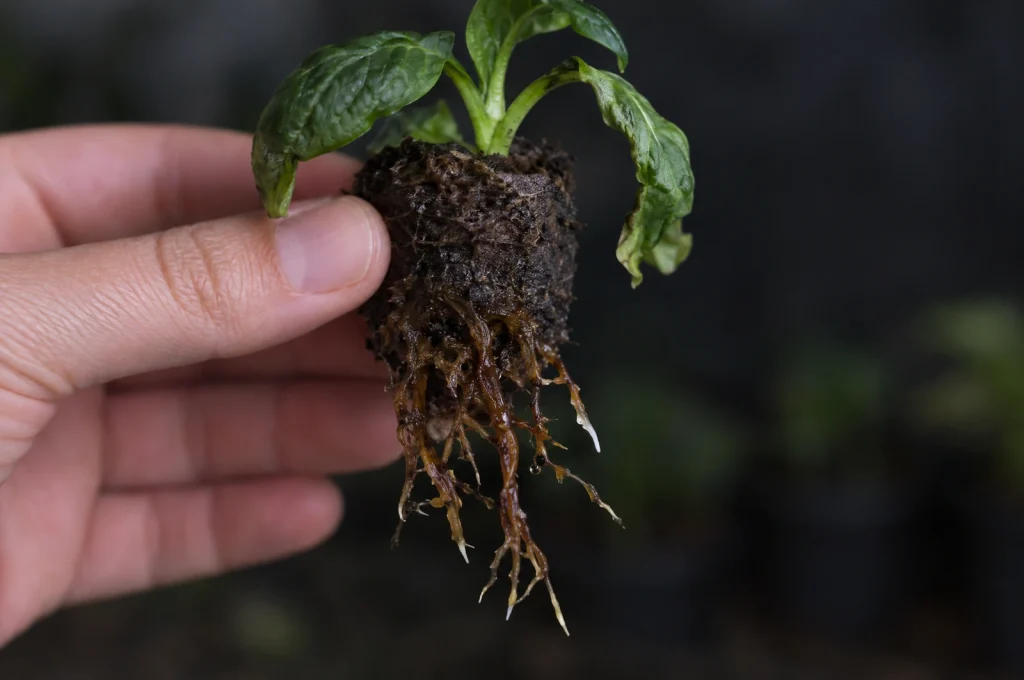
Leslie Katzman measured what that costs in her doctoral work there. Healthy 12 day old seedlings went into a pond from which an infected crop had recently been lifted. After only five days every single transplant had collapsed, never to recover. In the controlled version she gave the same dose on different days and harvested on day 28.
| Infected on day | Weight against healthy plants |
|---|---|
| 1 | 13 percent |
| 9 | 68 percent |
| 14 | 81 percent |
| 21 | 85 percent |
The same dose every time, at 2,500 spores per millilitre, so the only thing that changed was the age of the root system it landed on. In the first row, 68 of every 100 plants died outright.
There is a threshold under that. Up to 25 spores per millilitre had statistically insignificant effects even after 19 days of exposure, while anything above 250 took more than a quarter of the weight. There is also a clock. The second wave arrived at the same point after infection however much went in at the start, and by day 28 the population had climbed back above its opening level even in tanks that began almost clean.
Warm grows it, cold slows it, and the crop is short enough to pick a side
Katzman ran the solution at 64F (18C), 75F (24C) and 86F (30C), infected and clean. Between 64 and 75F there was no statistically significant difference in biomass, and infected plants were no different from healthy ones at either. At 86F (30C) the diseased plants separated from the healthy ones and from both cooler treatments. Our root rot page already asks for 68 to 75F (20 to 24C), and this is the same boundary from the other direction.
Cooling further is where it stops being free. The cultivar Whitney put on 41 percent more fresh shoot weight at 79F (26C) than at 64F (18C), averaged across harvests on days 20, 25 and 28. The warm plants then succumbed on day 41, and only then, the report notes, did the cold ones catch up in weight. A later trial on the cultivar Eagle found 32 percent more shoot weight and 38.5 percent more usable cut leaf at 77F (25C) than at 68F (20C).
So cold is not a cure. It slows the crop and the disease together, and which side you want turns on one decision, which is how long the plant stays in the water. Cut at three weeks and the warm tank wins outright, because the thing that killed the warm plants arrived weeks after you had eaten them. The Florida extension service arrives by another road, calling a baby crop one successful technique for reaching a harvestable stage before Pythium has the opportunity to overcome the plants. A spinach plant you mean to keep is the losing half of that bet, and when to harvest is unusually literal here.
The one thing a bucket does better than a greenhouse
Cornell did find a method that simply works. Disinfect the tanks between cycles, use fresh solution each cycle, keep good hygiene during it, and the problem goes away. They call that feasible and effective, then explain why no commercial grower can use it. It is unworkable in large ponds, where the solution must be kept for many cycles and the system is so physically extensive and complex as to be virtually non-cleanable. Once launched it holds some level of inoculum forever.
Read that from a kitchen and it inverts. A five gallon bucket is the case the objection does not reach. You tip it out, scrub it and mix fresh, which is what changing the reservoir asks of you anyway. The reason this crop defeated commercial growers stops at the kitchen door, which is a rare direction for an advantage to run here.
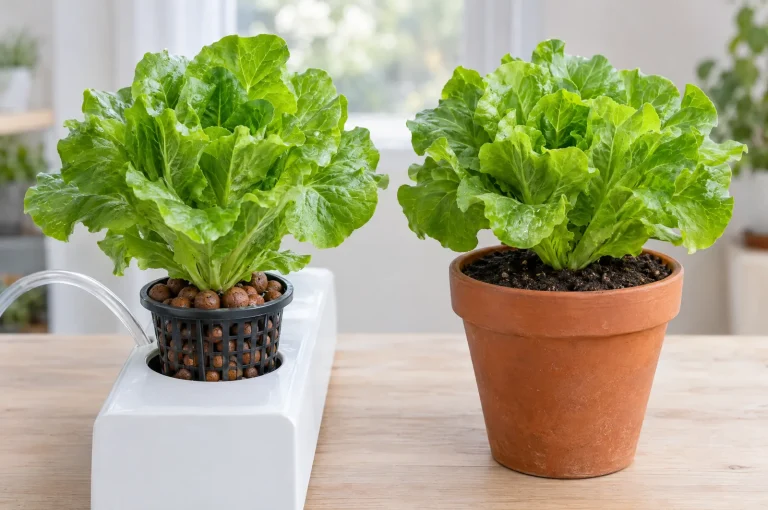
The system choice is where we have been too casual. UF/IFAS, in its guide to leafy greens under protected culture, says spinach production in deep water culture or raft culture has proven to be more problematic than media-based vertical growing systems, and that once the pathogen is established it is difficult to eradicate during the growing season. Our Kratky page and our bucket plan both list spinach, and both now carry that caveat. A Kratky jar is the hardest version of it, since the solution is mixed once, never changed, never aerated, and the plant sits in it from first day to last. Growing in a medium moves the odds most.
Or grow the chard instead
The same Florida guide hands you the exit. Swiss chard is adaptable to many hydroponic growing systems, it says, because it does not generally have the susceptibility to Pythium that spinach does, and it does not share the cool preference either. Chard already sits beside spinach on nearly every list here, including deep water culture. If spinach is on your list because you want a dark leafy green rather than because you want spinach, the swap costs nothing.
One figure of our own needed fixing on the way past. Our lettuce page said spinach and several other greens run happily on lettuce numbers, while our chart puts lettuce at 1.4 to 1.8 and spinach at 1.8 to 2.3. Sharing a reservoir had already spotted that they meet at one value rather than sharing a range. The lettuce page now says so.
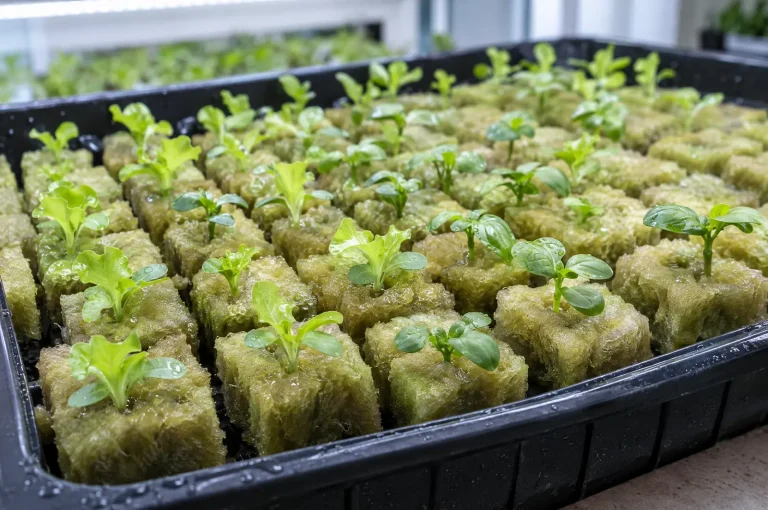
And if it is spinach you want, the answer is four changes to the routine this site teaches. Prime the seed over two days, sow into a medium rather than floating it, run the solution at the warm end of the normal band, and cut at three weeks instead of keeping the plant. Not one of them costs money.
Where this comes from
The two barriers, the germination mechanism, the priming protocol and its percentages, the Katzman infection and temperature trials, the cultivar weight comparisons and the extreme hygiene finding are all from A Commercially Viable Controlled Environment Agriculture Spinach Production System, the final report prepared for the New York State Energy Research and Development Authority by Cornell University under Louis D. Albright, June 2005, whose disease chapter draws on Leslie Katzman’s 2003 doctoral dissertation. The system comparison and the Swiss chard note are from Leafy Greens in Hydroponics and Protected Culture for Florida by Natalie B. Parkell, Robert C. Hochmuth and Wanda L. Laughlin, UF/IFAS publication HS1279. The current position is from the University of Arkansas System Division of Agriculture release of 9 November 2022. Those figures come from commercial scale greenhouse research rather than from a bucket, and the paragraphs above say which conclusions survive the change of scale and which were only ever about ponds.
Found this useful? Tell Google to show you more of it.
Add to Preferred Sources