
15 hydroponic mistakes beginners make (and how to avoid them)
Learn from our mistakes so you do not have to repeat them. Every one of these has cost us a plant at some point.
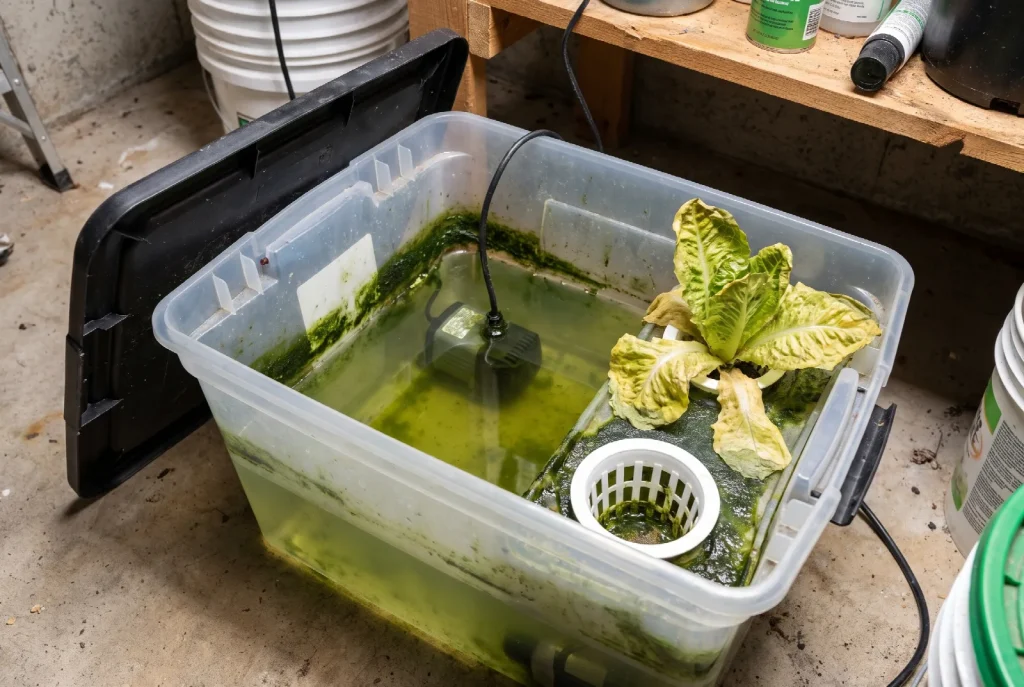
None of these are exotic. They are the ordinary, repeatable errors that account for almost every failed first grow. Read them once now and you will recognise the symptoms when they show up.
1. Using nutrients at full strength on seedlings
Young roots burn easily. Use half strength for the first two weeks, then move to the label dose. The dosing calculator works out the amounts for your container size.
2. Never checking pH
Affiliate disclosure: some links below are affiliate links. We may earn a commission if you buy through one, at no extra cost to you. As an Amazon Associate I earn from qualifying purchases. Full disclosure.
The single most common cause of a healthy-looking reservoir and a yellowing plant. Test weekly with a pH pen, keep it between 5.5 and 6.5, and read the pH guide if you are starting from scratch.
3. Topping a Kratky jar back up to the start line
The falling water level is the design, not a fault. Refilling drowns the air roots. Top up only enough to keep the lower roots wet, which the Kratky method page explains in full.
4. Leaving the reservoir in direct light
Light plus nutrient water grows algae, which competes for nutrients and looks unpleasant. Wrap the jar, paint it, or use an opaque container.
5. Running a grow light 24 hours a day
This is a real mistake, but not because plants need darkness. They do not. A fixed output panel left on permanently raises the light dose rather than spreading it, and the dose is what the crop responds to. Twelve to sixteen hours on is right for most crops, and the lighting guide has the figures by crop. A $5 mechanical timer solves this forever.
6. Putting the light too far away
Leggy, stretched, pale stems mean the plant is reaching. Most LED panels want to sit 6 to 12 inches above the canopy, and our grow light guide covers how to read a spec sheet.
7. Starting with a difficult crop
Full-size tomatoes as a first grow is a hard way to learn. Lettuce or basil will give you a result in three weeks and teach you the same fundamentals, and there are a dozen more on the beginner crop list.
8. Using unrinsed clay pebbles
They ship coated in dust that clouds the reservoir and clogs pumps. Rinse until the water runs clear, and see the growing medium guide for which media behave how.
9. Ignoring water temperature
Above roughly 75F (24C) the solution holds less oxygen and root rot becomes much more likely. Keep reservoirs out of direct sun and away from radiators.
10. Overcrowding the system
Four lettuces in a five-gallon bucket works. Eight does not. Crowded roots tangle, block flow, and compete for oxygen, and the bucket plan sets out sensible spacing.
11. Not labelling anything
Three weeks in, every seedling looks similar and you will not remember which jar was started when. Write the variety and date on the jar.
12. Mixing nutrients in the wrong order
With multi-part nutrients, add each part to water separately and stir between them. Combining concentrates directly causes them to bind and precipitate out.
13. Reusing solution far too long
As plants drink, the nutrient balance drifts even when the water level looks fine. In recirculating systems, change the reservoir every two to three weeks.
14. Panicking at the first yellow leaf
One yellowing lower leaf on an otherwise healthy plant is often just the plant retiring an old leaf. Look at the overall trend before you change anything.
15. Changing three things at once
When something goes wrong it is tempting to adjust pH, nutrients, and lighting together. Then you cannot tell what fixed it. Change one variable, wait a few days, observe.
Start on the right foot
Our beginner guide walks through the setup in the right order so most of these never come up.