
Drip hydroponic systems: the commercial workhorse at home
Solution is delivered drop by drop to each plant individually. It is how most greenhouse tomatoes and peppers in the world are grown.
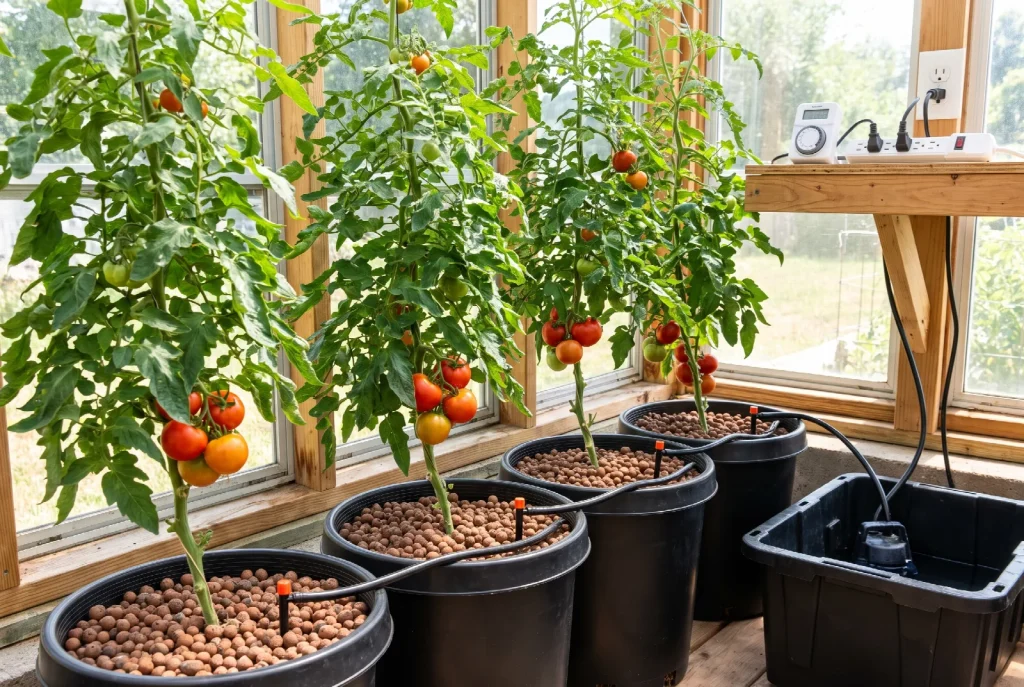
A drip system gives every plant its own supply line. A pump on a timer pushes solution through tubing to a small emitter at the base of each plant, where it soaks slowly down through the medium and past the roots.
Two versions
Recirculating. Runoff returns to the reservoir and is used again. Cheaper to run and what nearly every home grower builds, but nutrient balance drifts over time, so you change the reservoir regularly.
Drain-to-waste. Runoff is discarded. Every plant gets solution at exactly the strength you mixed, which is why commercial growers prefer it. It wastes nutrient, so it makes little sense at home unless you are chasing precision.
What it does well
- Each plant can be fed at its own rate
- Handles large, heavy-feeding crops that water culture cannot
- The medium buffers against short pump failures
- Scales to dozens of plants with more tubing rather than a redesign
Where it struggles
- Emitters clog, and a blocked one starves that plant silently
- The most tubing and fittings of any home design
- Needs regular flushing to prevent salt buildup in the medium
- Timer tuning takes a few weeks to get right
What to grow
Tomatoes, peppers, cucumbers, aubergines, and anything else large and hungry. Leafy greens work but are cheaper and easier in DWC or NFT.
Not sure which system to build?
Compare all six side by side on cost, difficulty, and what they grow best.
Answer five questions about your budget, space, experience and what you want to grow, and our system comparison tool ranks all six against your answers — with the reasoning shown, and an honest “nothing fits” when nothing does.