
Best grow lights for hydroponics: what to look for at every budget
Spec sheets for grow lights are full of numbers designed to impress rather than inform. Here is which ones actually matter.
Affiliate disclosure: The Hydroponist is reader-supported. When you buy through links on our site, we may earn an affiliate commission at no extra cost to you. We only recommend products we have researched thoroughly. Your trust matters to us. As an Amazon Associate I earn from qualifying purchases.
Grow light marketing is unusually bad. Listings quote wattages that are not real, use “equivalent” figures with no basis, and lean on purple light because it photographs well. Three numbers actually matter.
Once you know the real draw, put it into the running cost calculator to see what a light will add to your bill before you buy it.
The three specs worth reading
| Spec | What it means | What to look for |
|---|---|---|
| Actual power draw | Watts pulled from the wall, not “equivalent” watts. | A stated draw in watts. If a listing only says “1000W equivalent”, it is hiding something. |
| PPFD at distance | How much usable light reaches the plant, measured at a stated height. | 200 to 400 for greens and herbs. 400 to 600 for fruiting crops. Always check the height it was measured at. |
| Coverage area | The footprint it lights properly, which is smaller than the footprint it lights at all. | Match it to your actual growing area. Intensity falls off sharply toward the edges. |
Full spectrum white beats purple
Early LED panels used only red and blue diodes because those wavelengths drive photosynthesis most efficiently, which is where the purple glow came from. Modern full-spectrum white LEDs are now efficient enough that the small theoretical advantage is gone, and white light has two practical benefits: you can actually see your plants properly to spot problems, and it does not turn a room into a nightclub.
What to buy at each budget
| Budget | Type | Good for | What to expect |
|---|---|---|---|
| $0 | A sunny south-facing windowsill | Herbs, lettuce, greens | Genuinely sufficient for leafy crops if the shadow test is sharp. Try this before buying anything. |
| $10 to $20 | Desk lamp with a 5000K to 6500K daylight LED bulb | One or two jars of herbs | Perfectly adequate for a single Kratky jar. The cheapest real upgrade there is. |
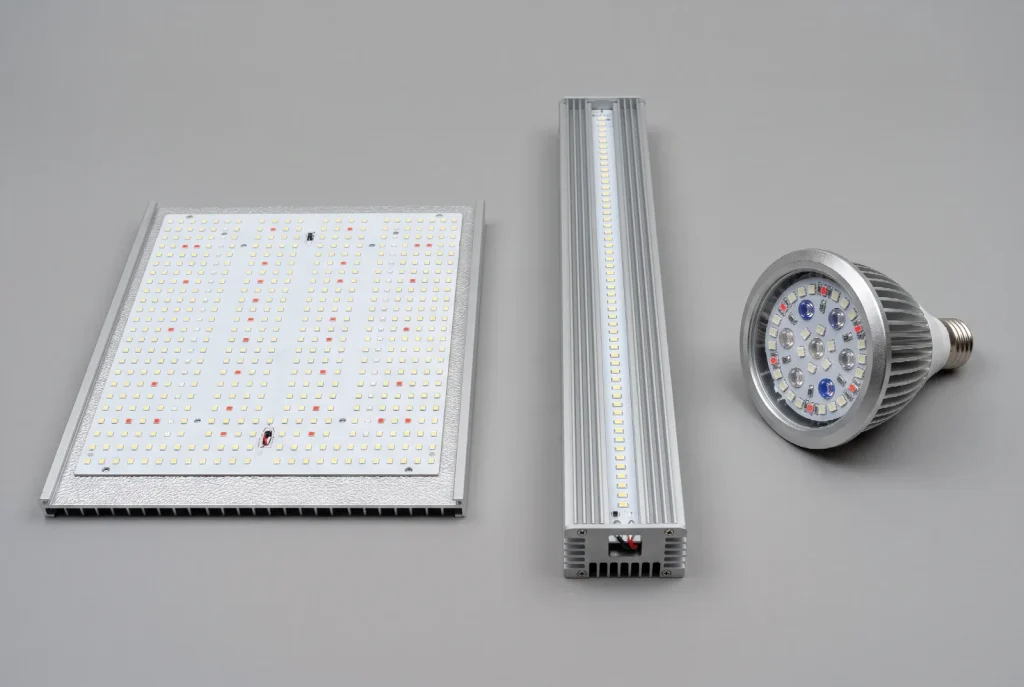
| $25 to $40 | Small full-spectrum LED panel or bar, 30 to 60W actual | A shelf, or a 4-plant bucket | The sweet spot for most home growers. Look for a dimmable model with a built-in timer. |
| $60 to $120 | Larger panel, 100 to 150W actual | Tomatoes, peppers, a full grow tent | Only worth it for fruiting crops or a multi-shelf setup. |
| $150+ | Commercial-grade panel | Serious multi-tier growing | Beyond what a home grower needs to start. Revisit after a year. |
Features worth paying for
- A built-in timer. Saves buying a separate one and removes the most common lighting error.
- Dimming. Lets one light serve seedlings and mature plants without remounting it.
- Adjustable hanging height. You will raise the light as plants grow. Fixed-height clamp lights become annoying quickly.
- A real warranty. LED panels do fail. A two-year warranty from a seller with a traceable address is worth more than 20 extra watts.
Related: how much light your plants actually need
Build before you buy
Every plan on this site is free, and the most popular one costs about $10 and takes 15 minutes.