What Can Share a Reservoir, and Why EC Is Not the Blocker
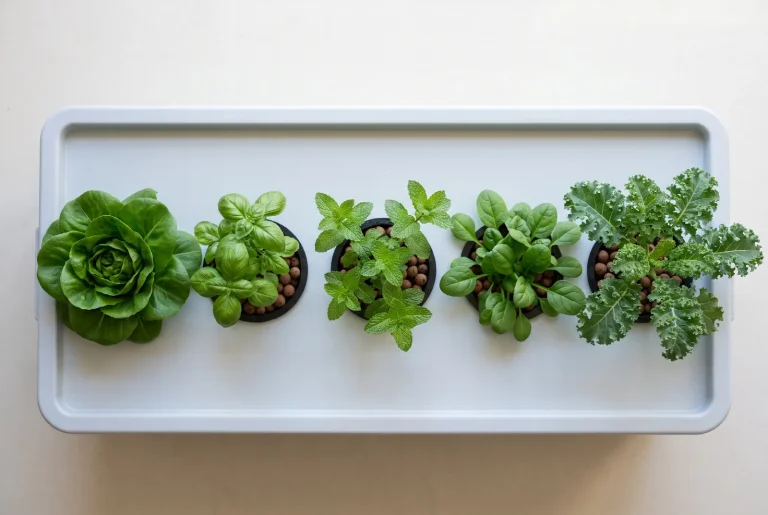
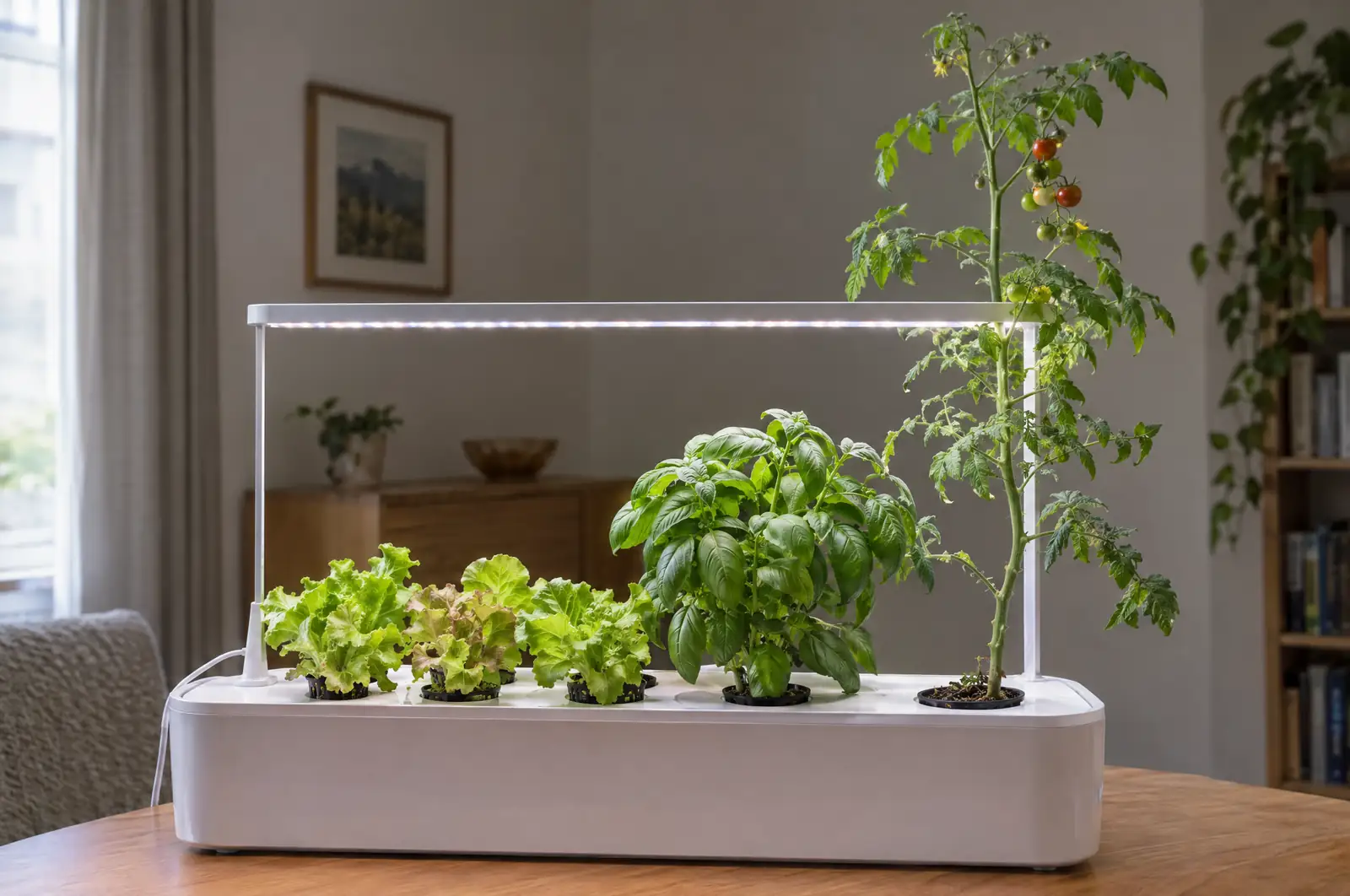
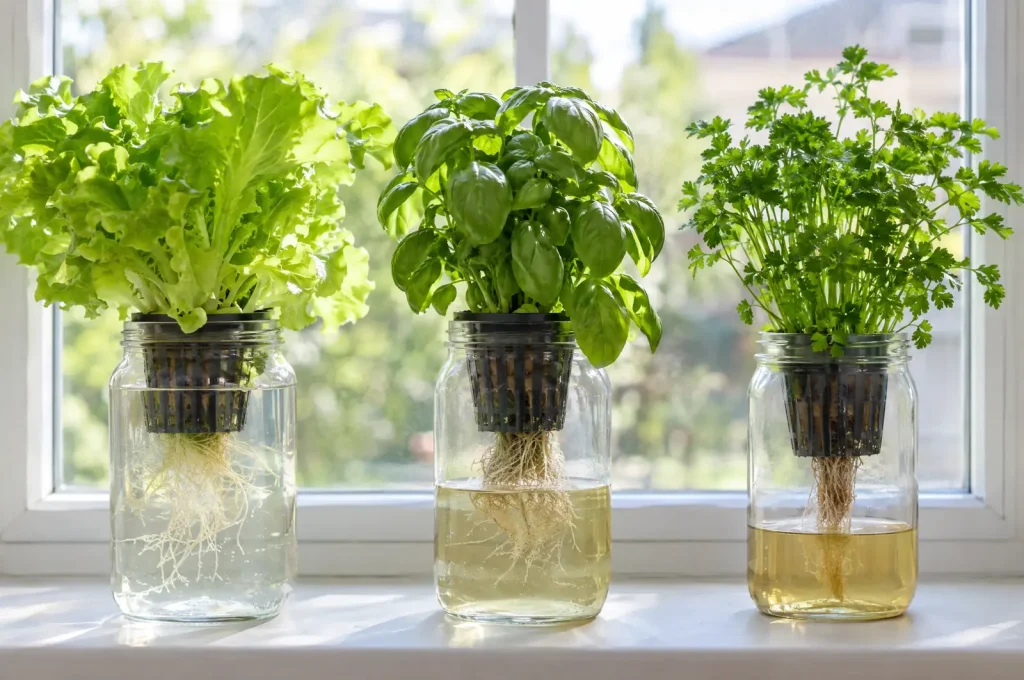
You have one tote, one pump and one light, and you would like a bit of everything in it. Some lettuce, a basil plant, and a cherry tomato because that is the one you actually want. Every version of this question gets answered with nutrient strength, as though the only thing standing between you and a mixed salad is picking an EC somewhere in the middle. Nutrient strength is a real constraint and it is the most forgiving of the four. The things that will actually stop you are the two nobody checks, and unlike strength they cannot be split down the middle.
Four constraints, checked in the wrong order
Anything sharing a reservoir shares four things: the pH of the solution, its strength, the hours the light is on, and the temperature of the room. People work down that list in order and usually stop after the second one.
The useful distinction is not which constraint matters most. It is whether a compromise value leaves both plants inside their range or pushes one outside it. For pH and strength the published ranges overlap, so a middle value suits everybody. For light hours and temperature the ranges frequently do not overlap at all, and then the middle value is simply wrong for one of the crops rather than imperfect for both.
pH is almost never the thing stopping you
Take the bands from our own pH guide and lay them over each other. Leafy greens want 5.5 to 6.5. Herbs want the same. Kale, chard and bok choy want 6.0 to 6.5. Strawberries want 5.5 to 6.2 and fruiting crops want 5.8 to 6.3.
Every one of those contains the window from 6.0 to 6.2. Hold the reservoir there and nothing in the list is outside its range, including the two crops with the narrowest tolerances. So pH is a problem you solve once, for the whole tank, and then stop thinking about in this context. It is still the first thing to check when something goes wrong, for all the reasons in that guide, but it is not what decides whether two crops can live together.
Strength is a real constraint, and narrower than it looks
Here the ranges genuinely diverge, and the figures below are from the PPM and EC chart.
| Crop | EC | Overlaps |
|---|---|---|
| Herbs | 1.0 to 1.6 | Lettuce |
| Lettuce | 1.4 to 1.8 | Herbs |
| Kale | 1.8 to 2.1 | Spinach |
| Spinach | 1.8 to 2.3 | Kale |
| Tomatoes | 2.0 to 2.4 | Peppers |
Meter readings with your tap water included. The overlaps column names the nearest crop that shares a workable band.
Two things fall out of that table and both are mildly surprising.
- Lettuce and herbs do get on. They share 1.4 to 1.6, which is narrow but real. Run the tank at 1.5 and both are inside their published band rather than merely near it.
- Leafy greens are not one group. Lettuce tops out at 1.8 and spinach and kale start there. They meet at a single point rather than sharing a range, which is not what the phrase leafy greens suggests. Worth adding that the chart flags its spinach figure as coming from one source only, so treat that row as the least settled of the set, and that strength is the least of what makes spinach the awkward one.
- Lettuce and a fruiting crop do not overlap at all. Lettuce finishes at 1.8 and fruiting tomatoes begin at 2.0. There is no value that is correct for both, so one of them is always being underfed or overfed.
Even so, strength is the constraint you can fudge. Being slightly off on EC produces a slightly slower or slightly saltier plant, and the reservoir article covers how the balance drifts anyway between changes. It is a cost rather than a wall.
The two that actually stop you
A timer has one schedule and a room has one temperature. These are the constraints where the middle value stops being a compromise and starts being simply wrong for somebody.
| Crop | Light | Air temp |
|---|---|---|
| Lettuce | 10 to 14 | 60 to 70F |
| Herbs | 12 to 16 | Warm |
| Berries | 12 to 16 | 60 to 75F |
| Tomatoes | 14 to 18 | 65 to 80F |
| Peppers | 14 to 18 | 70 to 85F |
Hours of light per day, and the air temperature each crop wants. Figures from our lighting guide and the individual crop pages.
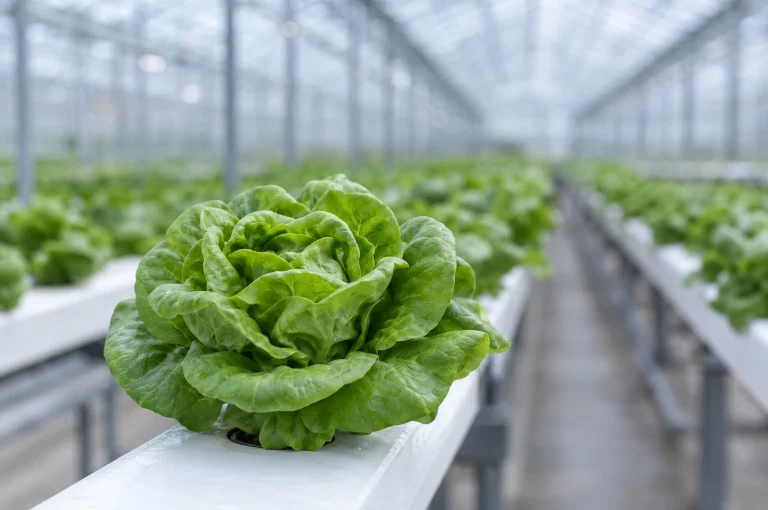
Look at lettuce against peppers. Lettuce wants 60 to 70F and peppers want 70 to 85F. The only number in both is 70, and lettuce bolts above roughly 75F, turning bitter and running to seed in a way you cannot reverse. Set the room where the peppers are happy and you are not giving the lettuce a slightly imperfect life, you are ending it.
Light does the same thing from the other direction. Lettuce wants 10 to 14 hours and fruiting crops want 14 to 18. They touch at 14, which means running lettuce at the very top of its range and the tomato at the very bottom of its, permanently. And the hours are not free either way, because more light drives more growth and more growth is what brings on tipburn in a crowded canopy.
Herbs are the interesting case, because basil pulls against lettuce on temperature specifically. The basil article works through that in detail, and the short version is that basil suffers in the cold while lettuce suffers in the warmth, so a room that suits one is working against the other even though their pH and strength get on perfectly well.
The problem nobody mentions: they finish at different times
Even where the numbers line up, a shared tank couples the crops together in time, and that turns out to be a practical nuisance rather than a theoretical one.
Lettuce is ready in three to five weeks from transplant and a tomato takes eight to twelve, and the figures in the article on when to harvest make the gap plain. So you cannot bring the system down, empty it, scrub it and restart without either sacrificing the tomato halfway through or leaving the lettuce in long past the point where it was good. A full reservoir change with a mature fruiting plant in the lid is awkward, and lifting net pots around it disturbs roots that did not need disturbing.
The same mismatch shows up in water use. A mature tomato drinks a great deal more than a lettuce, so in a shared tank it drags the level and the concentration around for everybody, and the days of running time you calculated are set by the thirstiest plant in the lid.
What does work
Group by what the plant wants rather than by what it is called, and three groupings do the job.
- Lettuce with soft herbs. Shared band at EC 1.5, pH 6.0, 12 to 14 hours of light, and a cool room. The compromise is on temperature, where basil would prefer things warmer, and it is a genuine compromise rather than a block.
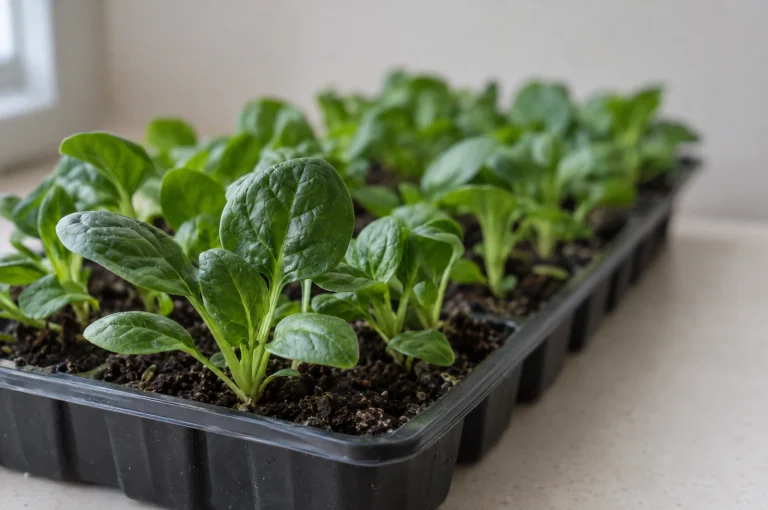
- The tougher greens together. Spinach, kale, chard and parsley all sit in the 1.8 to 2.1 band and all tolerate a cool room. This is the most comfortable grouping on the list and the least glamorous.
- Fruiting crops together. Tomatoes and peppers share 2.0 to 2.2, pH 5.8 to 6.3, and 14 to 18 hours of light. Peppers want it warmer than tomatoes, so give the warm corner to the peppers.
- Do not mix across those groups. Not because it is forbidden, but because every crossing costs you one of the four constraints outright rather than a little from each.
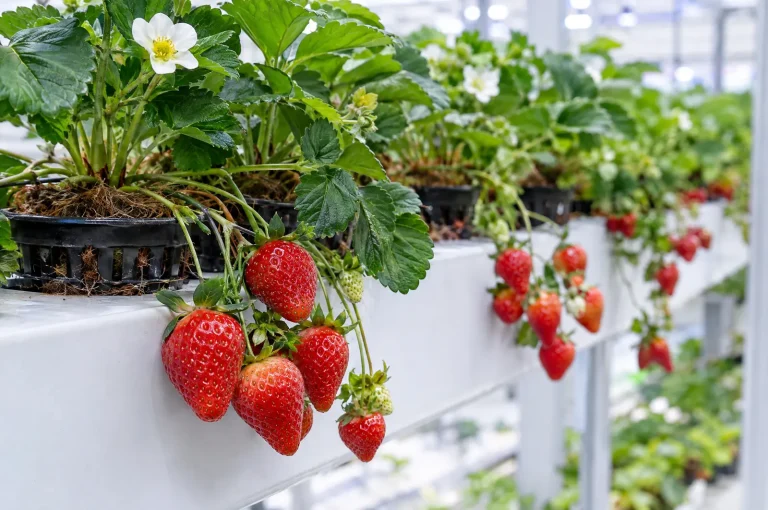
Strawberries are their own case and the honest answer is that the figures on this site do not agree on where they sit, so treat them as a crop to give a container of their own rather than one to slot into a shared tank on a number.
If you only have one system
None of this means you are stuck with one crop forever. It means the separation has to happen somewhere, and there are three cheap places to put it.
- Separate in time. Run one grouping to completion, then reset and run another. A lettuce cycle is a few weeks, which is a short wait for a system that then actually suits what is in it.
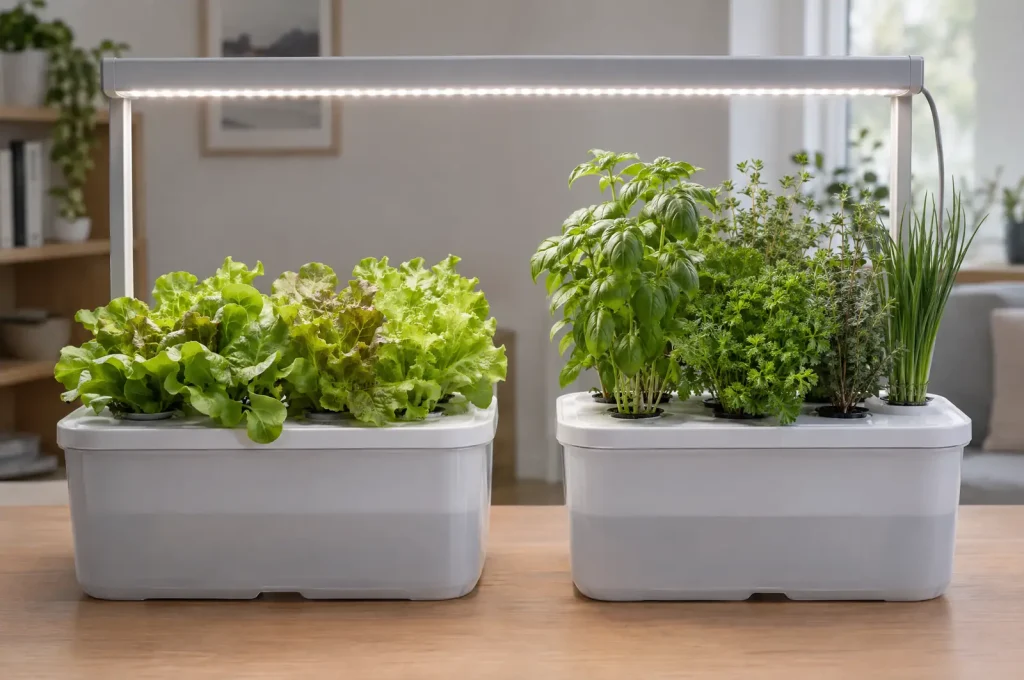
- Separate the water, share the light. The expensive part of a setup is the lamp, not the tub. Two containers under one light give you two reservoirs, two strengths and two harvest schedules for the price of a second box, whether you build it or pick one from the systems guide. It does not solve the hours or the temperature, but it solves everything else, and a second bucket build costs very little. If you are running deep water culture, one pump will usually drive air stones in two containers, so even the running cost barely moves.
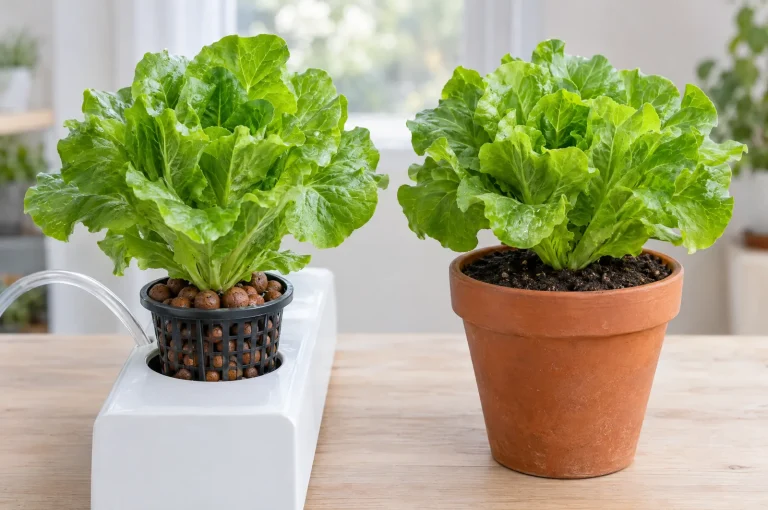
- Use containers that need nothing. A Kratky jar has no pump and no plumbing, so running three of them with three different mixes costs nothing but three lids. For herbs and greens this is the most flexible arrangement available to a beginner.
The one thing worth not doing is the thing the question usually assumes, which is picking an average of two incompatible numbers and hoping. An average EC is a workable idea. An average photoperiod is just a wrong photoperiod for both of them.
Where this comes from
Every figure in this article is one already published on this site, which is deliberate, because the point of the exercise is comparing them rather than introducing new ones. The strength bands are from our PPM and EC chart, which draws its ranges from Cornell, the University of Arizona, Oklahoma State, Ohio State and Hort Americas among others, and which flags its own spinach row as resting on a single source. The pH bands are from our pH guide. The light hours are from the lighting guide and the temperatures from the individual crop pages. The bolting threshold for lettuce is from the lettuce page. One caveat applies throughout and is worth stating rather than hiding: the strawberry strength figure is the one place where the chart and the crop page still disagree, which is why strawberries are described above as a crop to keep separate rather than one to place on a number.
Found this useful? Tell Google to show you more of it.
Add to Preferred Sources