When to Harvest, and How to Get a Second Crop From the Same Plant
Everything else on this site is about getting a plant to grow. This is the part nobody writes about, and it is where a good crop is most easily wasted. Beginners get harvesting wrong in two specific ways. They wait too long, which costs them the flavour. And they take the whole plant at once, which costs them the three or four further harvests the same plant was willing to give them.
Waiting is the expensive mistake
There is a strong instinct to let a plant get bigger. With leafy crops that instinct is wrong, because the plant is not working to your schedule. It is working towards flowering, and everything it does after that point is aimed at seed rather than at leaves.
In lettuce this is called bolting. The plant throws a thick stalk up from the centre, the leaves coarsen, and the sap turns genuinely bitter rather than mildly disappointing. It is not reversible. Extension guidance is blunt about it, that once bolting starts it ends the possibility of harvest, and the only decision left is whether to pull the plant now or later.
Basil does the same thing by a different route. It puts up flower spikes, and once it is flowering the leaves lose much of their oil and the plant stops making new ones at any rate worth having.
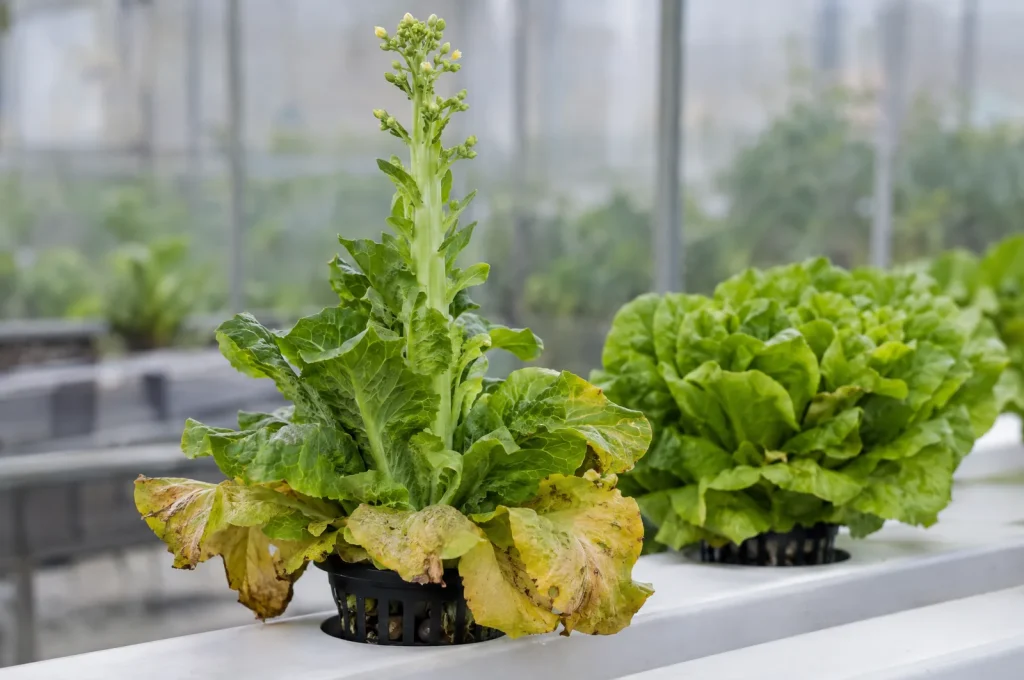
What actually triggers it, and why your setup is a factor
Three things push a leafy crop into flowering, and in a hydroponic system you control all three, which is both the good news and the awkward news.
- Heat. The main trigger. Extension sources put the threshold somewhere between several days above 75F (24C) and a flat 80F (27C) for most varieties, which is a wide enough spread that the honest reading is simply that warm rooms bolt lettuce. The same reservoir temperature that invites root rot is also the one that shortens your harvest window, so the fix is the same fix twice.
- Long days and high light. Here is the one worth sitting with. Daylength is a listed bolting trigger, and a great many hydroponic growers run fourteen to sixteen hours of light because it grows plants faster. For lettuce in a warm room, that is pushing the accelerator and the thing you are trying to avoid at the same time. Variety matters, since some types are day-neutral and some are not, but if your lettuce keeps bolting early and the room is warm, the light schedule is the second thing to look at.
- Water stress. Less of a risk here than in soil, which is one of the genuine advantages of growing this way. A plant whose roots never dry out does not get the stress signal that a garden plant gets on a hot afternoon.
Loose leaf types tolerate warmth considerably better than hearting types. Crisphead lettuce, which is the supermarket iceberg shape, is the least heat tolerant of the lot and the one most likely to disappoint indoors in summer.
Cut and come again
This is the technique that changes the economics of a small system, and most people do not know it exists.
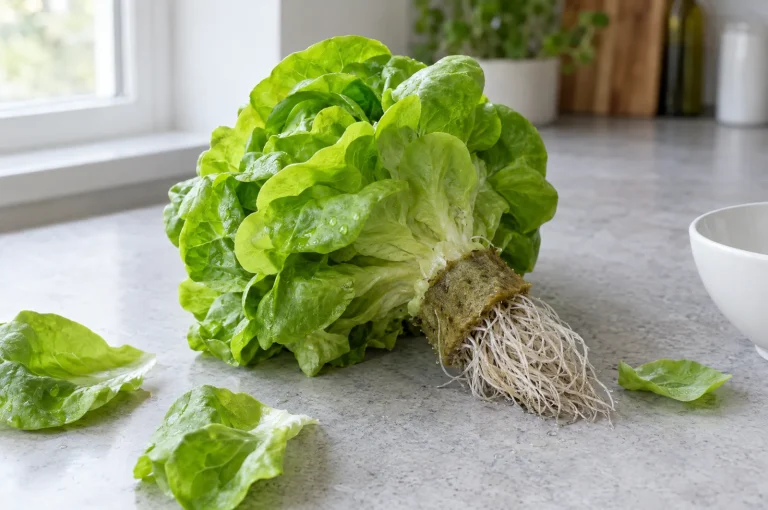
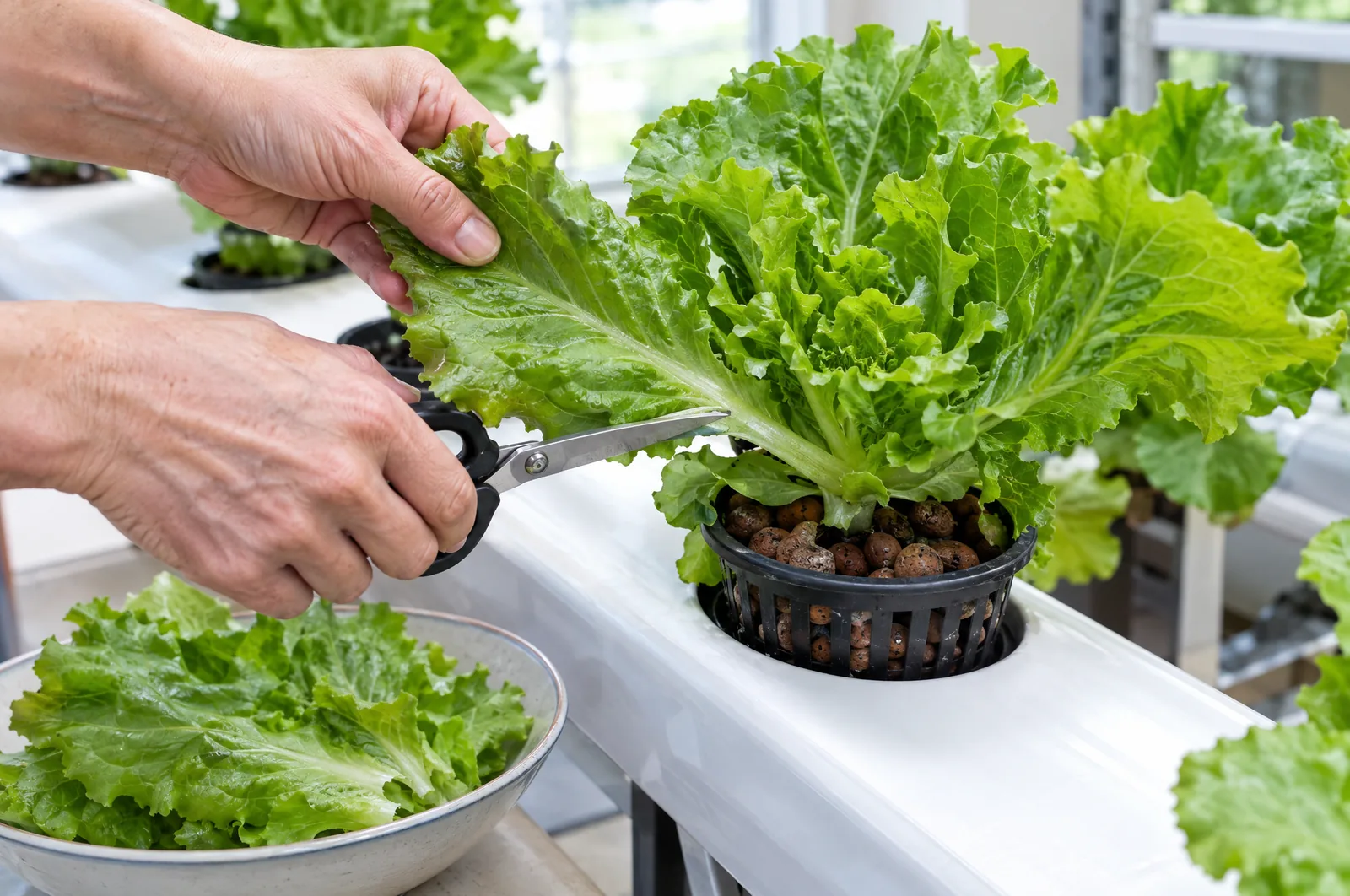
A loose leaf lettuce, and most leafy greens with it, grows from a central point. The outer leaves are the oldest. If you take only those and leave the centre untouched, the plant simply carries on producing from the middle, and you harvest the same plant repeatedly over weeks instead of once.
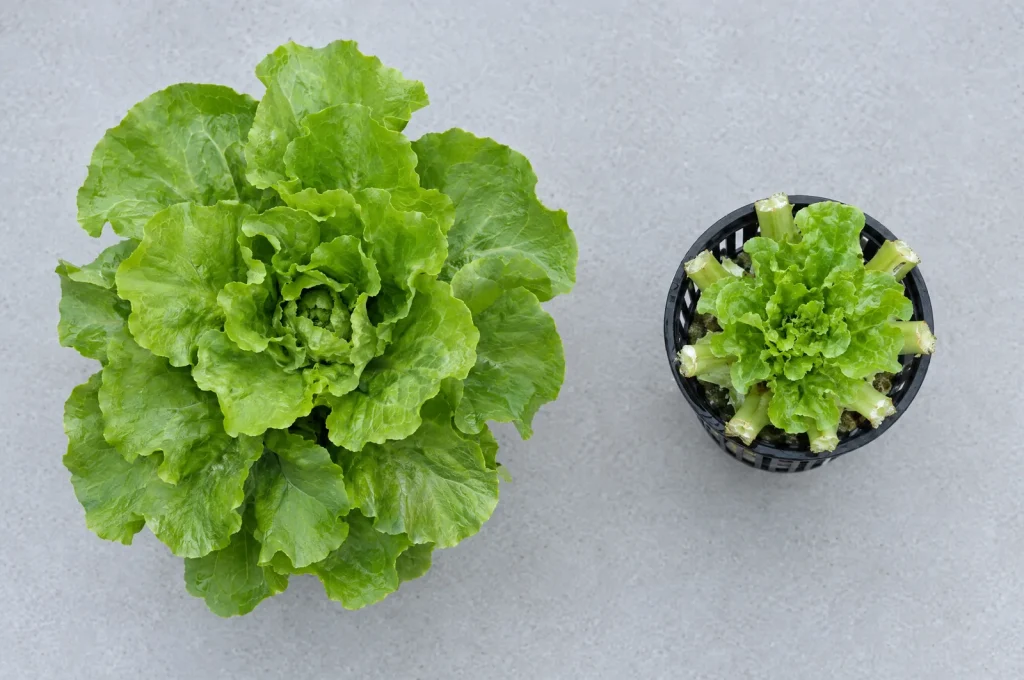
- Wait until the outer leaves are a usable size, which extension guidance puts at around three to six inches long.
- Cut rather than pull. Scissors or a sharp knife, close to the base of the leaf stalk. Pulling tears at the crown and risks lifting the whole plant out of the net pot.
- Never touch the centre. Those small pale leaves in the middle are the entire future of the plant. This is the step people get wrong, and it converts a repeat harvest into a single one.
- Take no more than about a third at a time. The plant needs leaf area to power the regrowth you are asking it for.
- Come back in a week to ten days. There will be more.
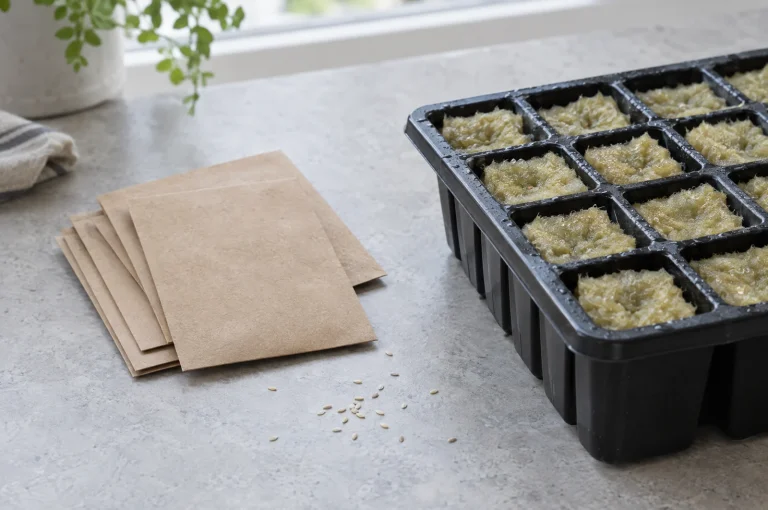
For a tray of mixed baby leaf there is a faster variant. Once the plants are four to five inches tall, cut the whole tray back to about two inches above the medium with scissors and let it regrow. Two or three cuts are normal before the quality drops off and it is worth resowing.
Basil is the same idea with a different shape. Pinch out the growing tip above a pair of leaves and the plant branches into two from that point, so every harvest makes the plant bushier. Never strip the lower leaves and leave a bare stem with a tuft on top, which is the usual beginner mistake and leaves the plant with nothing to work with.
Roughly when
| Crop | Weeks | Method |
|---|---|---|
| Lettuce | 3 to 5 | Outer leaves |
| Basil | 2 to 4 | Pinch tips |
| Spinach | 4 to 6 | Outer leaves |
| Kale | 5 to 7 | Outer leaves |
| Tomatoes | 8 to 12 | Pick ripe |
Weeks from transplant into the system, not from sowing. Add three to four weeks for the seedling stage if you are counting from seed.
Treat these as a prompt to go and look rather than a date to act on. Light, temperature and variety move them around considerably, and the plant is a better guide than the calendar. First harvest usually comes sooner than people expect, which is the opposite of the problem they were braced for.
Free plants out of what you just cut
Basil gives you something better than a second harvest from the same plant. It gives you more plants, from the stems you were about to throw away.
Take a cutting four or five inches long from a healthy non-flowering stem, strip the leaves off the lower half, and stand it in a glass of plain water on a windowsill. Roots appear in about ten days to a fortnight. Once they are an inch or two long, move the whole cutting into a net pot exactly as you would a seedling. It is the same transplant, minus the three to four weeks of raising it from seed, and the new plant is genetically identical to the one you already know does well in your conditions.
Mint, oregano and most soft herbs do the same. Lettuce does not, so do not bother standing a lettuce stump in water expecting a second head. You will get a few small bitter leaves and then a flower stalk, which is the plant finishing what it had already started.
One caution. Water-rooted cuttings make soft roots that are adapted to sitting in water rather than to a medium, so they sulk for a few days after transplanting. Keep them well watered through that and they catch up.
Keeping what you picked
Home grown leaves keep considerably better than shop ones, for the unglamorous reason that yours were on a plant twenty minutes ago rather than in a lorry for three days.
Leafy greens go dry and unwashed into a container or bag in the fridge, with a sheet of kitchen paper to take up condensation, and will hold a week or more. Basil is the exception and should never see a fridge, because it blackens below about 50F (10C). Stand it in a glass of water on the counter instead, where it will keep for several days and may well start rooting while you are not looking.
Small things that matter more than they should
- Harvest in the morning. Extension guidance on salad crops is specific about this. Leaves cut early are crisper and keep longer, because the plant has rehydrated overnight and has not yet spent the day transpiring.
- Do not wash until you use it. Wet leaves in a fridge go slimy. Hydroponic leaves are clean already, which is most of the point of growing this way, though clean of grit and clean of everything are not the same claim.
- Keep harvesting even if you cannot eat it. A plant left unpicked moves towards flowering sooner. Picking is itself a way of delaying the end of the crop.
- Stagger your sowing. Start a few new plants every two or three weeks rather than a whole system at once. Otherwise everything is ready on the same day and then nothing is ready for a month, which is worked through properly in the article on getting a lettuce a week.
- Taste before you commit to a schedule. Bitterness arrives before the flower stalk does, and a single leaf tells you more about where the plant is than any number of days on a calendar. If it has turned, harvest the lot now rather than waiting for the size you had in mind.
When the plant is finished
Once a leafy plant has bolted, or a cut and come again plant is producing small tough leaves no matter what you do, it is done. Take it out rather than leaving it in.
A spent plant in the system is not neutral. Its roots are still shedding material into the solution, it is still drinking and shifting the balance, and dying root matter is exactly the organic load that feeds the problems covered elsewhere on this site. Lift it, pull the root mass out of the net pot, and either plant the gap or close it.
If the whole system is coming down, this is the moment for a full reservoir change and scrub, with fresh medium for whatever goes in next. An empty system is the only time everything is reachable at once, and starting a new crop into last crop’s debris is how an easy grow becomes a difficult one.
Where this comes from
The bolting triggers, the temperature thresholds, the point that bolting ends the possibility of harvest, and the cut and come again method including the three to six inch leaf size and the two to three inch cutting height are from University of Minnesota Extension’s guidance on growing lettuce, University of Wisconsin Extension on salad greens, University of Illinois Extension, and UC Master Gardener material on growing lettuce in warm weather. The advice to harvest early in the day is from the same Minnesota guidance. The week figures in the table are typical rather than measured, and are deliberately given as ranges, because variety and conditions move them more than any single number would suggest.
Found this useful? Tell Google to show you more of it.
Add to Preferred Sources