Which Seed to Buy, and Whether Last Year’s Still Works
There is an article on this site about sowing seed and nothing at all about buying it, which leaves out the half that happens before anything is damp. The packet is doing more work than people give it credit for. It carries a legally required claim about whether the contents are still alive, it is dated, and the number printed on it is the reason our own seed starting article tells you to sow two or three per cube rather than one. Most of what is sold specifically to hydroponic growers, meanwhile, is ordinary seed with a word added to the label.
There is no such thing as a hydroponic seed
Start here, because it saves money immediately.
A seed is a dormant embryo with a packed lunch attached, and as our seed starting article puts it, that lunch carries the plant all the way to its first true leaves without anything from you. Nothing in that arrangement has any knowledge of what the roots will eventually sit in. Germination is a response to moisture, temperature and oxygen, and a rockwool cube supplies all three exactly as a seed tray of compost does.
No seed labelling standard recognises a hydroponic category, because there is nothing for it to describe. Where the phrase appears on a packet it generally means one of three things: ordinary seed at a higher price, pelleted seed sold under a friendlier name, or a variety that genuinely does suit indoor growing and could have said so plainly.
Affiliate disclosure: some links below are affiliate links. We may earn a commission if you buy through one, at no extra cost to you. As an Amazon Associate I earn from qualifying purchases. Full disclosure.
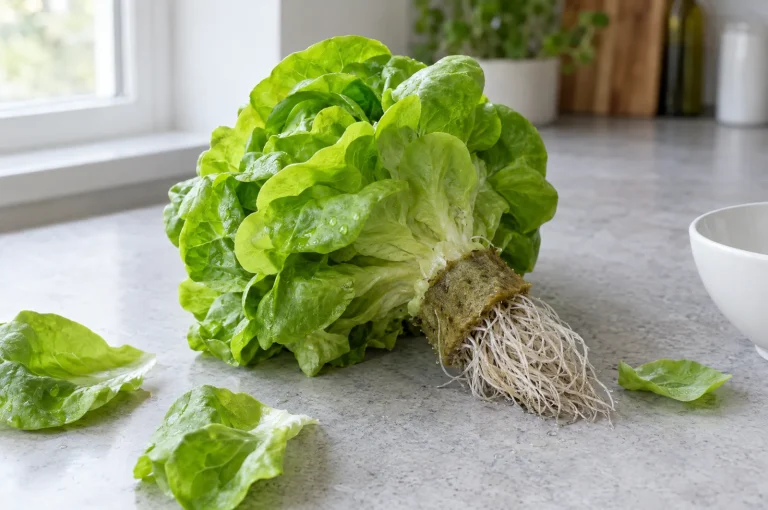
The thing that actually matters is the variety, and that is a crop question rather than a method question. Our lettuce page and the list of plants that are hard to kill are both built around choosing on grounds you can act on, which is speed, habit and tolerance rather than a marketing label. If you would rather compare varieties than read about them, a lettuce seed variety pack puts five of them in one envelope.
What the packet is obliged to tell you
Seed is one of the more closely regulated things you can buy in a garden centre, which is not obvious from looking at it.
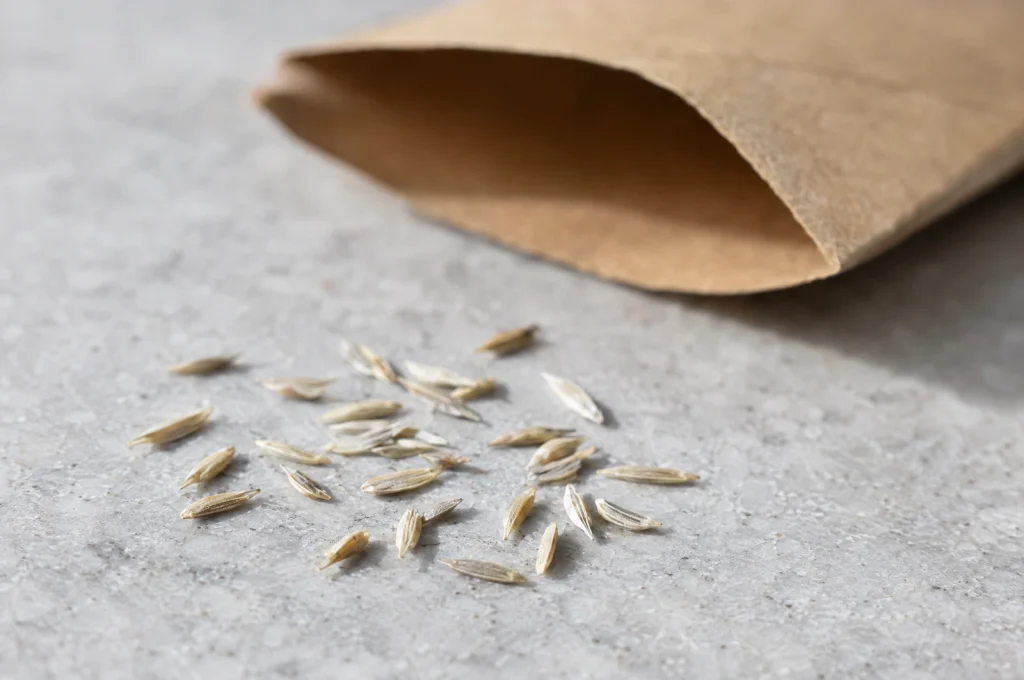
Writing for the University of California Master Gardener programme, Simone Adair points out that seed labels are regulated by law. Under the California Seed Law, general label requirements include a viability assurance statement, and labels must carry sell by and use before dates. The California Department of Food and Agriculture’s reasoning for bothering is quoted in the same place: poor quality seed costs farmers and home gardeners alike considerable amounts of time, money and resources.
Read that as what it is. The packet is a dated claim that a stated proportion of the contents will grow. It is not a promise that they all will, it was true on the day it was tested rather than today, and the date on it is the closest thing you have to knowing how much of that claim survives.
Why you sow two or three per cube
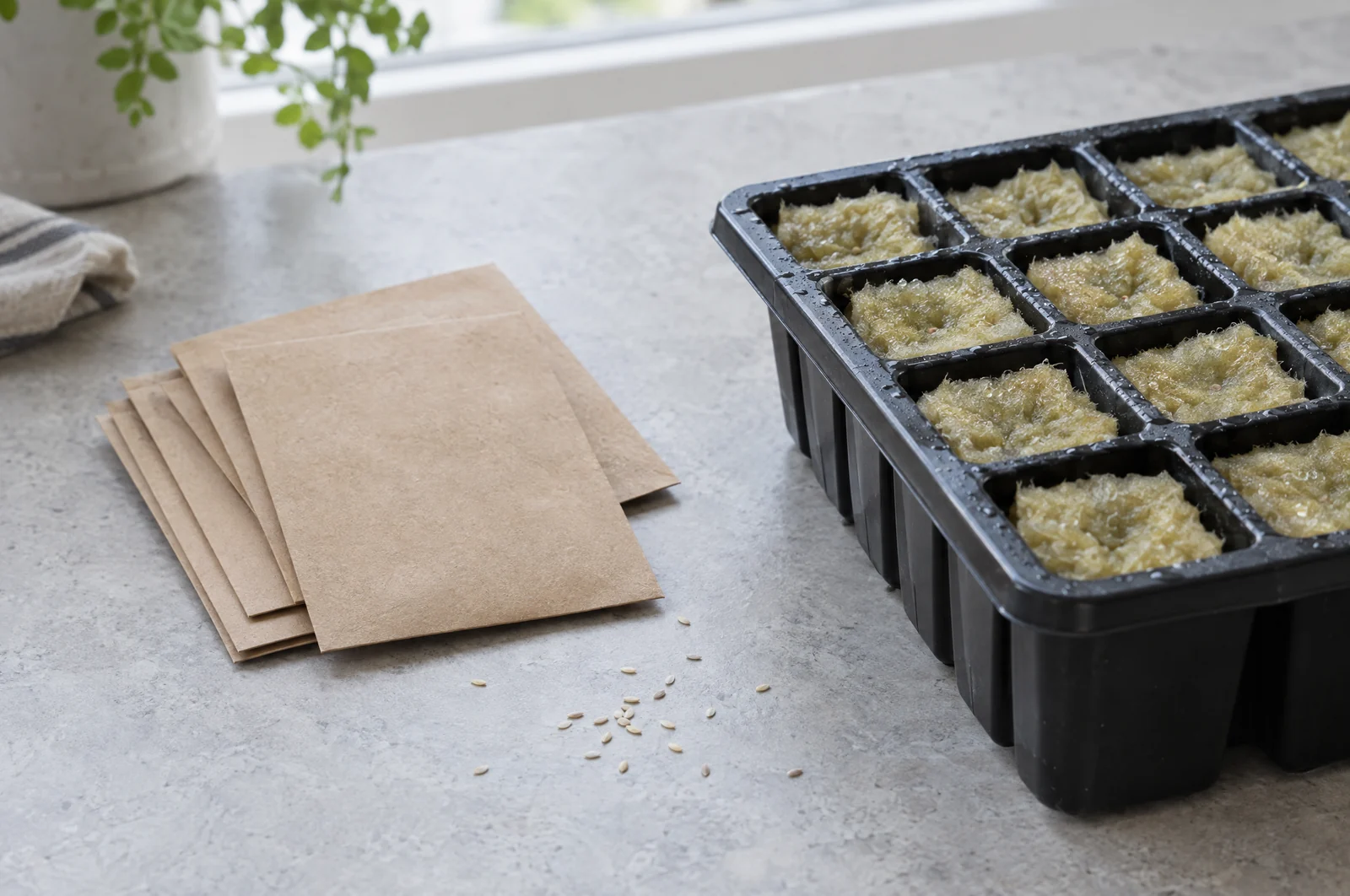
The seed starting article gives this as an instruction, with the note that germination is never a hundred out of a hundred and an empty cube costs you a fortnight. The arithmetic behind it is worth seeing once, because it explains why the answer is two or three rather than one or ten.
Take a lot testing at eighty five percent, which is an ordinary figure for lettuce. Each seed has roughly a fifteen in a hundred chance of not coming up. Sow one per cube and you can expect that outcome in about one cube in seven. Sow two and both have to fail, which is far less likely. Sow three and it becomes rare enough to ignore.
| Seeds sown | Empty cubes |
|---|---|
| One | About 1 in 7 |
| Two | About 1 in 44 |
| Three | About 1 in 300 |
Arithmetic from an eighty five percent germination figure, treating each seed as independent. A real seed lot is not quite that tidy, so read the shape rather than the exact odds.
That is the whole case. Going beyond three buys you almost nothing and wastes seed, which is why nobody recommends it, and it also crowds the cube. Snip the extras off at the surface rather than pulling them, which the seed starting article covers.
Testing seed you already have
If the packet is old, or the seed came from somebody’s garden with no packet at all, you do not have to guess. The same University of California article gives the test, and it needs nothing you do not own.
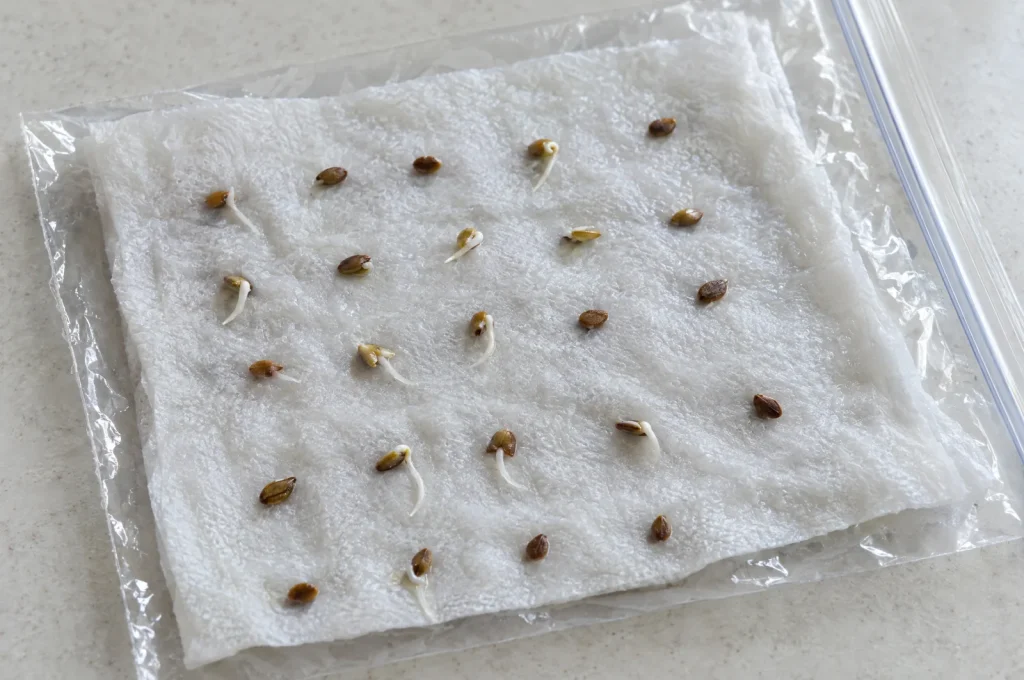
Put a counted number of seeds on a damp paper towel, fold it, seal it in a plastic bag and leave it somewhere warm. Count what sprouts. The germination rate is the number that sprouted multiplied by a hundred and divided by the number you started with, so seventeen out of twenty is eighty five percent.
Five days and twenty seeds tells you whether to sow the packet or bin it, and it also tells you how thickly to sow what is left. A lot testing at fifty percent is not useless, it simply needs sowing at twice the density, which is a decision rather than a disappointment.
The test earns its keep fastest on bulk seed. Microgreens are sown thickly by design and get through more seed in a tray than a lettuce crop does in a season, so they are usually bought by weight rather than by packet, often without a germination figure attached. Twenty seeds off the top of a bag settles what the whole bag is worth before you commit a tray to it.
How long seed actually lasts
Here the published figures are less help than they look, and it is worth knowing why before you throw anything away.
Onion and parsnip are usually given about a year. Tomato is usually given three to four. In the same article that supplies those numbers, the garden lead quoted reports having used twenty year old seed in her own garden. Those statements are not in conflict. A published lifespan describes seed kept in unremarkable conditions, and storage moves the figure so far that the average stops meaning much for any particular packet in any particular drawer.
Pelleted seed is the exception worth flagging, since lettuce is often sold that way. The seed is coated in clay to make it round and easy to handle, and the companies selling it advise using it within about a year because the coating shortens its life. We have not found independent research at that level of specificity, so treat it as the sellers’ own guidance, which is nonetheless the guidance of the people who coated it.
Storage is the variable you control
Everything above points at the same place. You cannot change the lifespan a crop is born with, and you have complete control over the thing that decides where in that range your packet lands.
Illinois Extension, quoted in the same University of California piece, puts the priorities in order. Seeds need to be kept dry and cool. The most important factors in seed storage are seed moisture and storage temperature, and the drier the seed at the time of storage, the longer it keeps. Their recommendation is low humidity and a temperature below 45F (7C), in a sealed container such as a jar or a bag, in a refrigerator.
There is also a rule of thumb that saves carrying a chart around. Add the storage temperature in Fahrenheit to the relative humidity as a number, and keep the total below a hundred. A room at 70F wants humidity under thirty. A refrigerator at 40F is forgiving by comparison, which is the entire reason the advice keeps pointing at one.
The part that is specific to growing this way
Two things fall out of all this that matter more to an indoor hydroponic grower than to somebody with a shed and a garden.
The first is that your seed is being stored in the same room as an open tank of water, and humidity is half of the sum above. A packet in a drawer beside a reservoir, or on a shelf above a propagator, is in a worse place than the same packet in a kitchen with no system in it. The refrigerator is not fussiness here. It is the obvious answer to a problem you created on purpose.
The second is that you are sowing into rockwool rather than into compost, and the surface of a cube dries faster than the inside of it. That matters most for pelleted seed, which needs steady moisture while the coating breaks down, and it is a reason to pay attention to what the growing medium article says about keeping a cube damp without waterlogging it. A cube that dried out on day two will make a good lot look like a bad one, and you will blame the seed.
One last habit, which the common mistakes list already makes its own entry. Write the variety and the date on the cube or the tray. A germination test is worth nothing if you cannot later remember which packet it belonged to, and a succession of sowings three weeks apart becomes unreadable within a month without labels.
Where this comes from
The seed labelling requirements, the germination test and its arithmetic, the crop lifespans and the storage guidance are from “Seed Viability for Seed Savers” by Simone Adair, published by the University of California Master Gardener Program of Contra Costa County in March 2024. The labelling requirement it cites is the California Seed Law, section 52288 of the California Food and Agricultural Code, so the specifics are Californian even though the principle of a regulated viability statement is not. The storage recommendation and the ordering of moisture ahead of temperature are quoted in that article from Illinois Extension at the University of Illinois Urbana-Champaign.
The table of empty cubes is our own arithmetic rather than a measurement. It treats each seed as an independent event at a stated germination rate, which a real seed lot only approximately is, and it is there to show why the answer is two or three rather than to predict your tray.
The pelleted seed guidance is from the seed companies that sell it rather than from research, and it is reported here as such. The claim that no labelling standard recognises a hydroponic seed category is an argument from what the labelling rules require, which is a viability statement and dates rather than a growing method. If a seed supplier can point at a standard we have missed, we would want to know.
Found this useful? Tell Google to show you more of it.
Add to Preferred Sources