Growing Through Winter, and the Light Gap Nobody Measures
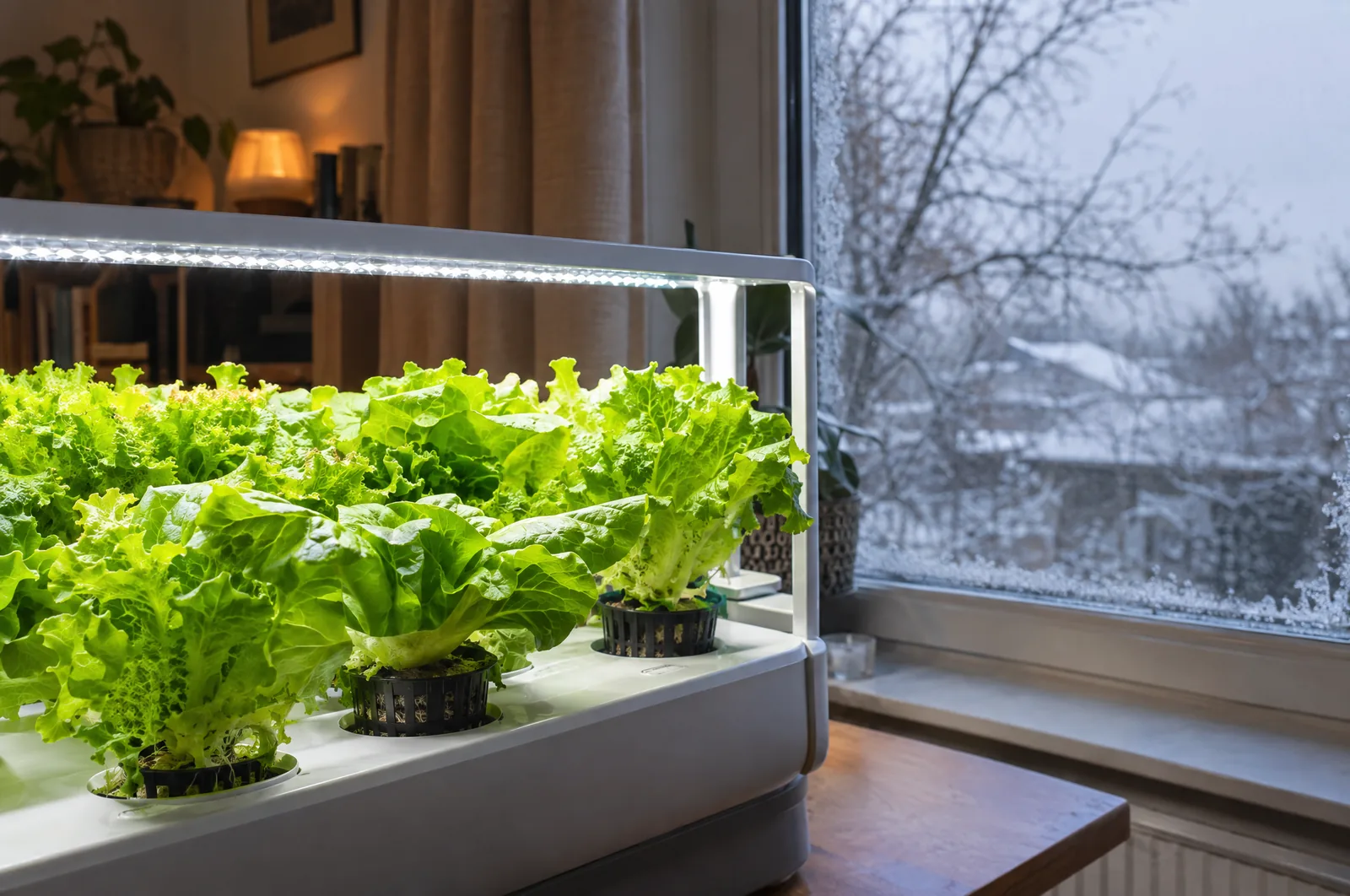
Winter should be when indoor growing earns its keep. Nothing is coming out of the garden, supermarket herbs are at their worst, and you have a system sitting indoors where it is warm. In practice winter is when most home setups quietly stop producing, and the owner concludes they have done something wrong. Usually they have not. There is a measurable gap between what winter light provides and what a lettuce needs, and almost nobody tells beginners how large it is.
The gap, in actual numbers
Plants do not care about hours of light or about how bright a room looks to you. They care about the total quantity of usable light they receive in a day, which has a name and a unit: daily light integral, measured in moles per square metre per day.
Lettuce wants somewhere around 15 to 20 of those a day. Published greenhouse figures put northern winter at an average of 1 to 5, and a greenhouse structure itself cuts the outside figure roughly in half before the plant sees any of it.
Read that again, because it is the whole article. Your crop wants fifteen. Winter is offering somewhere between one and five, through glass that takes a further cut. That is not a slightly dimmer version of summer. It is a different order of magnitude, and it is why a windowsill that grew basil beautifully in July produces pale stringy disappointment in January.
The useful rule of thumb attached to this is roughly linear: a one percent reduction in daily light integral costs about one percent of yield. Halve the light and you have halved the crop, not delayed it.
Working out what you need to add
This is the part that turns a vague worry into a decision, and it needs one piece of jargon. Light intensity at the plant is measured in micromoles per square metre per second, usually written PPFD. Many grow light listings quote it, and cheap meters and phone apps give an approximation.
Turning intensity into a daily total is simple arithmetic. Multiply the PPFD by 3,600 seconds, multiply by the hours your light is on, and divide by a million.
| PPFD | 12 h | 16 h |
|---|---|---|
| 100 | 4.3 | 5.8 |
| 150 | 6.5 | 8.6 |
| 200 | 8.6 | 11.5 |
| 250 | 10.8 | 14.4 |
| 300 | 13.0 | 17.3 |
Daily light integral in moles per square metre per day, for a given intensity at the plant and a given number of hours. Lettuce wants roughly 15 to 20, which is the bottom right corner of this table.
That table is quietly brutal about cheap lighting. A small lamp delivering 100 at the canopy, run for twelve hours, gives you about 4.3, which is winter daylight with extra steps. To reach the lettuce target from scratch indoors you need something closer to 250 to 300 at the plant, running sixteen hours. Intensity and duration trade against each other, so a dimmer light run longer can reach the same total, which is usually the cheaper way to close a gap.
Our lighting guide covers choosing and positioning a light, and the running cost calculator will tell you what those sixteen hours cost at your electricity rate before you commit to them.
Seedlings feel it first
If something in your system is going to fail in winter, it will be the youngest plants, and the published figures on this are striking.
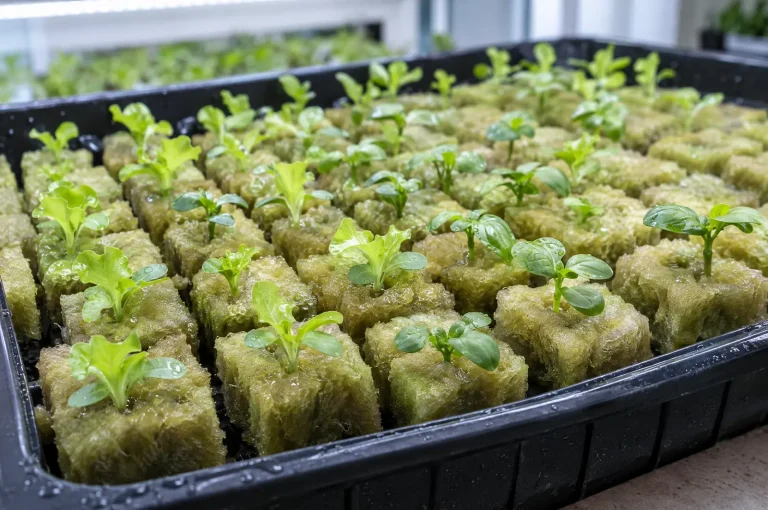
Extension guidance for leafy green seedlings uses a high daily light integral deliberately in the first eleven days. Drop that total by half and the same seedlings take twenty two days instead of eleven. The crop is not merely slower, it has doubled its most vulnerable stage, during which it is also more prone to the damping off and stretching covered in the seed starting article.
The practical answer is to give seedlings the brightest spot you have, even at the expense of the mature plants. A grown lettuce under slightly thin light is merely slow. A seedling under thin light is being permanently shaped.
Cold is its own hazard
Everything written about hydroponic temperature warns about heat. Warm water holds less oxygen, warm water invites root rot, warm rooms bolt lettuce. All true, and all summer problems. The cold side gets almost no coverage, and it is not benign.
| What | Below | Result |
|---|---|---|
| Lettuce seed | 61F | Slow |
| Basil | 50F | Damage |
| Root zone | 68F | Stalls |
| Solution | Freezing | Root loss |
The cold ends of figures quoted elsewhere on this site. Approximate thresholds rather than cliffs.
Some specifics behind that. Lettuce seed that germinates in about 21 days at 72F takes around 40 days at 61F, so a cold propagator does not slightly delay a sowing, it nearly doubles it. Basil is damaged below about 50F, which is why it is the first thing to look sorry for itself in a cold room. And the extension alert behind our root rot article records a Connecticut grower who found ice crystals in the recirculation tanks one winter and had root damage across the whole growing area within days.
That last case is the one worth remembering, because it is the exact inverse of the warning everyone gives. Cold water damages roots directly, and it does it quickly.
Where the cold actually gets in
A room at a comfortable temperature can still have a reservoir several degrees colder than the air, for three reasons that are easy to miss.
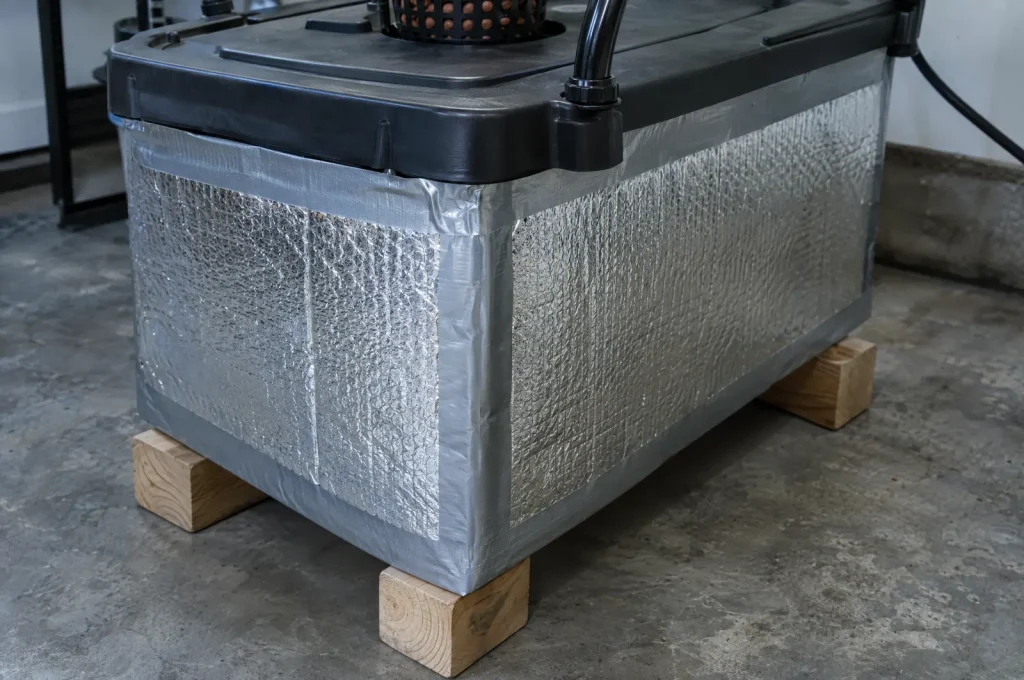
- The floor. A tank sitting directly on concrete in a garage or a utility room is in contact with the coldest surface in the building. Two lengths of timber under it break that contact and cost nothing.
- The window. The bright spot you chose in summer is a cold spot in winter, and glass radiates heat away all night. A plant pressed against the pane is in a different climate from the one in the middle of the room.
- The water itself. A body of water changes temperature slowly, which cuts both ways. It resists warming up during the day and then holds the night time cold well into the morning.
Affiliate disclosure: some links below are affiliate links. We may earn a commission if you buy through one, at no extra cost to you. As an Amazon Associate I earn from qualifying purchases. Full disclosure.
The fixes are unglamorous. Lift the reservoir off the floor, wrap it, move the system away from the glass by even a foot, and if the room genuinely drops overnight, an aquarium heater in the tank is a cheap and well understood solution, and also mains power in a tank of water, so read what we say about electricity beside an open tank before the first one goes in. The same reasoning as the NFT page gives for a larger stock tank applies here, which is that volume is thermal stability.
The condensation problem
Winter introduces one problem that summer does not, which is that the house is sealed and the air is still.
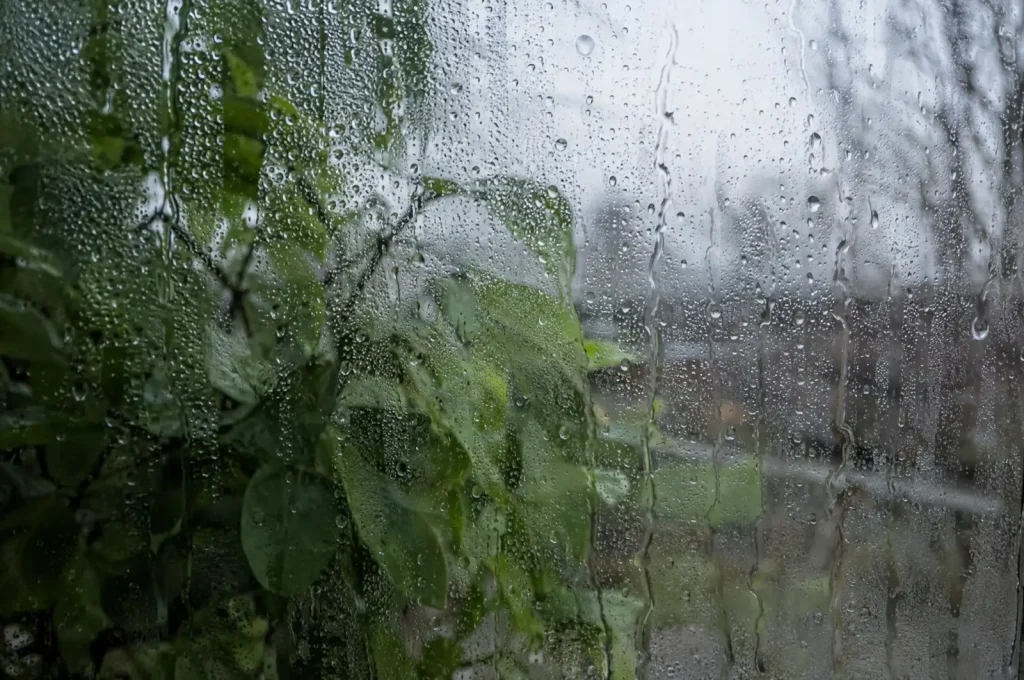
An open reservoir and a tray of plants put a surprising amount of moisture into a closed room, and that moisture condenses on the coldest surface available, which is the window your plants are next to. High humidity with no air movement is the condition behind downy mildew sporulating and behind damping off in seed trays, both covered elsewhere on this site. Winter supplies both halves at once.
A small fan is the entire answer, and it is the same fan recommended for three other problems on this site. Running it is more important in winter than in summer, because in summer you probably had a window open and did not realise it was doing the job. There is a fourth problem it quietly deals with, which is that a sealed room with a crop in it runs short of carbon dioxide while the light is on.
Grow the things that suit the season
The cheapest way to close a light gap is to stop fighting it. Some crops are far better suited to a dim cold season than others, and choosing well does more than another lamp would.
Microgreens are the winter crop, and it is not close. They finish in about ten days, they are harvested at the seedling stage so they never need the light budget a mature plant does, and most of what powers them came packed inside the seed rather than from your lamp. If you are going to grow one thing between November and February, grow these.
After that, the cool season leafy crops. Lettuce, spinach, chard, kale and mustard all prefer the temperatures you are worried about, and all of them hold far longer without bolting than they would in July. Basil is the one to be realistic about, because it wants both warmth and strong light, and winter is short of both. A basil plant will survive the season in a warm bright spot, but it will not be the plant it was in August.
What winter is genuinely good for
Having spent most of this article on the difficulties, the season has real advantages and they are the mirror of the summer problems.
- Nothing bolts. The heat and long days that end a lettuce crop early are simply absent, so plants hold in good condition far longer and you can pick from the same plant for weeks.
- Root rot is much less likely. The warm stagnant water that the organisms need is the one thing winter will not give them.
- Fewer pests. Fungus gnats breed far more slowly at lower temperatures, and nothing is flying in from outside.
- Slower is less work. Solution lasts longer between changes because the plants are drinking less, and the whole system needs less attention per week.
Which leaves one honest conclusion. Winter hydroponics is a lighting problem wearing a temperature costume. Solve the light properly, keep the tank off the cold floor, run a fan, and the season is arguably easier to grow in than high summer.
Where this comes from
The daily light integral target of roughly 15 to 20 for lettuce, the winter greenhouse average of 1 to 5, the roughly one for one relationship between light and yield, and the seedling figures of eleven days at a high daily total against twenty two days at half of it are from Purdue University Extension’s publications on daily light integral and supplemental lighting, Michigan State University, and the e-GRO alert on low light in leafy greens. The conversion from intensity to daily total is standard arithmetic and the table was calculated with it rather than measured. The cold thresholds are the cold ends of figures already sourced on this site, with the ice crystals case coming from the UConn e-GRO alert cited in our root rot article. The seedling publication is around a decade old, so treat its figures as indicative.
Found this useful? Tell Google to show you more of it.
Add to Preferred Sources