Hydroponics Versus Soil, and the One Thing You Gave Up
Every other article on this site is about how to make hydroponics work. This one is about what you gave up to get there, because the honest answer is that you gave up a great deal and most beginner material never mentions it. Nearly every problem covered elsewhere on this site traces back to a single thing you removed, and once you see it the whole method makes more sense. If you are at the very beginning, the getting started section is the place to pick up from.
Soil is a buffer
People think of soil as something that holds the plant up and contains food. It does both, but neither is the important part. The important part is that soil is slow.
Add fertiliser to soil and it does not all become available at once, because the soil holds some of it on clay and organic matter and releases it gradually. Water a pot heavily and the excess drains while the rest is held. Pour something acidic on it and the pH barely shifts, because soil resists that change. Leave it in the sun and the temperature at root level moves slowly. Every one of those is a buffer, and every one of them absorbs a mistake before it reaches the plant.
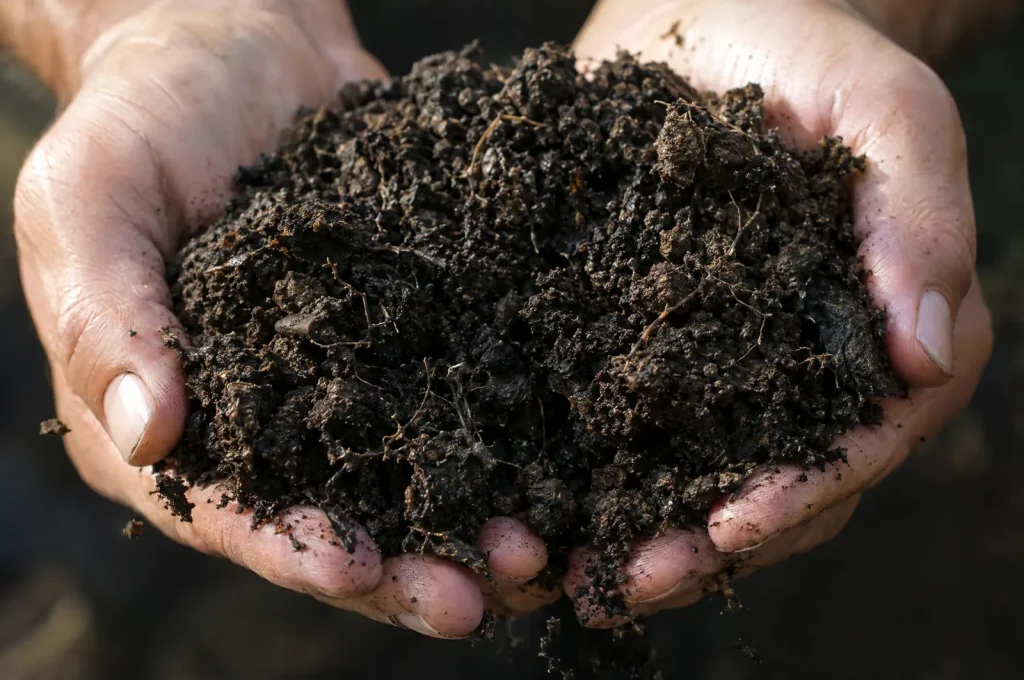
In water, there is no buffer at all. A mistake arrives at the roots immediately and at full strength.
| Job | In soil | In water |
|---|---|---|
| pH | Buffered | You adjust |
| Nutrients | Stored | You mix |
| Water | Held | You top up |
| Warmth | Evened | You watch |
| Oxygen | In the pores | You pump |
The right hand column is the job description you accepted. It is not a long list, which is why this works at all.
That table is really a reading list for this site. The pH guide exists because soil is not doing it. The reservoir article exists because nothing is storing nutrients for you. Root rot is what happens when the oxygen job is not done. None of those articles would need writing for a tomato in a pot of compost.
What that costs you day to day
The practical version is that hydroponics is less forgiving of inattention, and specifically of inattention at the wrong moment.
A potted plant that you ignore for ten days is thirsty. A hydroponic system you ignore for ten days may have drifted its pH out of range, concentrated its salts, warmed up enough to invite root rot, or run its reservoir down to the point where the pump is sucking air. The failure is faster and it compounds, because the conditions that cause one problem cause the others.
This is also the honest answer to whether you can go away. A pot of soil copes with a week. Most hydroponic systems do not, unless they are large relative to the plants or they are Kratky, which is the one design here built around being left alone. If you travel often, that is a real argument for which system you build rather than a detail.
It stops when the power does
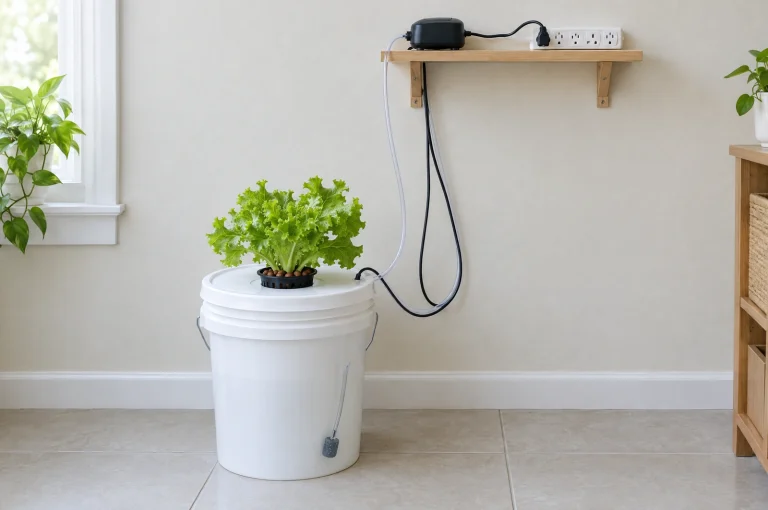
Soil does not need electricity. Most hydroponic systems do, continuously, and the consequences of losing it are not evenly distributed.
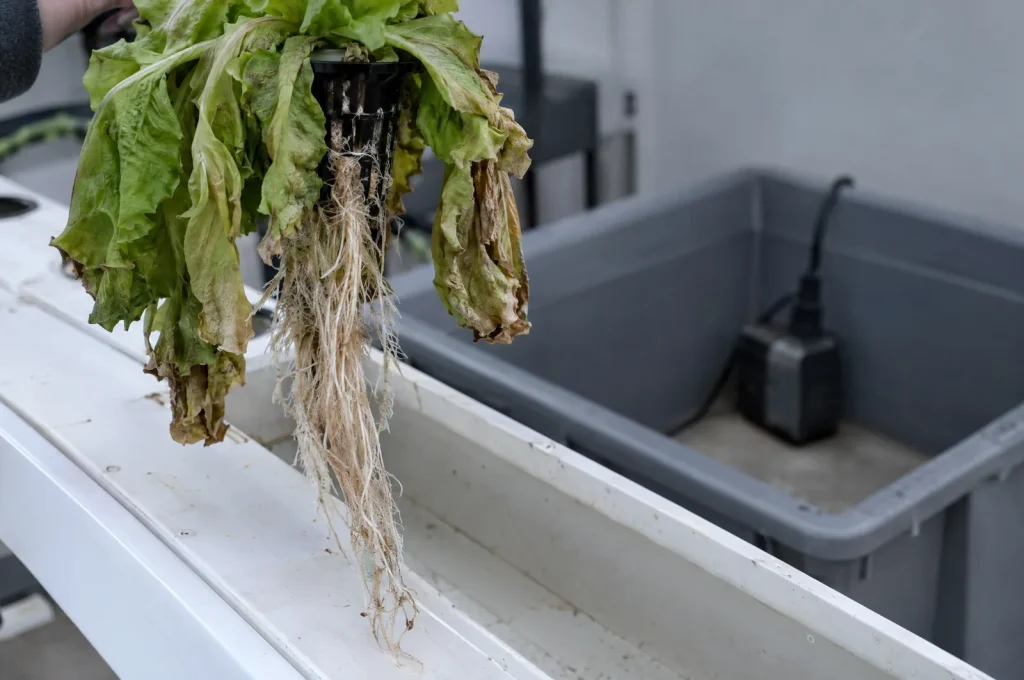
In deep water culture the solution is still there when the air stone stops, so you have hours before oxygen becomes the problem. In NFT there is only a film of water, and Oregon State’s guidance is blunt that pump or power failure causes immediate wilting. There is no reserve to draw on. A summer afternoon power cut can cost you the crop before you know it happened.
Nothing about this makes hydroponics a bad idea. It does mean that where you site a system, and whether the socket it depends on is one somebody might switch off, are decisions rather than afterthoughts.
Disease travels differently
A row of plants in soil are neighbours. A row of plants in a recirculating system share a bloodstream.
The organisms behind root rot release spores that swim, so a shared reservoir or a shared channel exposes every plant on it at once. In soil the same pathogen moves slowly from plant to plant, and the one that is struggling can be pulled out before the others notice. In water it has already arrived.
Against that, you also removed most of the soil borne problems in the first place, along with weeds entirely and a good deal of the pest pressure. It is a genuine trade rather than a straight loss. What changes is the speed and the scale of a failure when one happens.
Things you simply cannot grow well
This is the limitation people discover last, usually after buying seed.
- Root vegetables. Carrots, potatoes, beetroot and parsnips need depth and something to push against, with radish and beet the two exceptions worth knowing about. They can be done in deep media beds, but at that point you have rebuilt a container of soil with extra steps.
- Anything large and long lived. Sweetcorn, squash, fruit bushes, trees. The plant outgrows the vessel and the root mass becomes the problem, which is the same reason tomatoes block an NFT channel.
- Grains and field crops. Technically possible, economically absurd at any scale a home grower would attempt.
What is left is leafy greens, herbs, and a shortlist of fruiting crops in the right system. That is not a small category, and the site’s beginner crop list is built from it, but it is narrower than the enthusiast coverage implies.
The running cost nobody adds up
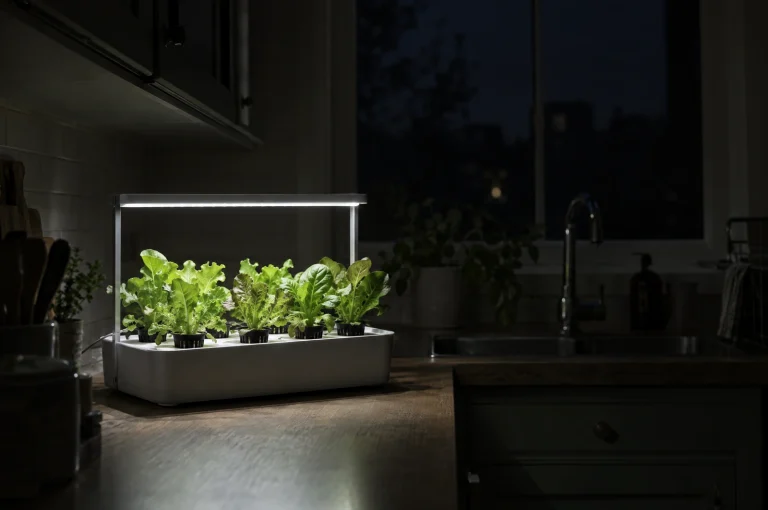
A pot of soil on a windowsill costs nothing to run. A hydroponic system runs a pump continuously, and if it is indoors it very likely runs a light for twelve to sixteen hours a day as well.
The pump is usually trivial. The light is not, and it is the part people leave out when they compare the cost of home grown lettuce against the shop. Our grow light running cost calculator exists to answer that properly rather than by guessing, and it is worth running the numbers for your own electricity rate before deciding the economics work.
On a windowsill with no supplementary light the sum looks completely different, which is the honest case for starting small and unlit rather than buying a lamp on day one.
And what it costs to start
Soil has an unfair advantage at the beginning, which is that a pot, a bag of compost and a packet of seed is a complete system for very little money, and you probably own two of the three already.
Hydroponics needs a vessel, a medium, net pots, nutrients, usually a pump and an air stone, and a pH kit before anything grows. None of it is individually expensive and all of it adds up, which is why our breakdown of what a six plant system actually costs exists in the first place. The budget gear list is the same point from the other direction.
Two things make that fairer than it first looks. Most of the cost is reusable, so it is a one off against years of crops rather than a per season expense the way compost is. And the nutrients, which feel like the recurring cost, are not: a bottle lasts a very long time at the dilutions involved.
Still, if the question is purely which produces a salad for less money this month, soil wins and it is not close. The case for hydroponics has to be made on speed, space, water or interest, not on beating the price of a supermarket lettuce, and anyone selling it to you on that last basis is not being straight with you.
What it is genuinely better at
Having spent an article on the debit side, the credit side is real and some of it is not close.
- Water. A recirculating system reuses what the plant does not drink. Compared with watering a garden bed it is not a contest.
- Speed. Roots that never have to search for water or nutrients put the effort into leaves instead, and leafy crops are noticeably faster.
- Space. Plants sit closer together because the roots are not competing for the same volume of soil.
- Cleanliness. No soil on the leaves, which for a salad crop you eat raw is worth more than it sounds.
- No weeding. None, ever.
- Control. The same absence of buffering that punishes neglect also means a correction works immediately rather than over weeks.
On taste and nutrition, which is where these comparisons usually end up, the honest position is that the published evidence is mixed and depends heavily on crop, variety and how each side was grown. We have since taken both halves of that at length, on whether it is as nutritious and on whether it tastes different, and the second of those turns out to have a better answer than it used to. Anyone telling you confidently that one is better is going further than the research does.
So is it worth it
For leafy greens and herbs, in a small space, for somebody who will look at it every couple of days, yes, comfortably. That describes most of the people this site is written for.
For root vegetables, for a large productive vegetable patch, for someone who travels for weeks at a time, or for anyone hoping to save money on groceries by buying a grow light first, soil is still the better answer and there is no shame in that conclusion.
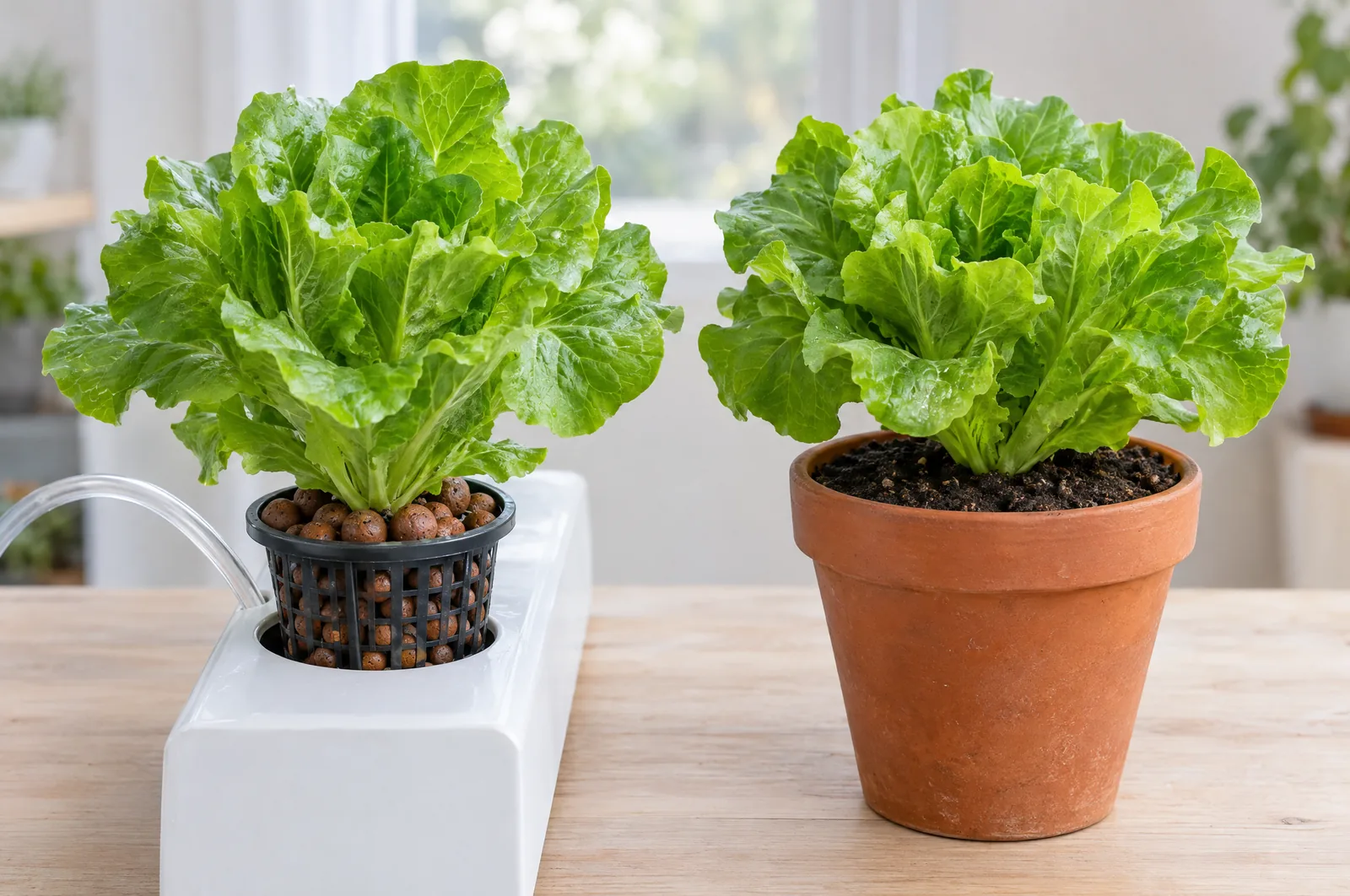
The useful way to think about it is that you have not found a better way to grow plants. You have taken over a job that soil was doing for free, in exchange for doing it faster and in less space. Whether that trade is worth making depends entirely on whether you want the job, and the cheapest way to find out is a jar on a windowsill rather than a system you have to commit to.
Where this comes from
The point that pump or power failure in a nutrient film system causes immediate wilting is from Oregon State University Extension’s publication on nutrient film technique, cited in full on our NFT page. The behaviour of the root rot organisms, including the swimming spores that make a shared reservoir a shared risk, is from the e-GRO extension alerts cited in our root rot article. The remainder of this article is a summary of soil science and of the material already sourced elsewhere on this site rather than new findings, and the section on taste and nutrition deliberately avoids a conclusion because the published work does not support a confident one.
Found this useful? Tell Google to show you more of it.
Add to Preferred Sources