How Much Lettuce You Actually Get, and What It Costs
There is an article on this site that works out exactly what a six plant system costs to build, down to the silicone sealant and the second trip to the hardware shop. It has never said what you get back. That is half an equation, and it is the half that is easy to find, because every build guide on the internet quotes a parts list and almost none of them quotes a harvest. Here is the other half, with a number from a research greenhouse and an honest adjustment for the fact that you are not one.
What a commercial crop actually produces
Start with the best documented version of the thing, which is Cornell’s controlled environment lettuce programme. Their handbook is unusually direct about its target.
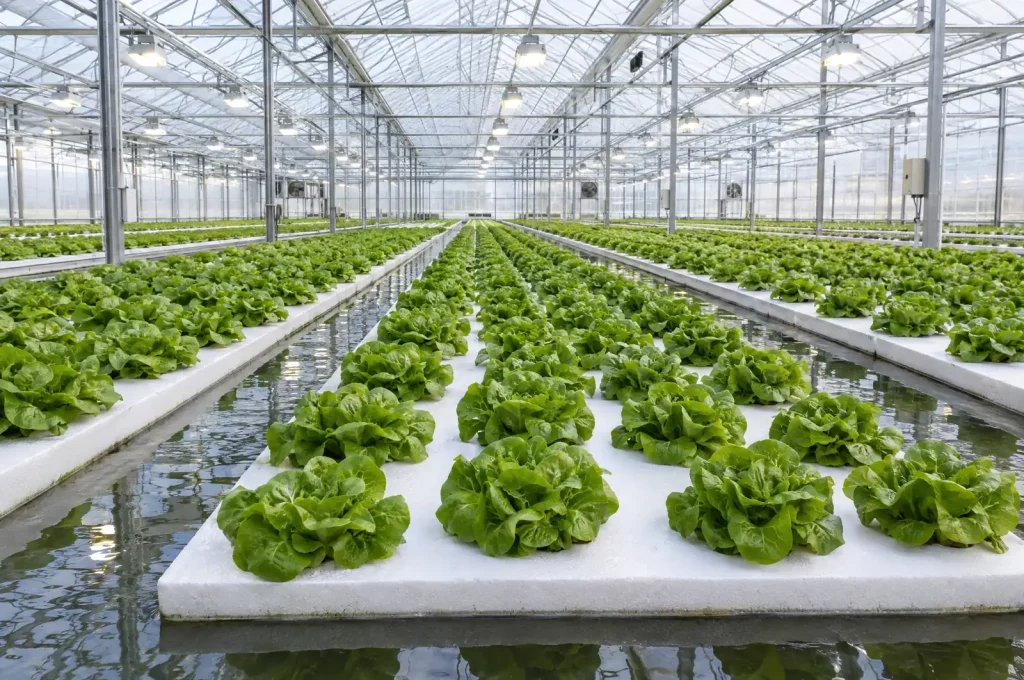
It is written, in its own words, toward a daily production of five ounce heads of leaf lettuce, which is 150 grams. The cycle to get there is 35 days from seed: eleven days in a germination area, then transplanting into the greenhouse ponds for the remaining twenty four. Plants start at about 97 per square metre and are re-spaced down to about 38 per square metre at day 21.
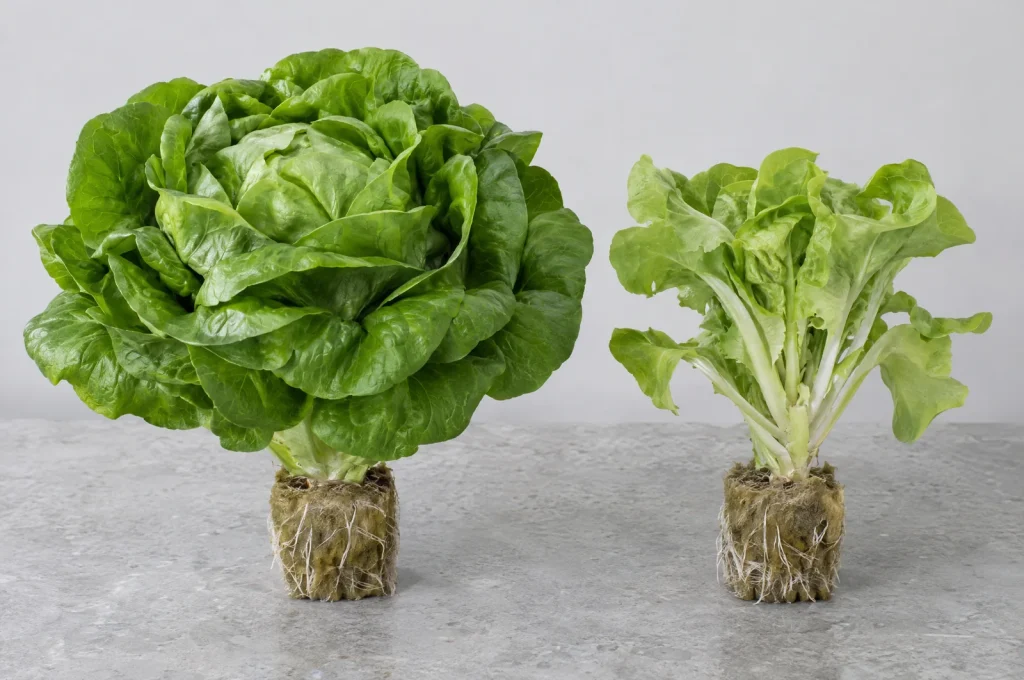
One of the trials reported in the same handbook came in heavier, at an average shoot fresh mass of 190 grams at 35 days after seeding. So somewhere between 150 and 190 grams in five weeks is what good conditions and a suitable cultivar produce. That is the ceiling to measure yourself against, and it is a useful ceiling precisely because it was achieved by people controlling everything.
Most of what you grew is water
Before going further it is worth sitting with one figure from that trial, because it reframes the whole exercise.
The dry matter percentage was 3.7. A 190 gram head of lettuce is about seven grams of actual plant and the rest is water. Five weeks of light, nutrients and attention produce roughly a tablespoon of dry material.
That is not a reason to be disheartened, and it is true of every lettuce ever grown in soil as well. It is a reason to be careful about what you are counting. It also explains something our article on whether hydroponic food is as nutritious spends a section on, which is that comparing crops by fresh weight is partly comparing how much water they are holding.
Why yours will be smaller, and roughly by how much
Cornell hit 150 grams with a daily light integral of 17 moles per square metre per day. That number is the hinge of this whole article, because it is the one input a home grower almost never matches.
Our article on growing through winter puts the home figures beside it. Northern winter daylight averages somewhere between 1 and 5 of those moles before a window takes its cut. A small panel delivering 100 micromoles per square metre per second at the canopy, run for twelve hours, works out at about 4.3. It also gives the rule that turns that gap into an expectation: the relationship is roughly linear, so a given reduction in daily light costs about the same proportion of yield.
| Light a day | Head at day 35 |
|---|---|
| 17 mol | About 150 g |
| 8.5 mol | About 75 g |
| 4.3 mol | About 38 g |
Our arithmetic, not a measurement. It applies the roughly linear light to yield relationship to Cornell’s figure, and it ignores everything else that could be limiting, so treat it as the shape rather than a prediction.
That bottom row is the honest answer to why a windowsill lettuce in January looks like a garnish. It is not a mistake you made. It is the arithmetic of the light available, and no amount of nutrient will substitute, which is the argument the lighting guide makes from the other direction.
One caveat the handbook supplies itself, and it is a good one. Seventeen was the integral that worked best for the particular cultivar they used, and for some cultivars fifteen is the maximum before tipburn sets in. More light is not an unlimited lever.
What that makes a head cost you
Now the two halves can meet, and the site already holds most of the numbers so this is assembly rather than new arithmetic.
The build is a one off and is set out in the full parts breakdown. Nutrients are close to irrelevant per head, since our nutrient guide works out that filling a five gallon reservoir costs in the region of sixty cents. Seed is pennies.
Electricity is the entire question, and it is the one input that scales with how serious you got. The running cost calculator takes your own rate and your own cycle length and gives a cost per harvest, which is a better number than anything we could print here, because the spread between the cheapest and most expensive electricity in the United States is roughly fourfold.
The shape of the answer, though, is not really in doubt. A passive jar on a sunny windowsill draws nothing at all, so its lettuce costs about sixty cents of nutrient spread across several heads plus the seed. A tent with a panel, a fan and a pump running sixteen hours a day is in a different category entirely, and that same calculator page puts a modest setup at well over a hundred dollars a year before you count the light itself.
One head is the wrong unit for most crops
Everything above treats a plant as producing one thing once, because that is what Cornell’s figure describes. A commercial crop is cut whole at day 35 and the pond is replanted, which is the right model for a business and the wrong one for a kitchen.
Most of what this site recommends does not work that way. A loose leaf lettuce picked from the outside, basil pinched above a leaf pair, and most of the herbs keep producing for weeks from the same root system, which is the cut and come again habit rather than a single harvest.
That changes the denominator rather than the yield. The plant is still limited by the light it receives, so it does not produce more total material for being picked repeatedly. What changes is that the same build cost, the same reservoir and the same slot on the windowsill are amortised across many pickings over a couple of months instead of one cut at day 35. For anybody weighing the economics rather than running a farm, that is the more favourable arithmetic and it is the one a commercial figure will never show you.
It cuts the other way too, and worth saying so. A plant held for repeated picking is occupying the system for longer, so the succession argument for starting the next one before you need it applies more rather than less. And a crop kept past its moment goes bitter and bolts, at which point the extra weeks produced nothing anybody wanted to eat.
So does it pay
Two honest answers, because there are genuinely two situations and conflating them is how people end up disappointed.
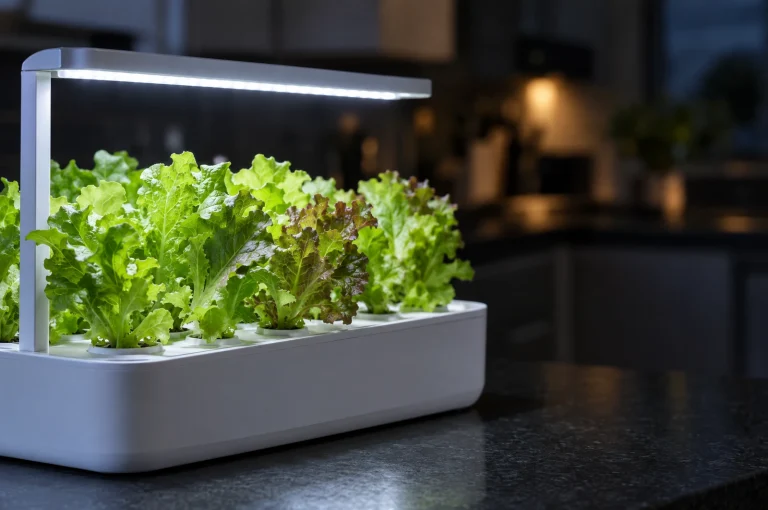
On a windowsill, comfortably yes. The inputs round to nothing, the output is real food, and a cut and come again lettuce picked at the right moment beats a bagged equivalent that was harvested days ago, which is the finding our nutrition article lands on.
Under a grow light, on money alone, almost certainly not. A lit setup is paying mains electricity to replace sunlight that is free outdoors, in order to produce a crop that is mostly water and that a supermarket sells at a price supported by field scale production. Nothing in the arithmetic above rescues that, and anybody telling you a tent pays for itself in lettuce is not showing you their numbers.
What a lit setup does buy is the things money is a poor measure of. Fresh leaves in February, varieties no shop stocks, no slugs, no washing, and a crop that is twenty minutes old. Our article on hydroponics against soil reaches the same conclusion by a different route. The case is real. It is just not a financial one.
Getting your own number
Everything above is a national average wearing a disguise. Your light, your rate and your cultivar are what actually decide it, and one season of measuring beats any figure on this page.
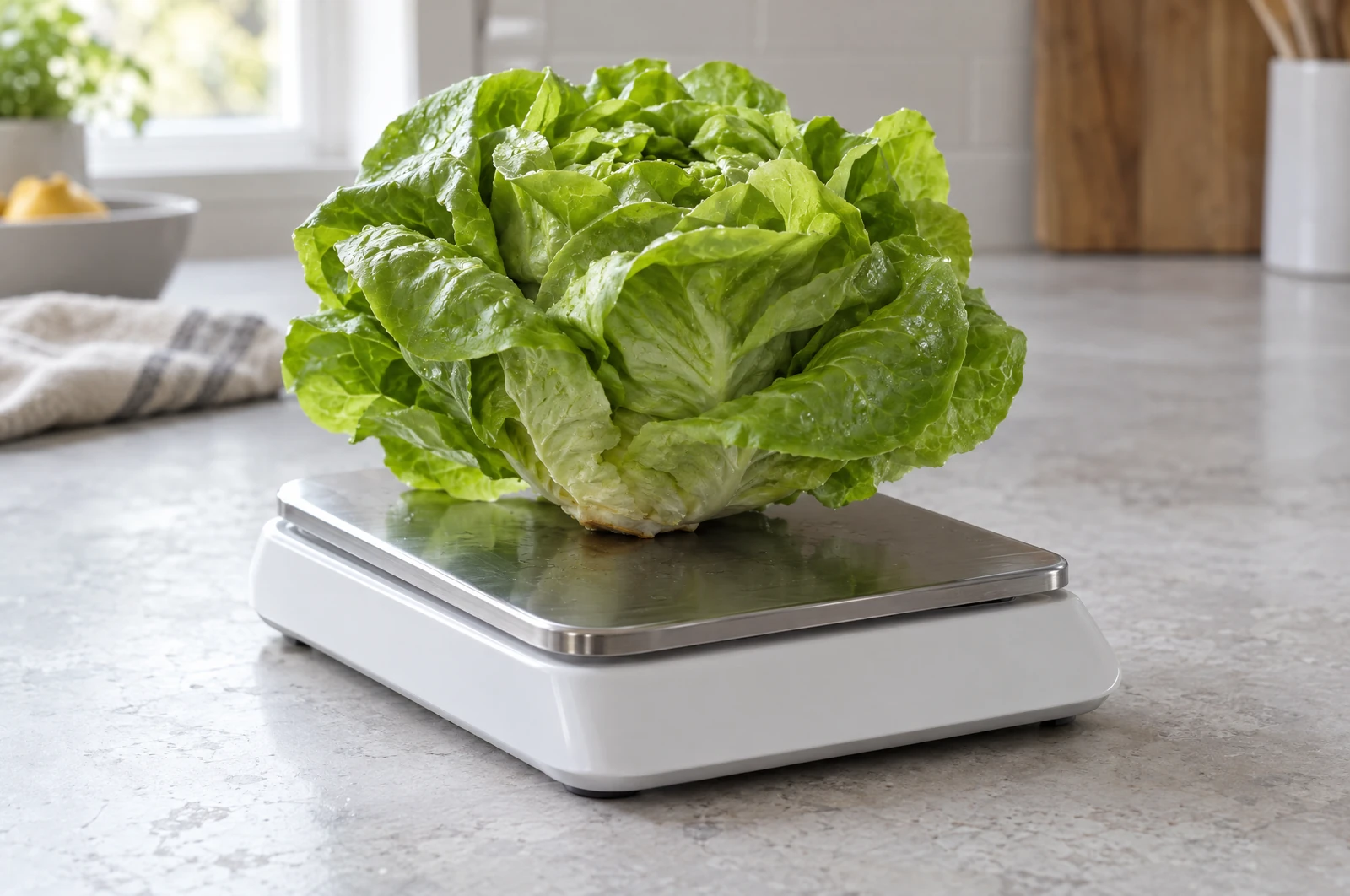
- Weigh the harvest. Kitchen scales, every head, written down. This is the whole experiment and almost nobody does it.
- Count the days from sowing, not from transplanting, so your figure is comparable to the 35 above. Our harvest timing article covers picking the right moment rather than the convenient one.
- Put the running cost in from the calculator, using your own bill rather than a state average.
- Do it across a winter and a summer. A single cycle tells you about one season, and the seasonal swing is the largest thing in the entire calculation.
After four or five cycles you will have something nobody can write for you, which is what a head of lettuce costs in your kitchen. That is the number worth having, and it is the reason this page gives you a method rather than a verdict.
Where this comes from
The 150 gram target, the five ounce description, the 35 day cycle split into eleven days of germination and twenty four in the greenhouse, the re-spacing from about 97 to about 38 plants per square metre, the daily light integral of 17 moles per square metre per day, the caveat that seventeen suited the particular cultivar they used and that fifteen is the tipburn ceiling for some others, and the trial that returned an average shoot fresh mass of 190 grams at 3.7 percent dry matter, are all from the Cornell Controlled Environment Agriculture Lettuce Handbook, published by the Cornell University CEA Program.
The home daily light integral figures, the cheap panel worked example and the roughly linear relationship between light and yield are from our own winter article, which sources them in turn. The electricity figures belong to the running cost calculator and the nutrient arithmetic to the nutrient guide, and both are better read there than summarised here.
The table of expected head weights is ours and is arithmetic rather than measurement. It takes Cornell’s figure and scales it by light alone, which assumes light is the only thing limiting your crop. If your pH is wrong or your reservoir is warm then it is not, and the table will flatter you.
Found this useful? Tell Google to show you more of it.
Add to Preferred Sources