Where the Old Reservoir Goes, and the One Drain to Avoid
Every fortnight our own article on changing the reservoir tells you to tip the old solution out and mix a fresh one. It does not say where to tip it, and until now neither did anything else here. The gap is not an oversight on our part alone. Nobody writes guidance at this volume, the pages that do answer the question contradict each other flatly, and the one rule that genuinely matters has nothing to do with how much fertiliser is in your bucket.
What you are actually holding
Worth doing the sum once, because the answer is smaller than the worry attached to it.
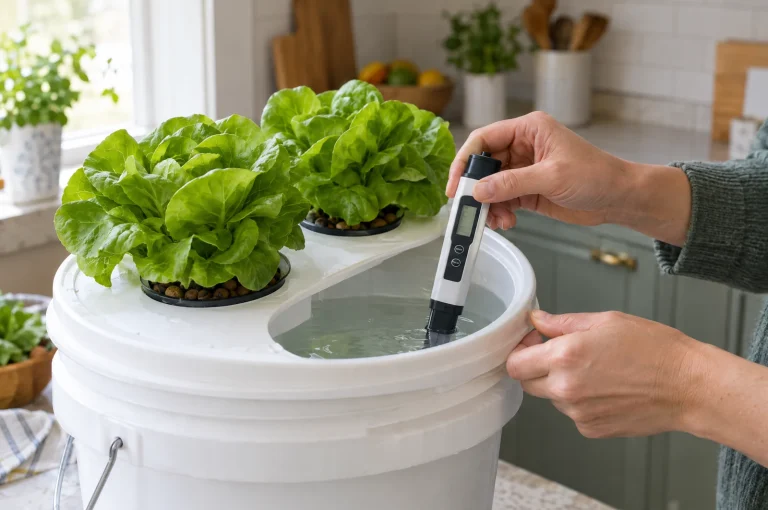
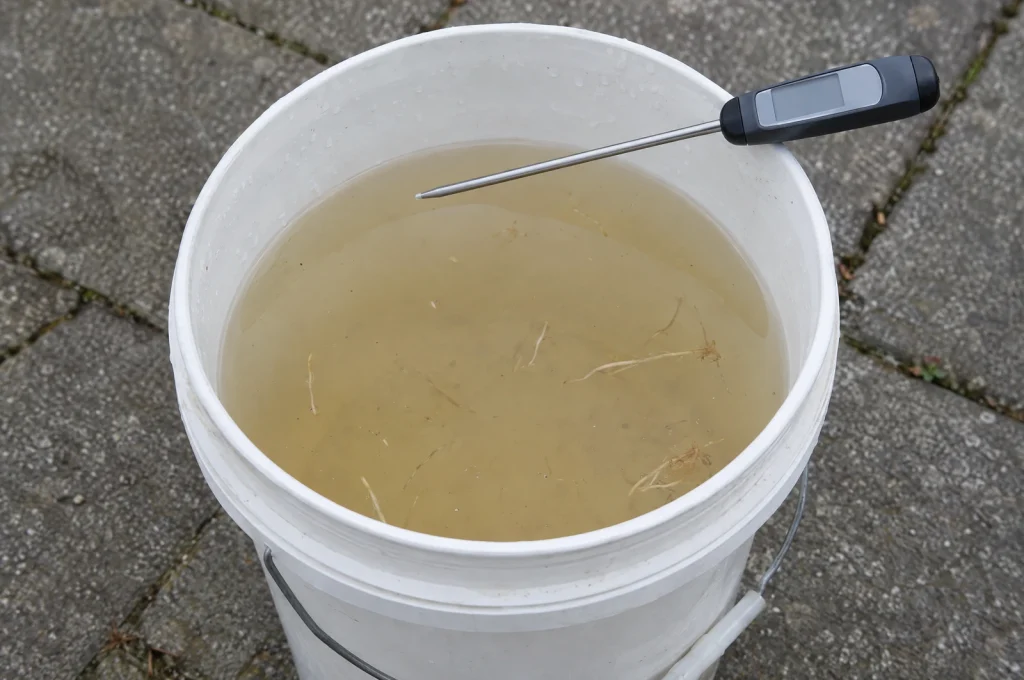
A five gallon bucket run at four gallons holds about fifteen litres. Say it is sitting at EC 1.6, which is a sensible leafy green reading, and your tap water contributes about 0.3 of that before you add anything, a step the PPM and EC chart insists on. That leaves roughly 1.3 from the fertiliser. On a meter using the 500 scale that is about 650 milligrams of dissolved salts in every litre, so fifteen litres carries something near ten grams in total.
Ten grams is about two teaspoons. That is what you are deciding where to put: a bucket of water with two teaspoons of mineral fertiliser dissolved in it, most of which the plant has already eaten the useful parts out of. Treat the number as the shape of the thing rather than a measurement, since the conversion scale your meter uses moves it and the chart explains why.
It is also not waste in the sense the word usually carries. Those two teaspoons are the same set of elements you bought deliberately, minus whatever the crop took out. It is dilute fertiliser that has gone lopsided, which is the whole argument of the reservoir article, and lopsided for a lettuce is not lopsided for a shrub.
The garden is the easy answer
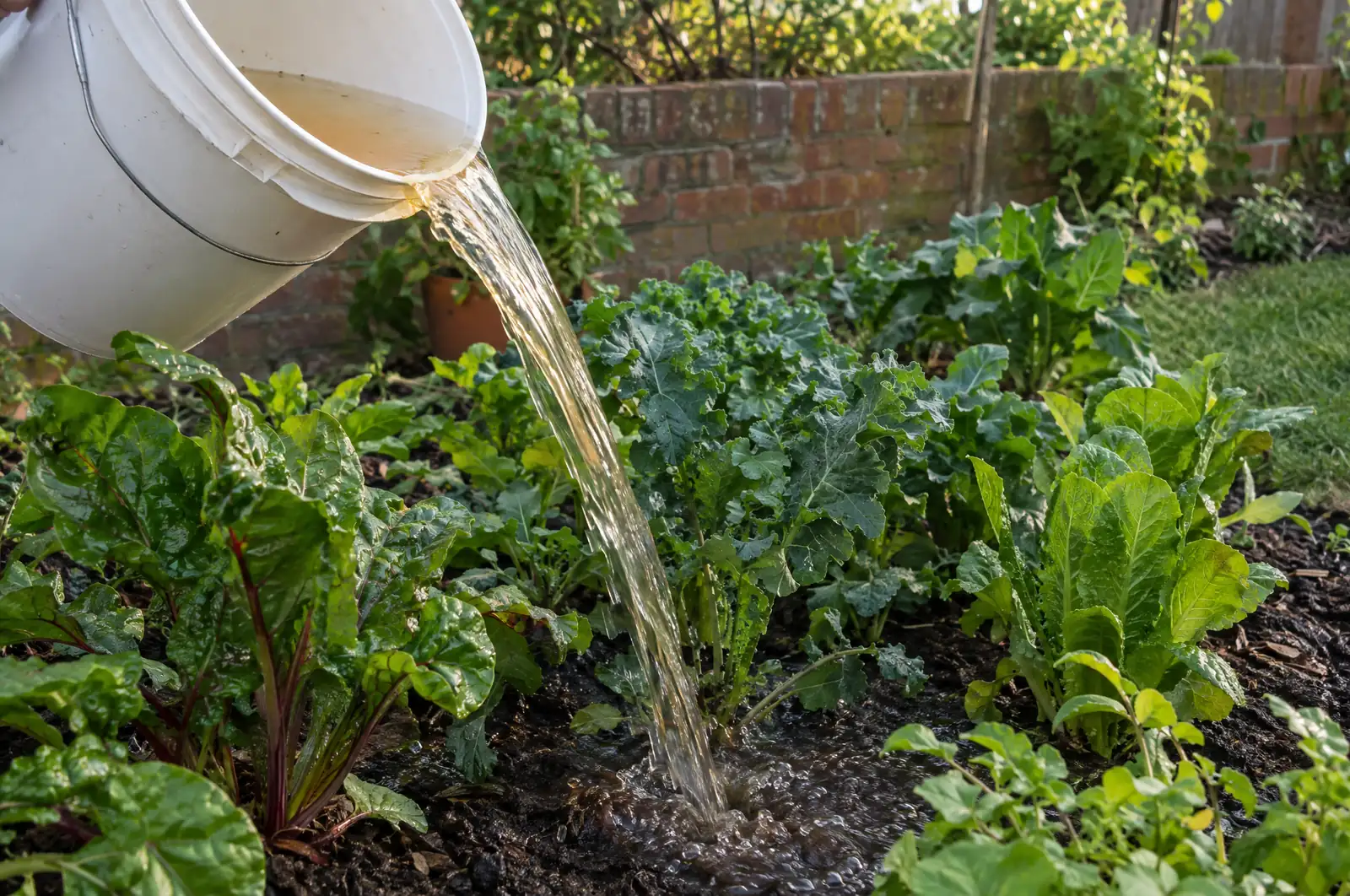
If you have any open ground at all, that is where it goes, and the reasoning is the same one the soil article is built on. Soil is a buffer. It holds some of what you pour on, releases it slowly, and rain moves the rest down past the roots over time. The thing that makes soil a nuisance to grow in is exactly what makes it a forgiving place to put a bucket of weak feed.
Two small cautions and neither is dramatic. Spread it rather than emptying the whole bucket onto one square foot, because the point is dilution and a single spot gets none of it. And keep it off seedlings and anything newly planted, for the same reason that a seedling going into full strength solution is being asked to cope with one more thing it did not need.
Houseplants look right and are not
This is the answer most people reach for, and it is the one with a documented failure mode behind it.
A pot is not soil in the sense that matters here. It is a closed container with a saucer under it, so nothing leaches away. Water leaves through the leaves and off the surface, and every mineral it was carrying stays behind. Do that fortnightly for a year and you are not feeding a plant, you are concentrating a solution in a pot.
Maryland Extension lists the causes of high soluble salts in indoor plants as excessive use of fertilisers, frequent applications, and the incorrect use of fertiliser concentrates, which is a fair description of tipping reservoir water into a pot plant. The symptoms it gives are specific: browning or dieback of the leaf tips and margins, reduced growth, lower leaf drop, dead root tips and wilting, with fertiliser salts accumulating on the surface of the media as a white crust, especially where the plant is bottom watered, and visible deposits on the outside of the pot.
None of that makes it forbidden. It makes it something you do occasionally and then undo. The same guidance says a large pot can be flushed by irrigating with clear water, letting it run out of the bottom and repeating over several irrigations with a volume at least that of the pot, and that a small pot whose media has gone high in salts is better off with the media replaced than rescued.
The drain, and the distinction nobody mentions
Here is the part worth taking away even if you forget everything else on this page. There are two kinds of drain outside your house and they are not the same object.
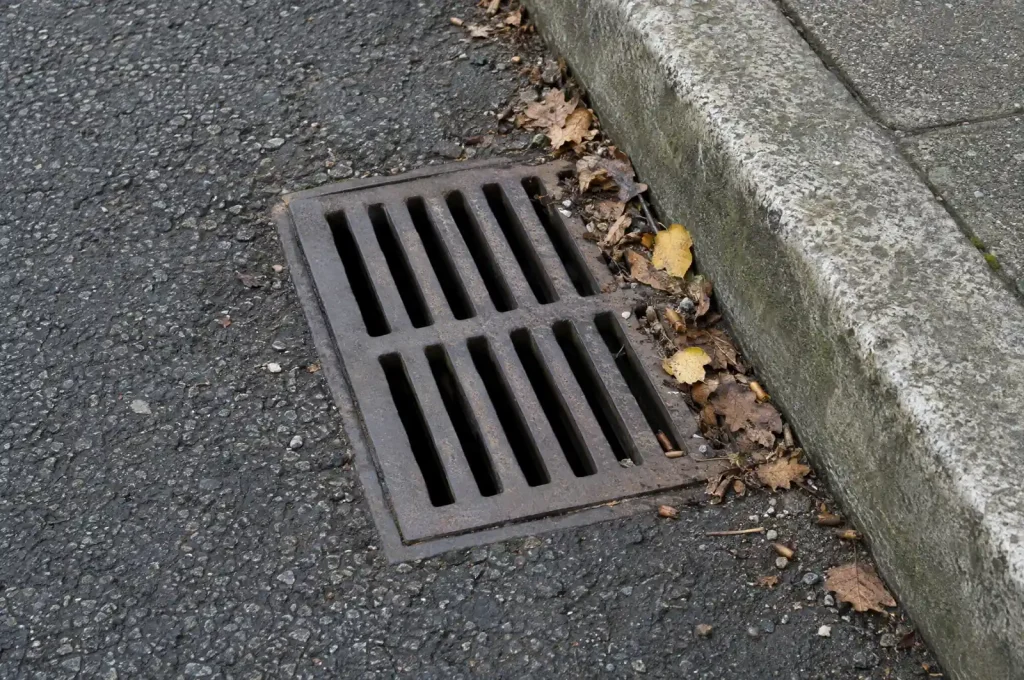
Your kitchen sink goes into the foul sewer, which leads to a treatment works whose entire purpose is to take nitrogen and phosphorus out of water before it is returned to a river. The grid in the street outside does not. Surface water drains carry rain off roads and roofs, and the United States Environmental Protection Agency puts the consequence plainly: because that water flows straight into storm drains, there is no opportunity for soil and plants or a water treatment facility to filter out pollutants. The same page notes that this runoff already carries nitrogen and phosphorus from fertilisers and pet and yard waste.
| Destination | What happens |
|---|---|
| Garden soil | Buffered and leached |
| Pot indoors | Salts stay and build |
| Kitchen sink | Goes to treatment |
| Street drain | Goes to a stream |
The four places a reservoir usually ends up. Only the last one has nothing at all between your bucket and open water.
So the rule is not that the drain is bad. It is that one specific drain is. The sink is a reasonable destination for an occasional bucket of dilute feed. The grid in the road is the only option on the list that delivers your fertiliser to a watercourse with no step in between, and it is the one people reach for because it is nearest to where the bucket already is.
Being honest about the scale
Searching this question turns up a great deal of alarm about nutrient pollution, algal blooms and oxygen starved water, all of which is real and none of which is about you.
The nutrient problem in rivers is agricultural runoff across whole catchments and urban runoff across whole cities. Your contribution is two teaspoons a fortnight. Telling a home grower that their bucket is an environmental hazard is both untrue and counterproductive, because somebody who has worked out that the warning is overblown stops listening to the part that is not.
Put a year on it if the fortnightly figure still feels like something. Twenty six changes at fifteen litres is about four hundred litres of water and somewhere near two hundred and sixty grams of mineral salts, spread across twelve months. That is less fertiliser than a single small box of lawn feed, applied a bucket at a time rather than all at once, and the water itself is water you already paid for and already used.
The storm drain rule survives that honesty, and it does so on pathway rather than on quantity. It is the one destination where nothing stands between what you pour and a stream, and that remains true whether the bucket contains two teaspoons of fertiliser or a litre of engine oil. It is a good habit to hold for its own sake, since the next thing somebody is tempted to pour down it may not be nutrient solution.
Septic tanks, and where the guidance runs out
If your house is on a septic tank rather than mains drainage, the sink stops being the simple answer, because the treatment step is now a biological system in your garden that you own.
We could not find guidance written for this, which is worth saying plainly rather than guessing on your behalf. What we can say is that a septic household almost always has open ground, which makes the first answer on this page available and removes the need to resolve the question at all. Put it on the garden and the tank never sees it.
One further footnote on mains drainage, from the same Environmental Protection Agency page. Some systems combine foul and surface water in one pipe, and during heavy rain those can discharge excess untreated sewage directly to nearby streams and rivers. That is a property of the sewer network rather than of anything you did, and it is not a reason to avoid the sink. It is a reason not to imagine the foul drain is a magic hole either.
Three things not to do with it
- Do not keep it to use later. A drum of old solution in a shed is a worse version of the problem the article on nutrients going off describes, because this one has already been through a crop and carries whatever was living in the tank with it.
- Do not top up instead of changing. The temptation to avoid the disposal question by never emptying the tank is exactly the failure the reservoir article is about, and it costs yield before it costs appearance.
- Do not pour it into the system next door. Moving a lopsided solution from one tank to another does not fix anything, and if the first tank had a root problem you have just given it somewhere new to live. The root rot article covers why that spreads so easily.
Where this comes from
The soluble salts material is from “Fertilizer Toxicity or High Soluble Salts in Indoor Plants”, published by the University of Maryland Extension Home and Garden Information Center and last updated in March 2023. The causes, the symptom list, the white crust and the leaching instruction with a volume at least that of the pot are all quoted from that page.
The storm drain material is from “Sources and Solutions: Stormwater” on the United States Environmental Protection Agency’s nutrient pollution pages, which is also the source for the note about combined systems discharging untreated during heavy rain. The distinction between foul and surface water drains is standard across municipal water authorities, and your own local authority is the place to check how your street is plumbed if you want to be certain.
The arithmetic on what a reservoir contains is ours, worked from an EC reading rather than measured, and the conversion scale caveat on it belongs to the PPM and EC chart. On the central question of whether a home grower should use the drain at all, we found no extension or regulatory guidance written at this volume. What we found instead was retailer advice flatly contradicting itself, one page warning that drain disposal risks fines and another saying any household drain is fine. That disagreement is why this article reasons from the pathway rather than quoting a verdict.
Found this useful? Tell Google to show you more of it.
Add to Preferred Sources