What the Sticky Card Misses, and How to Find It Instead
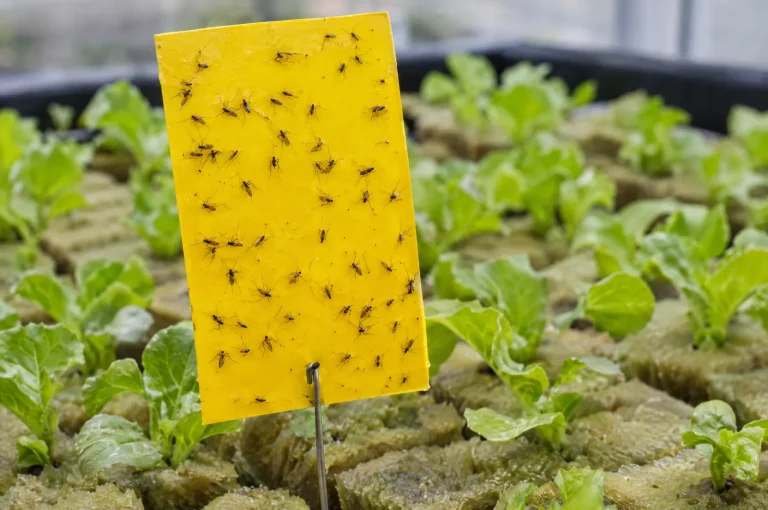
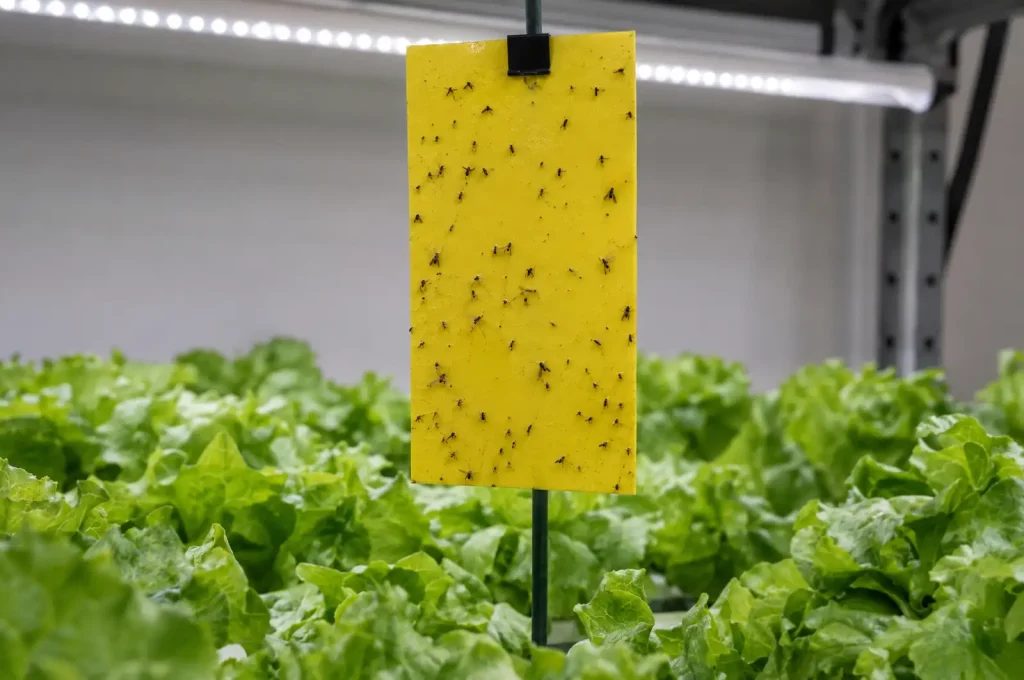
A yellow sticky card above the canopy is the standard advice, and it is good advice. It is also the reason a lot of people believe they have no pests. A card samples the things that fly, and the two pests most likely to quietly ruin an indoor crop either do not fly at all or do not fly in the stage that is eating your plant. A clean card after a fortnight tells you something real and much narrower than it appears: you have no flying adults. That is not the same as no pests, and the gap between those two statements is where a spider mite population gets large enough to see from across the room.
What a card actually samples
Extension scouting guidance is specific about this, pest by pest, and it is worth reading as a list of what each method cannot do rather than what it can.
| Pest | Sticky card | Where to look |
|---|---|---|
| Fungus gnats | Yes | The medium |
| Thrips | Yes | New growth |
| Whitefly | Adults | Under leaves |
| Aphids | No | New growth |
| Spider mites | No | Under leaves |
Whether a sticky card is a useful monitor for each pest, and where to look instead when it is not.
Spider mites have no wings at any point in their lives. Most aphids in a warm indoor population are wingless too, because they only produce winged forms when the colony gets crowded or the plant declines, which is to say long after you would have wanted to know. For both of those, the published instruction is blunt. Rely on plant inspection, not sticky cards.
That is also why these are indoor problems specifically. Outdoors a population like this gets rained on, eaten by things that arrived on their own, and stopped by a cold night. A warm lit room with no weather and no predators removes every one of those checks, so a colony that would have self limited outside simply keeps doubling. It is also why a fortnight away from the system is long enough to come back to a different situation.
Spider mites, and why webbing is the wrong thing to wait for
Everyone knows the webbing. Almost nobody knows that the webbing is the late stage. Extension guidance lists it as something you see once high populations have developed, which means a plant with visible webs has been infested for weeks.
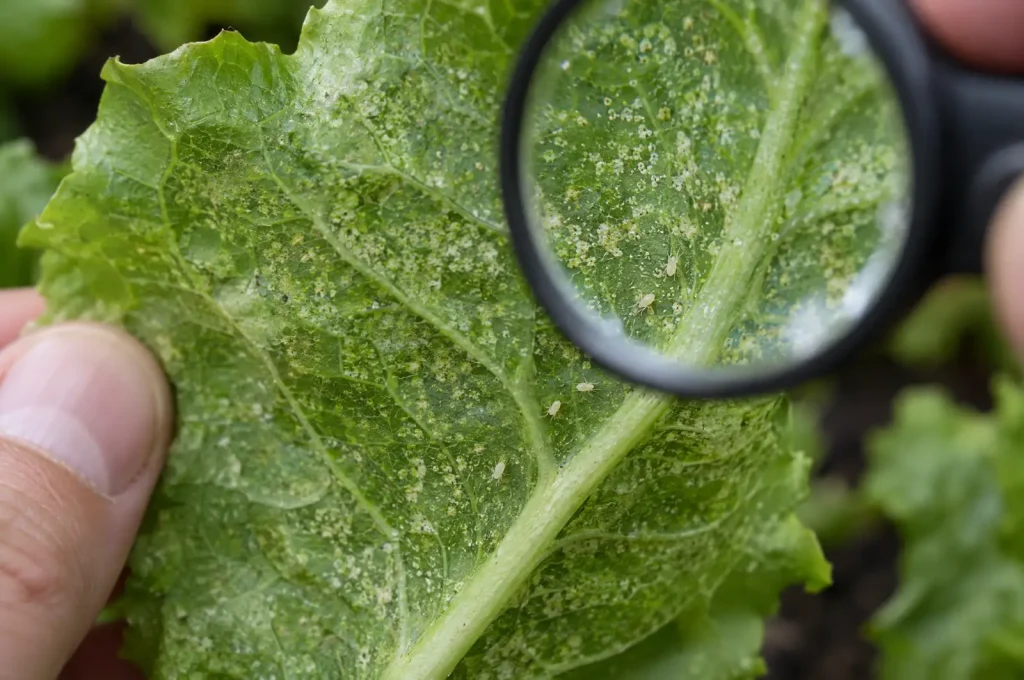
What comes first is flecking. Fine pale speckling on the leaf, as though someone has been at it with a very small pin, caused by mites emptying individual cells from below. On a green leaf it reads as a slight dullness before it reads as spots, which is why it gets missed.
- Look underneath, not on top. The damage shows on the upper surface and the animals are on the lower one.
- Use the tap test. Hold a sheet of white paper under a leaf and tap it sharply. Mites fall off and show up as slow moving specks against the white, which is far easier than finding them on a leaf.
- Check the hot dry corner first. Extension scouting puts mites near heat sources and entranceways, because they like it warm and dry. Indoors that means the plant nearest the lamp, the radiator or the door.
Aphids, where the signs are easier to see than the insect
Affiliate disclosure: some links below are affiliate links. We may earn a commission if you buy through one, at no extra cost to you. As an Amazon Associate I earn from qualifying purchases. Full disclosure.
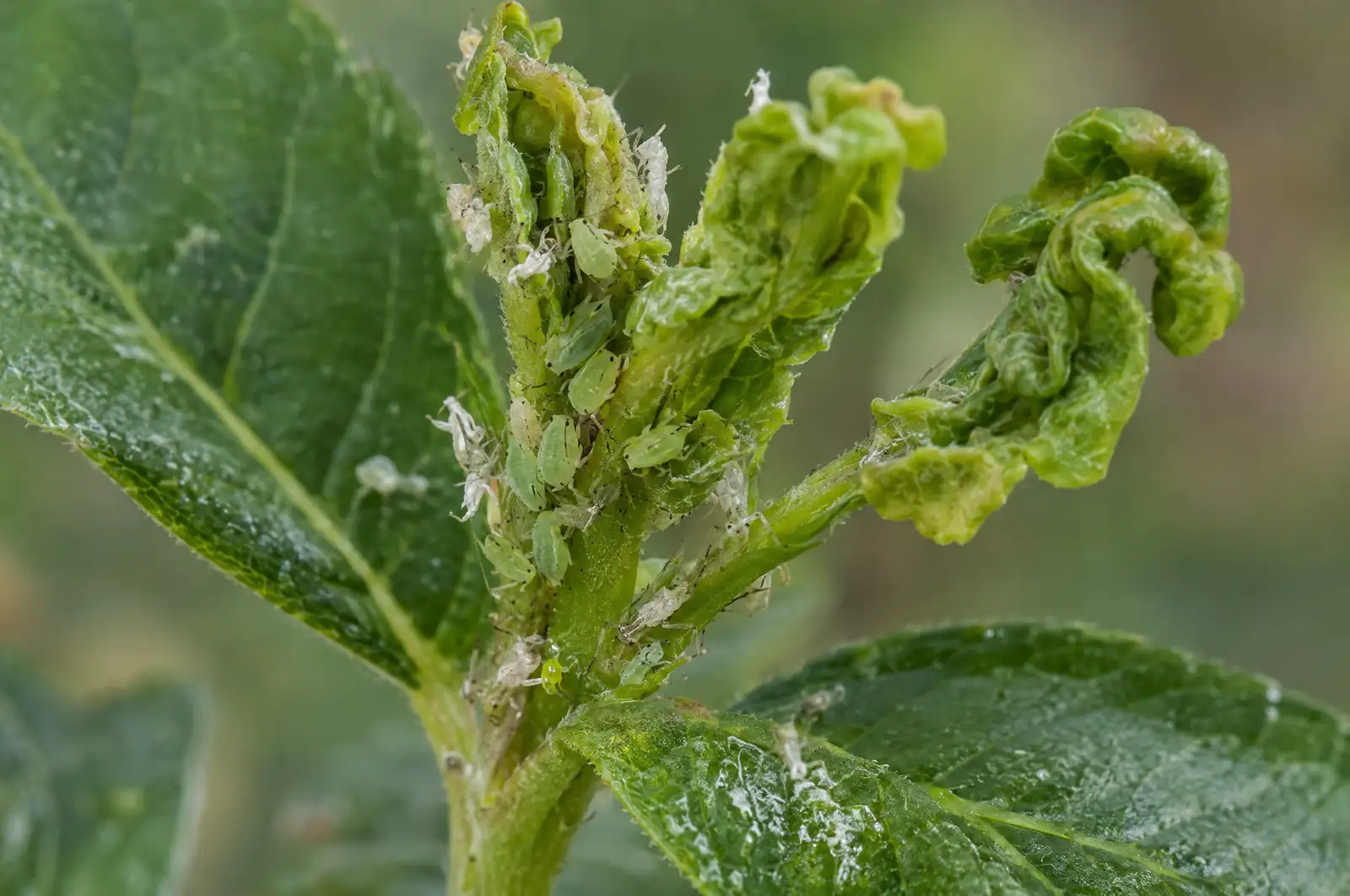
An aphid is about a sixteenth of an inch long and the colour of the plant it is sitting on. The giveaway if you get a lens on one is a pair of small tubes projecting from the back end, which nothing else on your lettuce has. But in practice you will notice the evidence first, and there are three pieces of it.
- Shed white skins. Small pale flakes stuck to the leaf that look like dandruff or perlite dust. Aphids moult repeatedly and leave the skins behind, so the skins outnumber the animals and persist after the animals move.
- Shiny honeydew. A sticky gloss on leaves below the colony, which is aphid waste. On a matt lettuce leaf it is obvious once you know to look for a shine that should not be there.
- Curled and distorted new growth. Aphids feed at the growing tip, and leaves that expand after being fed on come out crumpled and misshapen.
Look at the tips of new growth and the undersides of leaves. The same places matter on almost every leafy crop, which is convenient, because it means one habit covers the lot.
Thrips, the one the card does catch
Thrips are the exception that makes the card worth hanging. The published guidance is to rely on sticky cards placed just above the crop canopy together with inspection of the plants themselves, and to inspect by tapping tender new growth over a sheet of white paper. The same tap test as the mites, on a different part of the plant.
Their damage is white or silvery scarring where they have rasped the leaf surface, and alongside it black fecal spots. Those specks are the detail worth remembering, because they are the thing that separates thrips damage from everything else that silvers a leaf.
A silvered leaf is not automatically a pest
This is the part that saves you from treating the wrong problem, and it is the same discipline as every other diagnosis on this site. Turn the leaf over before you decide.
| Top of leaf | Below | Likely |
|---|---|---|
| Fine specks | Moving dots | Mites |
| Silver streaks | Black dots | Thrips |
| Yellow mottle | Nothing | Feeding |
What the underside of the leaf tells you when the upper surface has lost its colour.
If there is nothing at all underneath and the pattern sits between the veins of the newer leaves, you are looking at a feeding or pH problem rather than an animal, and the article on lettuce turning yellow works through those. If the margins of the young inner leaves are brown and dry rather than silvered, that is tipburn and no pest is involved. If a plant is wilting while the reservoir is full, the trouble is underneath rather than on the leaves, and root rot is the first thing to rule out. For everything else there is the full troubleshooting guide.
The problem with spraying over an open reservoir
Here is the constraint that general pest advice does not account for, because it is written for plants in pots. Your plants sit on a tank, and the tank is directly downstream of anything you spray.
Spray a canopy over an open reservoir and a good fraction of it runs off the leaves, through the net pots and into the solution. In a recirculating system that solution then reaches the roots of every plant you own, including the ones that were fine. Soaps and oils are surfactants, which is precisely why they work on an insect cuticle, and a surfactant in a root zone is not a thing anybody designed for.
Being straight about the limits of that: I could not find extension guidance addressing spray runoff into a small recirculating home reservoir, so treat this as practical caution rather than a documented finding. The way around it costs nothing either way.
- Lift the plant out and treat it away from the system. A net pot comes out in one piece. Deal with it over a sink and let it drain before it goes back.
- Cover the reservoir if the plant has to stay put. A bin bag over the lid and around the stems for the duration takes a minute.
- Try water before chemistry. A firm rinse under a tap physically removes a great many mites and aphids, costs nothing and puts nothing in your tank. On a crop you are about to eat it is often the whole answer.
What a home grower can actually use
Worth saying plainly, because it is the thing the literature will not tell you directly: nearly all greenhouse pest guidance is written for ornamental crops or for long season fruiting ones. You are growing a lettuce you intend to eat raw in a week or two, and that changes which half of the advice applies to you.
- Check what you bring in, before it goes near the system. A supermarket herb pot or a garden centre seedling is the usual way all of this arrives. Keep new plants apart for a fortnight and turn their leaves over, which is the same thirty seconds that keeps basil downy mildew and fungus gnats out. Starting your own seedlings sidesteps the problem entirely.
- Scout weekly and actually turn leaves over. Pick three plants, look at the undersides and the growing tips, and move on. The whole point of the tables above is that this takes a minute and the card does not replace it.
- Harvest early if the crop is close. A plant you are about to cut anyway does not need rescuing, and the method in when to harvest gets you a crop out of a situation you were going to lose.
- Biological controls exist and suit a permanent setup. Predatory mites and parasitic wasps are sold for exactly these pests and work well, but they establish over time, so they fit a system that runs continuously rather than one tray finishing in three weeks.
- Grow a new one. The unglamorous option, and often correct. A lettuce is a few weeks and a few pennies, and a badly infested plant that stays in the room is a source for everything else.
Where this comes from
The monitoring method for each pest, the instruction to rely on plant inspection rather than sticky cards for aphids and spider mites, the placement of cards just above the canopy for thrips, the tap test over white paper, the aphid signs of shed white skins and honeydew and distorted new growth, the note that mite webbing appears only once high populations have developed, and the advice to scout the hot dry parts of a growing space first are all from the UConn Extension integrated pest management scouting guidelines for vegetable bedding plants and transplants, by Leanne Pundt of UConn Extension and Tina Smith of UMass Extension, in the 2024 revision. The thrips symptoms of white scarring and black fecal spots are from the same document. The point about spray runoff into a recirculating reservoir is reasoning from how these systems are built rather than a cited finding, and is flagged as such above. That guidance is written for bedding plants and transplants rather than for a crop you are about to eat, which is the caveat running through the whole of the last section.
Found this useful? Tell Google to show you more of it.
Add to Preferred Sources