Do Bloom Boosters Do Anything?
There is a bottle on every hydroponics shelf with a very large middle number, sold on the promise of more flowers and more fruit. Our equipment list tells you to skip it. Our nutrient buying guide tells you to skip it too, with one line of reasoning. And our tomato page tells you that once flowers appear the plant wants more potassium and phosphorus. Two of those are right and the third contains a claim that has been tested and does not hold.
Split the sentence first
Potassium and phosphorus get said in one breath on almost every growing page on the internet, including ours, as though the flowering shift were one thing. They are not one thing. They do different jobs in a plant, they are taken up in wildly different quantities, and the evidence for increasing them at flowering runs in opposite directions.
Separating clauses like that is the same move our article on whether hydroponic food is pesticide free had to make, where two halves of one promise turned out to travel by completely different routes. Here the split is cleaner, because one half is a marketing claim with a paper trail.
The number on the bottle is the wrong way round
The three numbers on a fertiliser label are nitrogen, phosphate and potash, in that order. A bloom booster is defined by the middle one being the biggest, often by a long way. Esther McGinnis, a horticulture specialist at North Dakota State University Extension, puts the range at one part nitrogen to as high as five parts phosphate.
Now compare that with what the people growing flowers and fruit for a living actually use. In the same article she writes that greenhouses may apply fertilizers with a nitrogen to phosphorus ratio of 3-to-1 or even 5-to-1 depending upon the crop.
| Feed | Nitrogen to phosphate |
|---|---|
| Bloom booster | 1 to 5 |
| Balanced 10-10-10 | 1 to 1 |
| Greenhouse crops | 3 to 1, or 5 to 1 |
Read the table top to bottom. The commercial grower is running several times more nitrogen than phosphate, which is the bloom booster ratio turned completely around.
That is not a small discrepancy to explain away. It is the opposite of the product. And the middle row is not a safe compromise either, because the same source calls even a balanced fertilizer like 10-10-10 with equal parts of nitrogen and phosphorus a waste of phosphorus.
Where the idea came from, and what was found
The high phosphorus recommendation is not invented. It came out of older research to ensure productivity of high intensity farm crops rather than home landscapes, which is a sentence worth reading twice. A finding about field agriculture became a rule for everybody else, and the rule outlived the context it was measured in.
Tested on its own terms, it does not deliver. The preferred ratio is reversed, she writes, because studies show that high phosphorus rates do not increase the number of flowers. That is the whole claim on the front of the bottle, and it is the claim that fails.
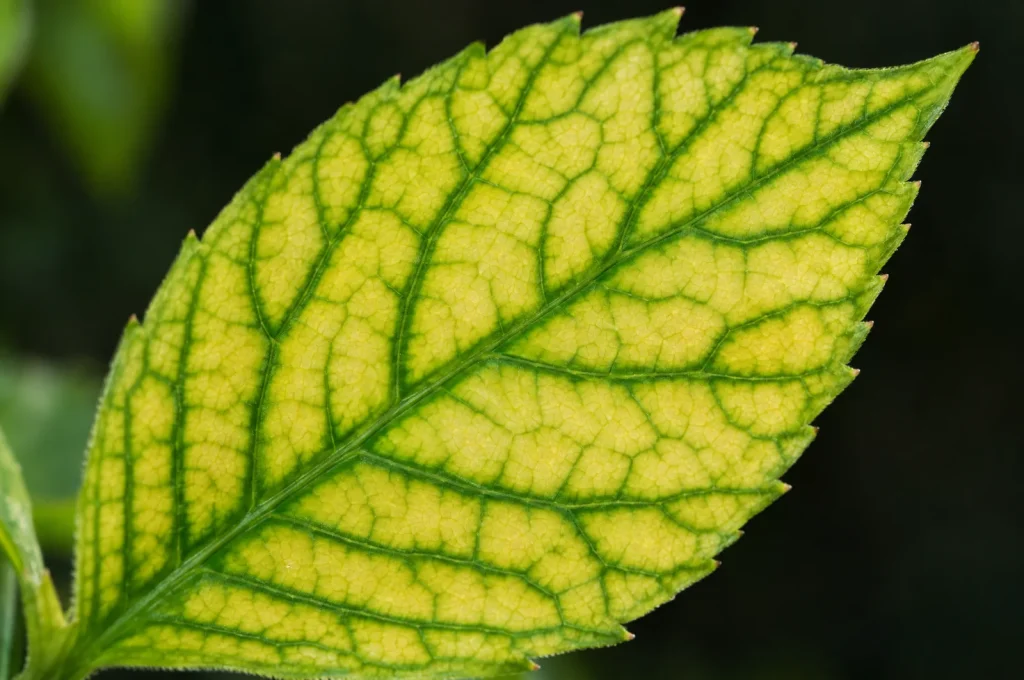
What a surplus does instead is get in the way. High levels are detrimental, the article says, because a surplus ties up important plant micronutrients such as iron and zinc, with symptoms that include stunted plants, yellowing leaves, and an overall failure of the garden to thrive. Anyone who has worked through our page on lettuce turning yellow will recognise that description, which is the uncomfortable part.
And she is blunt about why nobody has corrected it. Fertilizer companies do not have an incentive to dispel this myth.
Half that argument does not follow you into water
Being careful here matters, because most of what is written about fertiliser is written about soil, and this site exists because that is a different situation. Our comparison of the two is really a list of the jobs soil was doing for you, and several of them are load bearing in this argument.
The parts that do not travel are the soil parts. Phosphorus accumulates in garden soil and falls very slowly, so a gardener can spend years recovering from overfeeding. You cannot. Your entire nutrient supply is replaced every two or three weeks when you change the reservoir, so a bad decision lasts a fortnight rather than a decade. The runoff argument does not reach a bucket in a kitchen either.
The part that does travel is the plant. A tomato root takes up what a tomato root takes up, and the antagonism between a phosphate surplus and the uptake of iron and zinc is chemistry at the root surface rather than anything to do with soil structure. If anything it is sharper in solution, because there is no reserve of anything to buffer the mistake.
There is also a consequence that belongs to water alone. Phosphate and calcium do not coexist happily at concentration, which is why our article on whether nutrients go off warns never to pour one concentrate into another. A bloom booster is a phosphate concentrate, and tipping it into a reservoir that already carries calcium nitrate is the precise situation that produces a cloudy tank and a white sludge on the bottom.
What does change when a plant starts fruiting
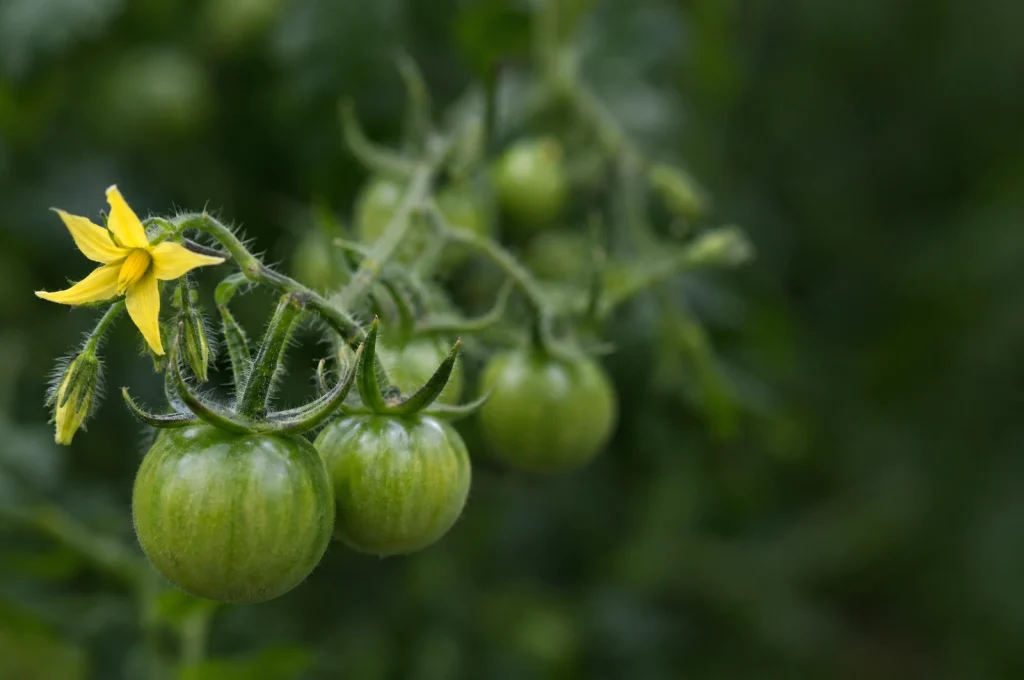
Something real happens at flowering, which is why the instruction exists at all. It is just the other element.
Potassium is described in the research literature as a quality element, and the reason is that it drives what ends up inside the fruit rather than how much fruit there is. Work published in Horticulture Research in 2024 traced this in navel orange and found that potassium increased the strength of both the source and the sink, raising fruit growth rate along with the enzyme activities and gene expression that move sucrose out of the leaves and into the fruit. Fruit potassium concentrations around 1.5 percent improved sugar accumulation and fruit quality.
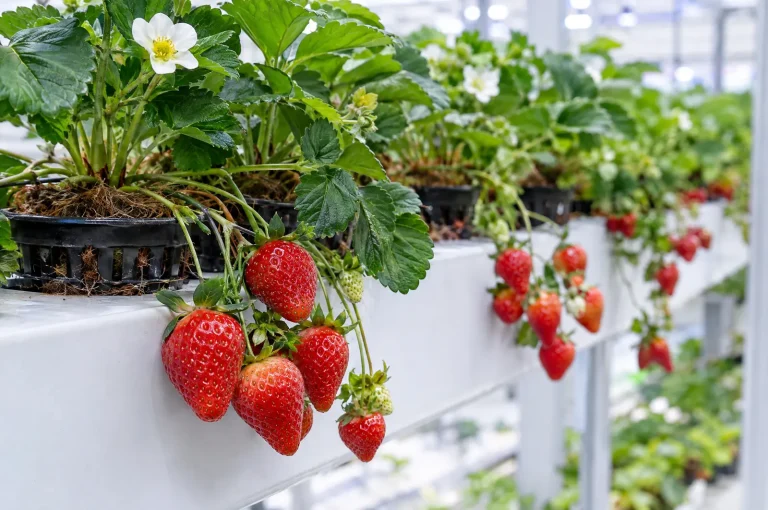
That is the mechanism the bloom bottle in a three part system is actually serving. A fruiting plant is building a large new sink and shipping sugar into it, and potassium is the element doing the shipping. It is also why the shift is real for tomatoes, peppers and strawberries and close to irrelevant for a lettuce, which never builds a fruit at all.
There is no free element in there either, which is the sentence that stops this becoming an argument for a potassium booster instead. Our page on lettuce tipburn sets out the published guardrails for calcium uptake, and high concentrations of potassium are on the list of things that block it, alongside ammonium and magnesium. Push potassium hard enough and the disorder you buy is the one that ruins a head from the inside, or its tomato equivalent at the base of the fruit.
So the sentence on our tomato page is half right, and the half that is right is the half nobody sells you a separate bottle for.
A bloom bottle is not a bloom booster
These two things share a word and are not the same product, which is where most of the confusion sits.
The bloom bottle in a three part hydroponic set is part of a complete feed. You use it instead of the grow bottle, the formulation shifts the balance of a solution that still contains everything, and the strength you end up at is the one in our PPM and EC chart. Our nutrient guide covers how the parts fit together.
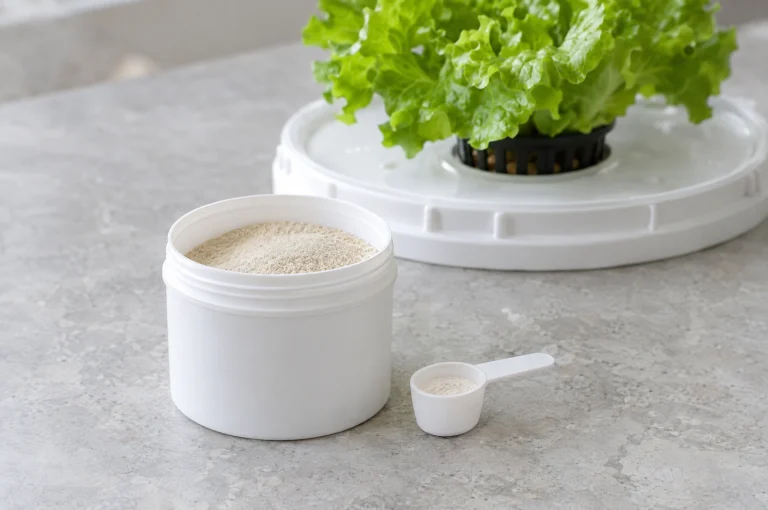
A bloom booster is an extra, poured in on top of a feed that was already complete. That is the product with the inverted ratio, and it is the one with nothing behind it. The test takes two seconds in a shop. If the middle number is the biggest and the bottle is sold as an addition rather than a replacement, put it down.
It is worth being clear about what adding one does to a reservoir, because it is not nothing. Every salt you tip in raises conductivity, so a booster moves the meter reading up while contributing almost entirely an element the crop was not short of. You then read a healthy number on the meter and believe the solution is where it should be. That is the same trap our article on changing the reservoir describes from the other end, where a rising reading hid a crop running out of nitrogen.
And it is worth saying plainly why so many growers are sure it works. A booster goes in at the moment flowers appear, which is the moment the plant was going to flower anyway. The bottle is applied to a change already in progress and then credited with it. That sequence convinces people about a great many garden products, and the only thing that separates it from a real effect is somebody running the other arm of the experiment.
What that leaves on the shelf
Our buying guide lists four things to skip and it is right about the boosters. The other three deserve a word each rather than being left as assertions.
Cal-mag is not really an additive. It is a correction for water that does not contain what a two part formula assumed it would, which is why it matters on reverse osmosis and very soft supplies and not otherwise. Our guide on tap water is the place to find out which you have before buying anything.
Microbial inoculants have an answer on this site already, worked through properly in whether beneficial microbes do anything, including the label test for telling a real product from a hopeful one. There is no need to repeat it here.
Silicon is the one genuinely open question, and it is open for an interesting reason. It is absent from your bottle not because it has been tested and dismissed but because it is not on the list of elements classed as essential, so formulators leave it out by definition. The published work on it is real and is mostly about plants under stress, which is why it needed a page of its own. That is a different claim from more flowers, and the answer turns out to depend on stresses a working reservoir has already removed.
Which leaves the boring advice our dosing calculator was built around. Mix a complete feed to the right strength, keep it there, and spend the money you did not spend on a booster on a light instead, where the published returns are not in any doubt.
Where this comes from
The ratios, the finding that high phosphorus rates do not increase the number of flowers, the origin of the recommendation in high intensity farm crop research, the micronutrient lock-up and the remark about fertiliser companies are all from Esther E. McGinnis, Dakota Gardener, the myth of high phosphorus fertilizers for more flowers, NDSU Extension, August 2023. That article is written for soil gardens, and the soil specific parts of it are identified as such above rather than carried across. The potassium work is Potassium stimulates fruit sugar accumulation by increasing carbon flow in Citrus sinensis, published in Horticulture Research in 2024, which is a citrus study rather than a tomato one and is quoted here for the mechanism rather than for a number to copy. The calcium and phosphate incompatibility is from the University of Arizona Controlled Environment Agriculture Center, cited in full on our own page about nutrient shelf life. The strength figures remain those in our PPM and EC chart, which draws its ranges from Cornell.
Found this useful? Tell Google to show you more of it.
Add to Preferred Sources