Is Growing Your Own Food Good For You?
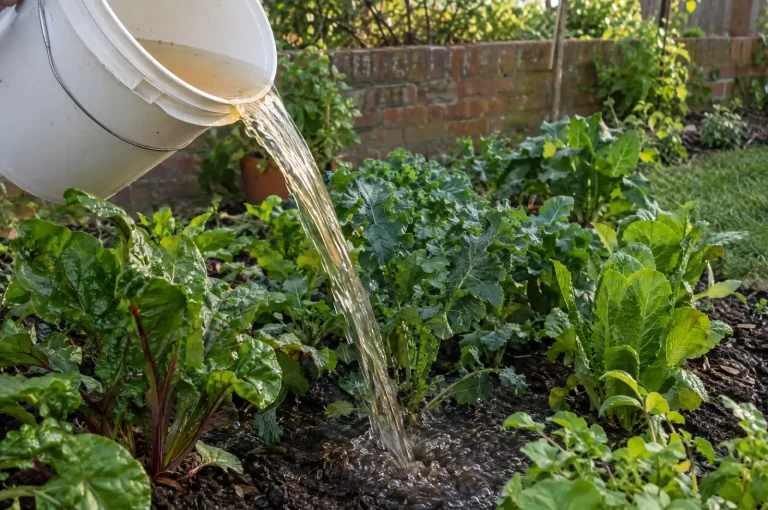
Benefit ten on our own page about the benefits of hydroponics says that growing your own food is genuinely satisfying, and then says this one is not measurable. The second half of that was written carelessly. It has been measured for twenty years, with blood pressure cuffs and validated depression scales, and the measurements are more interesting than either the claim or our hedge. Almost none of them were taken on anybody doing what you are doing.
The number everybody is quoting
In 2016 Masashi Soga, Kevin Gaston and Yuichi Yamaura pooled the quantitative research on gardening and health for Preventive Medicine Reports. Twenty two studies, seventy six separate comparisons, between fourteen and five hundred and fourteen participants each.
The pooled effect came out at 0.42, on a scale where zero means gardening made no difference at all. Translated, the average gardener in those studies scored better than about two thirds of the people they were compared against. The confidence interval runs 0.36 to 0.48. The authors then tested for publication bias, found it, estimated sixteen missing comparisons and recalculated. The effect fell to 0.35 and stayed significant.
That is a real finding and the strongest one in the subject. Then you read the subgroups.
| What was compared | Effect |
|---|---|
| Everything pooled | 0.42 |
| Horticultural therapy | 0.61 |
| Everyday gardening | 0.31 |
| Patients | 0.61 |
| Not patients | 0.32 |
| Before against after | 0.60 |
| Gardeners against non gardeners | 0.32 |
Effect sizes from the 2016 meta analysis, where zero would mean no difference at all. The smaller figure in each pair is the one that describes an ordinary person with plants.
The pattern holds whichever way the data is cut. Where the gardening was horticultural therapy, delivered to patients by somebody whose job it was, the effect roughly doubled. Where it was people who garden measured against people who do not, it halved.
Read the inclusion criterion
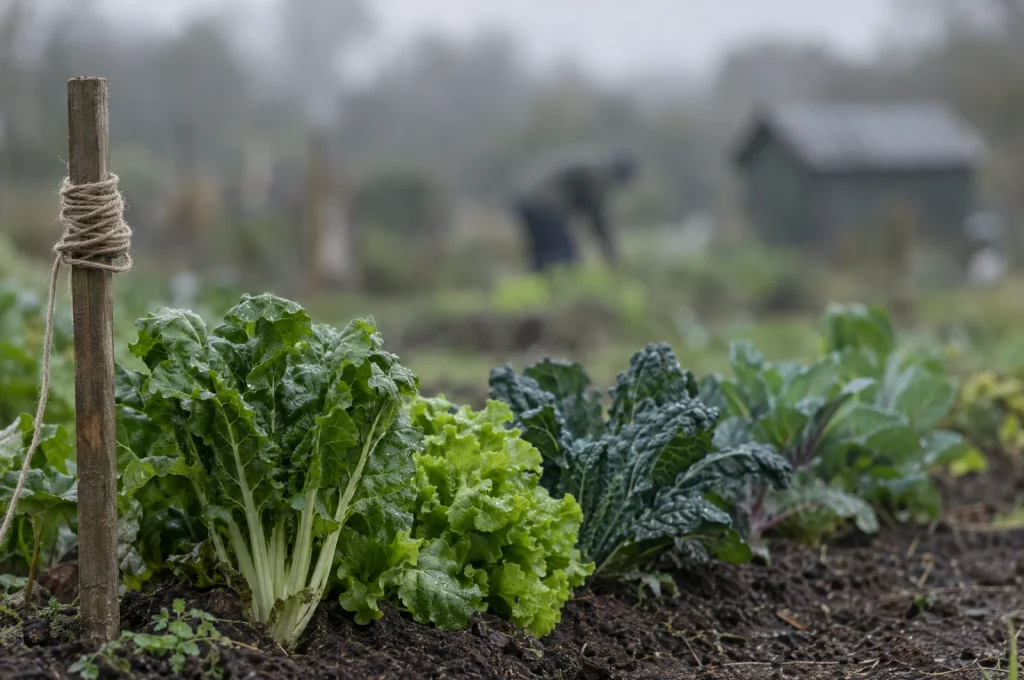
One line in the methods section decides how much of this belongs to us. Studies had to focus on outdoor gardening.
Indoor gardening is not mentioned anywhere in that paper. Neither are houseplants, nor hydroponics, nor growing anything under a lamp. The definition of gardening it works from covers domestic gardens, allotments and community gardens, which is to say a piece of ground outdoors.
So the headline evidence that growing your own food is good for you is evidence about being outdoors, in soil, usually alongside other people and often with a therapist. Everything this site is about had been excluded before the study began.
That does not make the claim false. It makes it unsupported by the thing usually cited to support it, which is a different and more fixable problem. Our article on what you gave up to leave soil behind works through the growing side of that trade. This asks the same question about the grower.
Twenty four young men and a Peperomia
The study people reach for when they want an indoor answer is Lee and colleagues in the Journal of Physiological Anthropology, 2015. It is a randomised crossover design, which is a good design, and it is very small. Twenty four healthy men, average age about twenty five. Each did two fifteen minute tasks on separate days in a randomised order. One was transplanting an indoor plant, a Peperomia. The other was word processing at a computer. Heart rate variability ran throughout and blood pressure was taken before and after each.
After transplanting, diastolic blood pressure was significantly lower than after the computer work, about sixty five against seventy two. The index of sympathetic nervous activity was lower as well, although only across the final three minutes of the fifteen. On a seven point scale the men rated the transplanting as more comfortable, more relaxed and more natural.
Here is the part the summaries leave out. The comparison was not rest. It was a word processing task. What this measured is that potting a plant is less physiologically stressful than office work, in young men, for a quarter of an hour. The authors say as much and ask for a more realistic control next time. A later study using a different one did not reproduce the diastolic result.
The trial that used an actual hydroponic unit
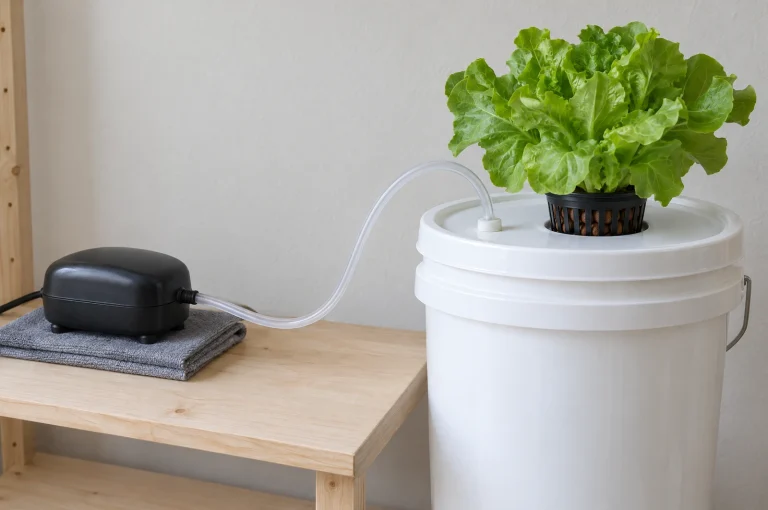
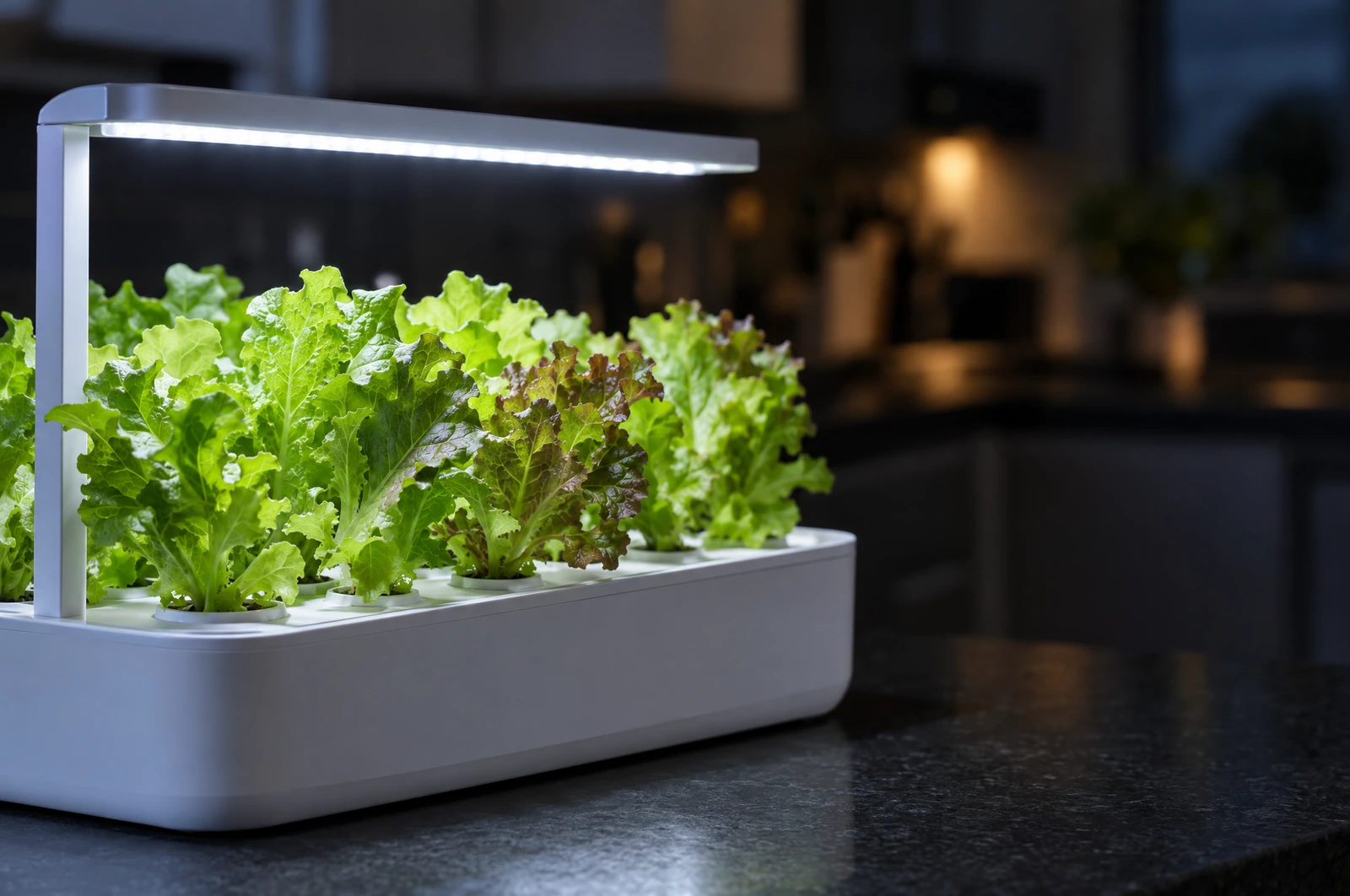
Then there is a 2025 pilot in Frontiers in Public Health that is almost uncomfortably close to home. Thirty six adults being treated at a Houston cancer centre were each given a countertop hydroponic unit, the kind with an LED bar over a tray, with nutrients and twelve seed pods of heirloom salad greens, and asked to grow them at home for eight weeks.
Over those eight weeks mental wellbeing improved significantly, as did global quality of life, emotional functioning and social functioning. The depression subscale fell from 10.4 to 5.94. Loss of appetite fell. Vegetable intake rose, dark green vegetables most of all, which is the least surprising result in the paper and also the only outcome in it that is not a questionnaire about feelings. Stress and anxiety did not move.
Two things about it are worth keeping. The first is that there was no control group. Everybody received a unit and each person was compared against their own earlier scores, which the authors acknowledge leaves causality unestablished. People who volunteer for a gardening study expect to enjoy gardening.
The second is a line in the participant table that explains more than the results do. Ninety two percent of them had a yard. Nearly seventy percent were not regular gardeners. Forty four percent spent under an hour a week outdoors. These were not people choosing a countertop unit over a garden. They had the outdoor option, were not using it, and got something in place of nothing.
Gardening against art
The most useful study here is the one that tried hardest to be fair. In 2022 a team at the University of Florida randomised forty two healthy women aged twenty six to forty nine into two groups and gave each eight one hour sessions over four weeks. One group gardened indoors. The other made art.
Both improved. Mood disturbance, perceived stress and depression scores fell in both arms by moderate to large amounts. Gardening came out slightly ahead on most self reported measures and well ahead on trait anxiety, where the art group barely moved. The blood pressure readings went the same way, the art group drifting up about three millimetres of mercury more across the eight sessions.
And not one of those differences between the groups was statistically significant. The analysis found no group effect on any measure. The authors set out to show that gardening and art diverged, and reported plainly that they did not. There was no inactive control arm either, so the trial can rank the two activities against each other but cannot say what either was worth against an evening of nothing in particular.
One more detail, because it matters more than the statistics. The indoor gardening here happened in a greenhouse of two thousand seven hundred square feet, led by a horticulturist, twice a week, on a fixed schedule, in company. That is what was being compared with art. It is not a jar on a windowsill.
The soil story runs the wrong way
If you have read around this you have met the claim that soil bacteria lift your mood, usually attached to a species called Mycobacterium vaccae. It is the one proposed mechanism that would make hydroponics structurally incapable of delivering the benefit, because there is no soil to put your hands in.
It is also the thinnest evidence on this page. The famous study is Lowry and colleagues in Neuroscience in 2007, and it was done in mice. The bacteria were heat killed and administered into the airway or under the skin. The mice showed activation in a specific group of serotonin producing neurons and spent less time immobile in a forced swim test.
The human end of it is a lung cancer trial. In 2004 O’Brien and colleagues gave four hundred and nineteen patients with advanced non small cell lung cancer standard chemotherapy, half of them with a monthly injection of killed Mycobacterium vaccae added. Survival did not differ. Quality of life declined significantly less in the injected group, in an open trial with no placebo.
That is the whole case. Mice, injections, and a trial without a placebo arm. Nobody has shown that getting soil on your hands does anything. The mechanism most often used to argue that soil free growing cannot work on you is the one carrying the least weight.
What is left for a jar on a windowsill
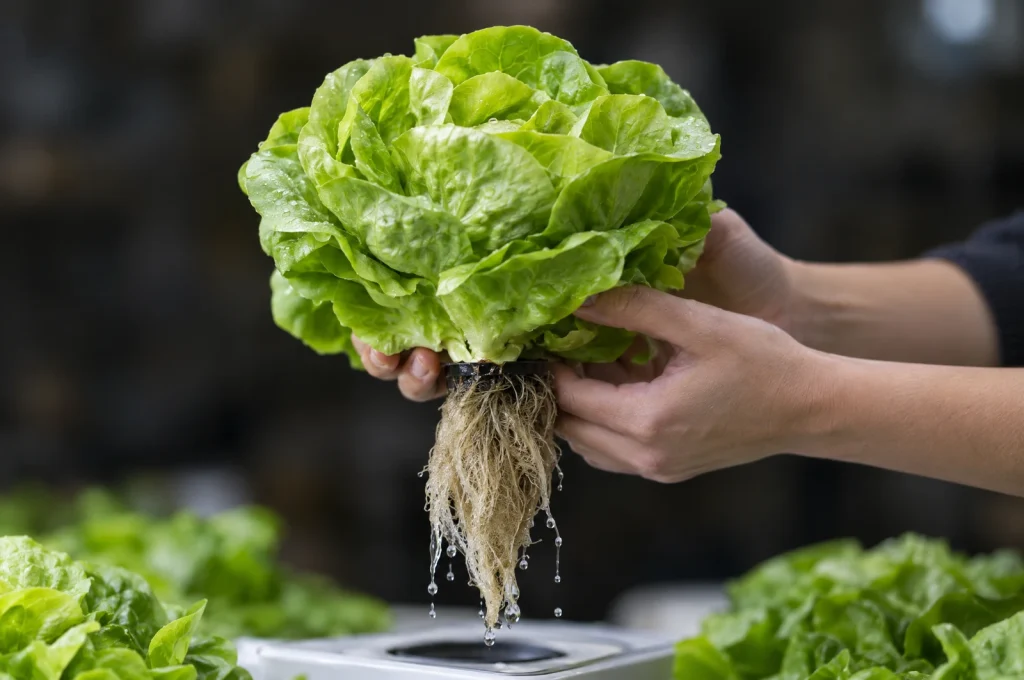
Put honestly, the effect is real and it is largest in precisely the circumstances a home grower does not have. A therapist, a group, a fixed schedule, a greenhouse and a diagnosis. The everyday gardening subgroup is about half the size of the therapy one, the one indoor trial using a unit like yours had no control arm, and the one randomised indoor trial found that making art did the same job. What survives is still worth having, and three parts of it can be copied deliberately rather than hoped for.
Something to do, rather than something to look at. Every result above comes from people handling plants, not from plants being present in the room. The fifteen minute task was active, the eight week one asked people to tend, and the four week one put tools in their hands twice a week.
A rhythm. Twice a week for four weeks, or eight weeks of a unit that needs topping up. A system that asks nothing of you for a fortnight is not delivering this. Our article on succession planting is really about building that rhythm, and the one on how much time hydroponics actually takes found that growers overestimate their own by close to a factor of three.
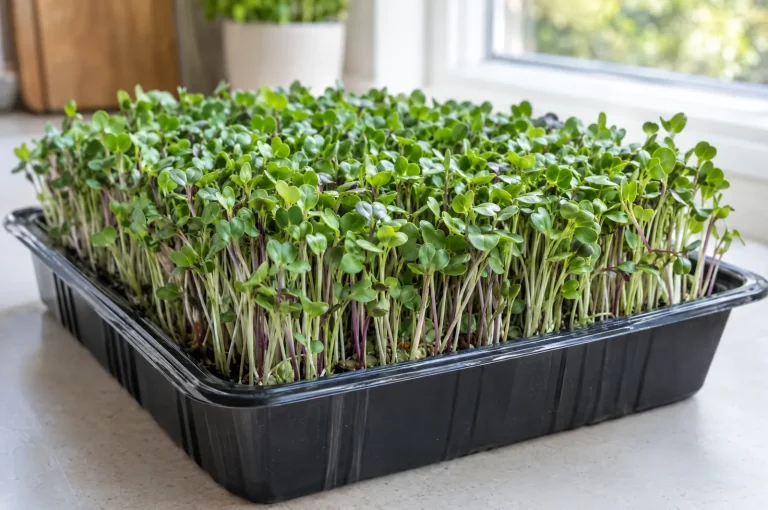
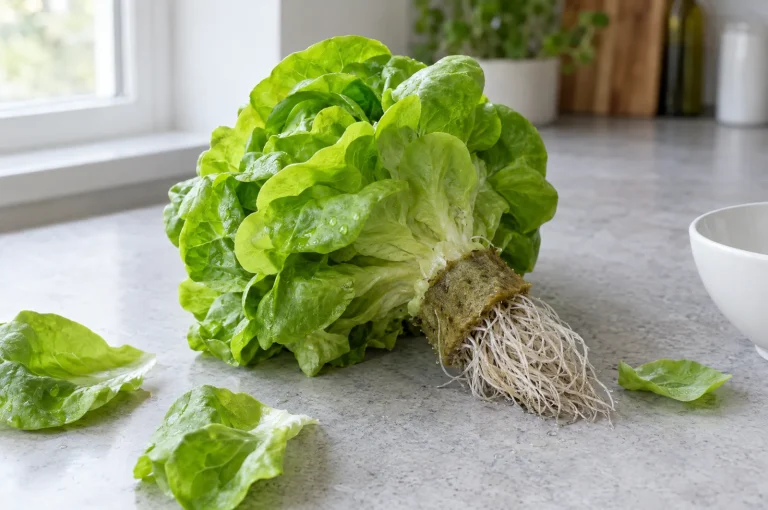
Something that finishes. The depression result in the hydroponic trial arrived together with harvested salad and a measured rise in vegetable intake, and that pairing is probably not a coincidence. Microgreens are the shortest version of that loop, a realistic count of what a small system yields is the honest version, and a salad cut in January is the version that earned the sentence on our benefits page. The risk is a crop that never finishes, which is why the list of plants almost impossible to kill and the beginner crop rankings exist.
And one thing this site cannot sell you, which should be said anyway. In every study where the effect was large, somebody else was there.
Benefit ten is staying on the page, because it is the honest reason most people keep going. The sentence saying it cannot be measured is coming off. It has been measured, mostly on other people doing a sturdier version of this, and the parts that counted were the doing and the finishing. Both of those a jar can do. Whether the greens are as nutritious or taste any different is a separate argument from whether growing them did you good.
Where this comes from
The pooled effect size, the subgroup figures, the publication bias correction and the outdoor gardening inclusion criterion are from Gardening is beneficial for health, a meta analysis, by Masashi Soga, Kevin J. Gaston and Yuichi Yamaura, Preventive Medicine Reports volume 5, 2017. The transplanting experiment is Min-sun Lee and colleagues on interaction with indoor plants and autonomic nervous system activity in young adults, Journal of Physiological Anthropology, 2015. The countertop unit trial is Taehyun Roh and colleagues on indoor hydroponic vegetable gardening in cancer patients, Frontiers in Public Health, 2025. The gardening against art trial is Raymond Odeh and colleagues in PLoS One, 2022. The soil bacteria work is Christopher Lowry and colleagues in Neuroscience, 2007, and the lung cancer trial is Mary O’Brien and colleagues in Annals of Oncology, 2004. Nothing here is our own measurement, and the sentence on our own page is the thing it was written to check.
Found this useful? Tell Google to show you more of it.
Add to Preferred Sources