Is Hydroponic Food Pesticide Free?
Two sentences on this site disagree with each other. Our page on the benefits of hydroponics says you get no mystery pesticides and no soil contaminants, because you mixed the solution and you know what is in it. Our page on scouting for pests says spider mites and aphids are indoor problems specifically, because a warm lit room has no rain, no cold nights and nothing living in it that eats them. Both of those are true. Holding them in the same hand is what makes this question worth asking properly, and the honest answer splits the claim into two halves that behave completely differently.
There are two claims in that sentence
Pull the benefits line apart and it is really making two promises. One is about sprays. The other is about what is in the ground under a garden, the lead from old paint and old petrol, whatever the previous owner tipped behind the shed.
Those travel by completely different routes. A soil contaminant arrives through the roots, which is the half of the plant hydroponics actually replaces. A pesticide is almost always applied to the leaves, which hydroponics does not touch at all.
So there is no reason to expect the two halves to hold up equally, and they do not. The half with hard numbers behind it is not the half people repeat.
What a roof does to a spray
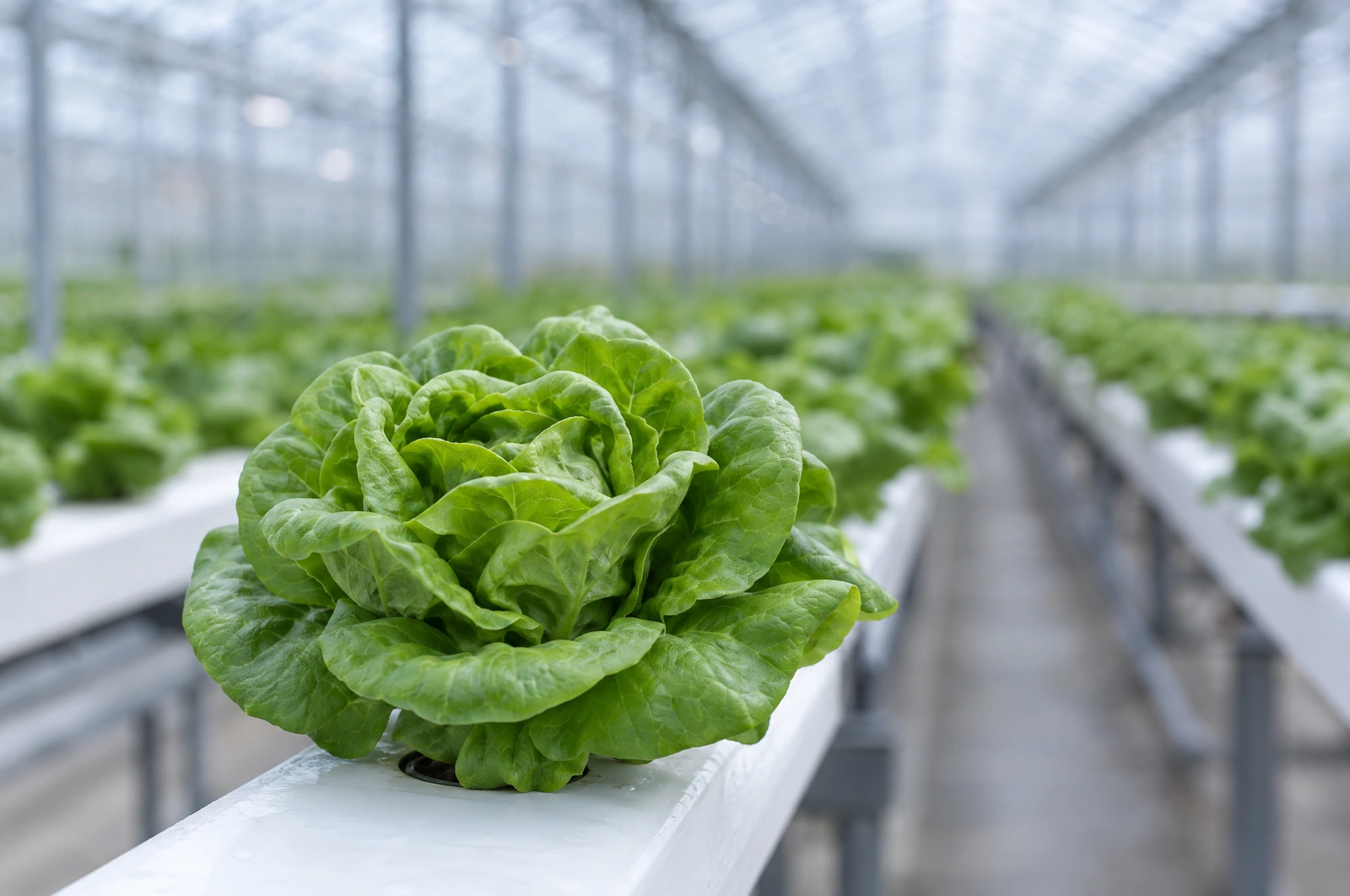
Start with the result nobody expects. A group at Lancaster University went through the United Kingdom Pesticide Residues Committee monitoring data for 2004 to 2009 and built five crop pairs, each one a crop usually grown under cover set against a comparable crop usually grown in an open field, at around a hundred samples per crop.
Two pairs came out significantly different, and both went the same way. Lettuce under cover carried more pesticides than open field cabbage, and more samples with several residues on them at once. Strawberries under cover did the same against open field berries. Protected lettuce also exceeded the legal maximum residue levels more often than open field cabbage did.
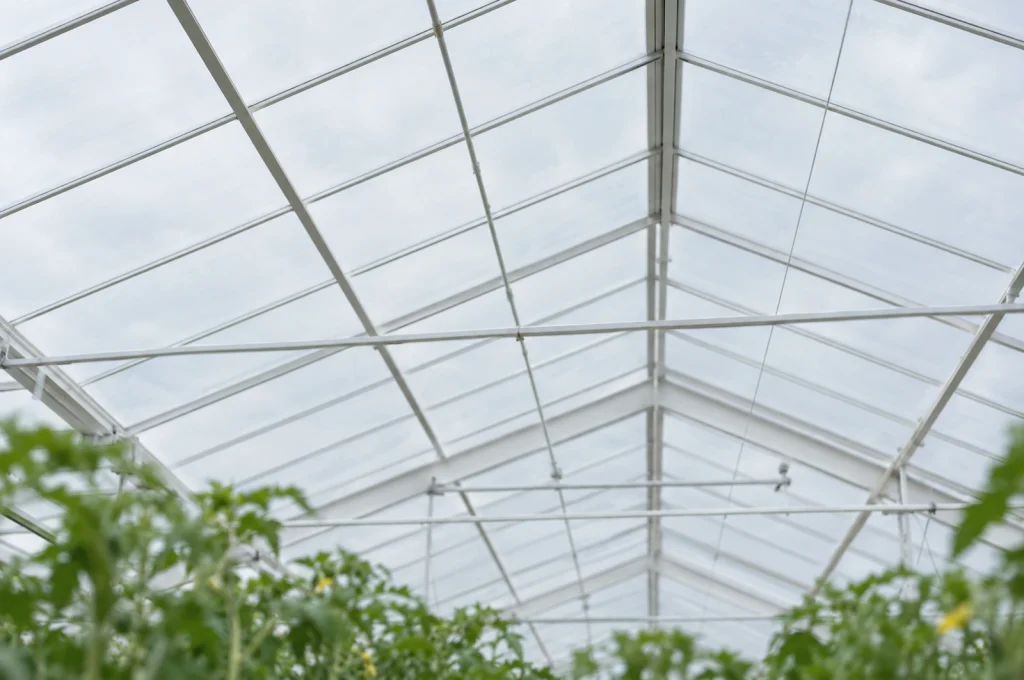
The detail that explains it is the one worth keeping. Average concentrations were higher under cover specifically for the pesticides that normally break down in sunlight. A greenhouse roof is a filter as well as a shelter. Chemistry that a field would have taken apart within days sits there instead, because the thing that would have taken it apart is outside. The authors put it down to a combination of different spraying practice and slower removal, and their recommendation was that pesticide use regimes in closed cropping systems should be reviewed.
Be careful what that does and does not say. Protected is not the same word as hydroponic. A polytunnel full of soil grown strawberries is protected cropping. The finding is about the building, not about the root zone. It matters here only because most commercial hydroponics happens under exactly that building.
What is actually on the shelf
The other direction has a measurement too. A 2024 study in Foods bought lettuce, celery, tomatoes and cucumbers from both hydroponic and conventional soil production and screened them for 120 pesticides, 18 phthalates and two heavy metals.
| Measure | Hydroponic | Soil grown |
|---|---|---|
| Pesticide found | 30 percent | 84 percent |
| Lead and cadmium | Lower | Higher |
| Hazard index | 0.22 | 0.64 |
Share of samples carrying at least one of 120 pesticides, and the combined hazard index the authors calculated. Both index figures sit below one, which is the line they treat as the threshold for a meaningful risk.
That is a real difference and it runs in favour of hydroponics. It is also the number to read slowly. Thirty percent is not zero. Roughly one in three hydroponic samples carried a detectable pesticide, in a sector that sells itself on the opposite impression.
Neither group was dangerous on these figures. Both hazard indices came in under one and the authors say so plainly. The useful finding is not that one is safe and the other is not. It is that hydroponic produce in shops is better on this measure and is not clean of it.
The half of our claim that holds up
Look at the middle row of that table again, because it is the quiet one. Lead and cadmium were significantly higher in the conventionally grown vegetables, and lead was the main heavy metal contaminant across the whole sample set.
That is the previous owner buried something in the garden half of our own sentence, and it is the half with the measurement behind it. The mechanism is not mysterious. A root takes up what the root zone offers it. Offer it a mixed solution and the list of things it can possibly take up is the list you wrote, which is the same argument our article on whether hydroponic food is as nutritious makes from the other end. A known diet is the point. It cuts both ways and here it cuts in your favour.
So the sentence on our benefits page is not wrong. It is two claims wearing one coat, and only one of them is about something hydroponics controls.
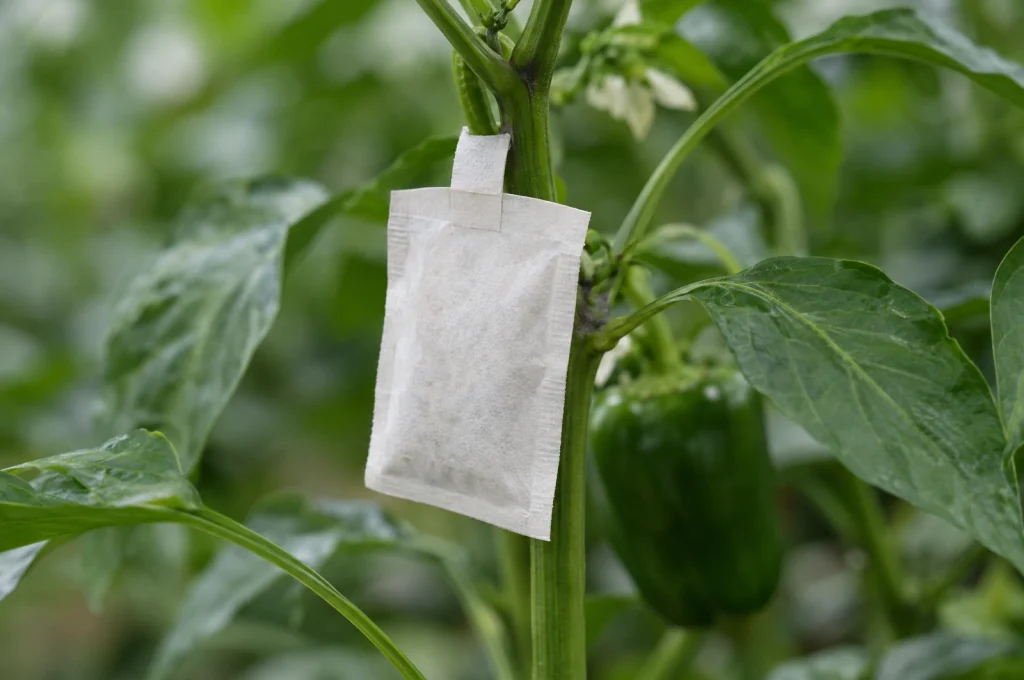
What the big glasshouses actually do
If sprays persist longer under cover, you would expect the industry to have noticed. It has, and the response was not a better spray.
Dutch figures compiled from national statistics across nine glasshouse crops show biological control agents deployed on almost 95 percent of the cultivated area by 2020, up from 92 percent in 2016 and 78 percent in 2012. For cucumbers, peppers and tomatoes the figure is 100 percent of the area. Strawberries under glass reached almost 98 percent, having been below 70 percent not long before.
The agents are named animals rather than products. The predatory mite Phytoseiulus persimilis, which eats red spider mite, was in use across about 52 percent of the glasshouse area overall and more than 90 percent of the pepper area. The parasitic wasp Encarsia formosa, which goes after whitefly, covered about 33 percent overall and around 80 percent of tomatoes. The predatory bug Macrolophus pygmaeus, also for whitefly, reached over 90 percent in tomatoes.
Read that for what it says. Biological control deployed across the whole area does not mean nothing is ever sprayed in a Dutch glasshouse. It means the first tool reached for is an animal, and the share doing it has been climbing for over a decade.
The reason it works is the same structure that caused the residue problem. A sealed building stops ultraviolet light getting in, and it stops your predators getting out. An open field cannot hold a population of released mites for an afternoon. A glasshouse can hold one for a season. That is a genuine advantage of growing under cover, and it belongs to the building rather than to the water.
None of this is a property of hydroponics
Lay the three findings side by side and the shape is clear enough.
Hydroponics is a root zone technique. What it genuinely changes is what the roots can take up, which is why the heavy metal result goes the way it does. The structure most hydroponics sits inside changes how long a spray survives and how well living predators work. Everything in between is decided by whoever is running the place, and the same is true of the organic certification question, which turns on paperwork rather than on anything the plant experiences.
Pesticide free is not something a growing method can be. It is something a grower decides, one crop at a time, and the word on the packaging tells you which decision was made by somebody you have never met. This is the same conclusion our comparison of hydroponics against soil keeps arriving at from other directions. The method moves fewer things than the marketing suggests, and the grower moves most of them.
The windowsill answer
For a jar or a bucket at home, all of the above collapses into one fact. You are the entire pesticide policy. Nothing goes on that plant unless you put it there, which makes our benefits page straightforwardly correct about your own system and only about your own system.
The decision that actually arrives is what you do the day you turn a leaf over and find mites. Our scouting article covers the constraint that general pest advice ignores, which is that your plants are sitting on an open tank and anything sprayed on a canopy runs down into it. Lifting the net pot out and treating it over a sink is the answer there, and a firm rinse under a tap is often the whole treatment on a crop you are cutting next week.
Two habits remove most of the question before it is asked. Check what you bring in, because a garden centre seedling is how fungus gnats and mites usually arrive, and starting your own seedlings sidesteps it. And be sceptical of bottles. Anything claiming to control a pest or a disease is a pesticide and has to be registered as one, a point our article on whether beneficial microbes work goes through in detail.
There is also one option open to you that is open to nobody growing commercially. You can throw the plant away. A lettuce is six weeks old and cost pennies, and binning an infested one and starting again is a completely legitimate pest control strategy at this scale. It is the cheapest way there is to keep the answer to this question at zero, and it is worth more than any spray you could buy. Whether the result needs washing before you eat it is a separate question, and the answer there is less obvious than it sounds.
Where this comes from
The protected against open field residue comparison is Allen, Halsall, Ukpebor, Paul, Ridall and Wargent, Increased occurrence of pesticide residues on crops grown in protected environments compared to crops grown in open field conditions, in Chemosphere, volume 119, 2015, pages 1428 to 1435, with the sunlight detail as reported by Lancaster University on publication. The shop shelf comparison is Chen and colleagues, Occurrence and Risk Assessment of Pesticides, Phthalates, and Heavy Metal Residues in Vegetables from Hydroponic and Conventional Cultivation, in Foods, volume 13, 2024, article 1151. The Dutch biological control figures are the Compendium for the Living Environment series built on Statistics Netherlands data for 2012 to 2020. The scouting guidance and the spray runoff constraint are sourced on the page where they appear.
Found this useful? Tell Google to show you more of it.
Add to Preferred Sources