Does Hydroponic Lettuce Taste Different?
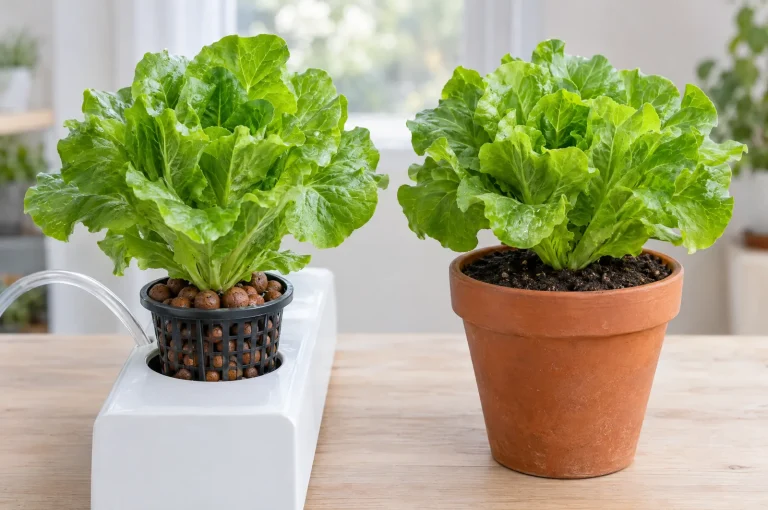
Somebody will tell you hydroponic lettuce is watery and tastes of nothing. Somebody else will tell you it comes out sweeter than anything grown in a garden. Our comparison of hydroponics against soil declines to settle the question in a single sentence, which was the right answer when it was written. There is a better one available now, and it arrives with an awkward companion. In a trial where fifteen lettuces were grown side by side in one hydroponic system, the gap between two of those varieties was wider than any gap anybody has measured between hydroponics and soil.
What a bitterness score actually is
Taste arguments go nowhere because nobody brings a number. A research panel brings one, and the method is worth knowing before any result gets quoted at you.
A 2017 trial run by University of Florida extension staff did it the standard way. Experienced panellists tasted coded samples against a reference solution of caffeine and scored each one from 0 to 15, where 0 is no bitterness at all and 15 is highly bitter. One sample was served twice under different codes so the panel could be checked against itself. The scores were then sorted into three bands: low below 3.3, medium from 3.3 to 6.6, and high above 6.6.
Two things follow from that design. The panel scores one attribute rather than deciding which lettuce is nicer, because bitterness is the attribute people actually reject a salad leaf over. And the samples are coded, so nobody tasting knows what they are tasting. Everything on this page comes from work built that way. The claims you meet elsewhere, that hydroponic greens are sweeter or cleaner tasting, almost never do.
Fifteen lettuces, one system
All fifteen cultivars in that trial were grown identically. Nutrient film channels, rockwool transplant cubes, one greenhouse under shade cloth, and a solution held at pH 5.8 and an EC of 1.2, in the same territory our PPM and EC chart gives for a lettuce crop. If the growing method decided flavour, they should all have scored alike.
| Cultivar | August | October |
|---|---|---|
| Anntonet | High (8.7) | Low |
| Ilema | High (7.7) | Medium |
| Red Incised | High (7.6) | Medium |
| Rex | Medium | Low |
| Red Butter | Low | Medium |
| Muir | Low | Low |
| Shop bought bibb | Low | Low |
Seven of the fifteen lettuces in the Florida trial, all grown in one nutrient film system. Numbers are mean panel scores out of 15. Every score in the high band came from the August crop.
Anntonet, the most bitter lettuce in the August crop at 8.7, came out of the same pipe as Muir, which sat in the low band. Ilema scored 7.7 and Red Incised 7.6. A shop bought bibb lettuce, carried along as a control, stayed in the low band both times. Rex was the cultivar served twice under two codes. Its two scores landed in the same band in August and one band apart in October, which is a fair measure of how much noise a panel this size carries and a reason not to read a single band too hard.
Now read along the rows instead of down them. Anntonet went from the top of the high band in August to the low band in October. Same seed, same channel, same nutrient solution, two months apart. Red Butter travelled the other way.
None of that is about hydroponics. It is about which lettuce you put in the pot and what the weather did to it, and both of those moved the score further than any published comparison of hydroponics against soil ever has. That is the argument for treating which seed you buy as a flavour decision rather than a shopping detail, and it is why our beginner plant list names varieties rather than crops.
The comparison that grew both sides
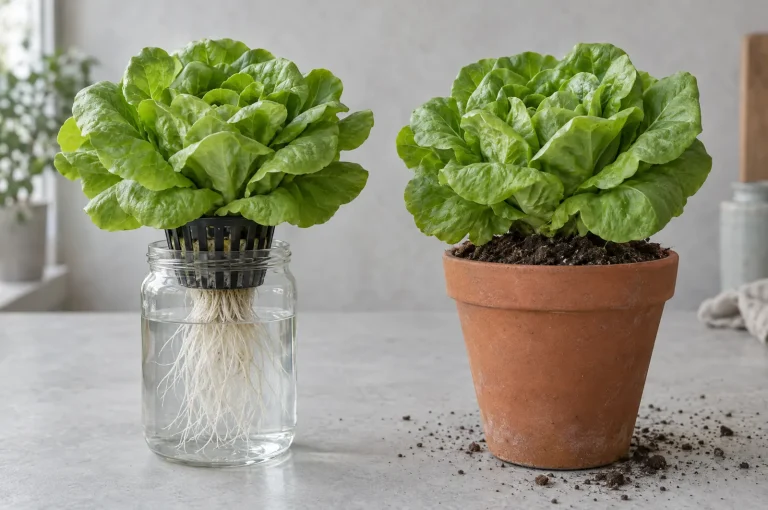
Variety dominating does not mean the method does nothing, and a study published in Food Chemistry this year went looking for what it does. Four lettuce cultivars were grown hydroponically and in substrate by the same researchers, the chemistry of both was profiled, and the result went in front of a trained panel scoring preference on a nine point scale.
The panel preferred the hydroponic lettuce. The paper puts that down to two compounds sitting lower in it, chlorogenic acid and lactucopicrin, and reports that preference across the whole set ran opposite to bitterness. The more bitter a sample was rated, the less it was liked.
Read the comparison for what it is before quoting it anywhere. Substrate culture means plants grown in a medium in containers, which is not a garden bed, so this is not hydroponics against soil in the sense most people mean. Four cultivars is four. It is one study. What earns it the space is that both sides were grown by the same people for the purpose, which is the step almost every taste comparison in circulation skips.
The sweetness ran the wrong way
The same paper measured sugars, and the result embarrasses the most popular claim in this whole argument.
Soluble sugars were higher in the substrate grown lettuce, by 1.24 to 2.43 times. The sesquiterpene lactones, which are the bitter compounds, were also higher in the substrate grown lettuce, by 1.36 to 4.20 times. The hydroponic samples came out ahead on protein, on free amino acids and on potassium, the last of those by 1.61 to 2.14 times.
So the lettuce the panel preferred was the one with less sugar in it. Whatever people are tasting when they call hydroponic greens sweeter, more sugar is not it.
What the paper found instead was that bitterness tracked the polyphenols and the ratio of total sugars to total sesquiterpene lactones. Sugar enters that ratio as the thing masking bitterness rather than as sweetness in its own right. Load up both and the bitterness wins. Take both away and the leaf reads mild, which is what a hydroponic lettuce mostly does. Herbs are a different case entirely, and the one place a grower moves flavour directly: the aromatic oils that make basil worth growing are manufactured in response to light, which is what the lighting guide exists to sort out.
Heat, and the thing it needs in order to matter
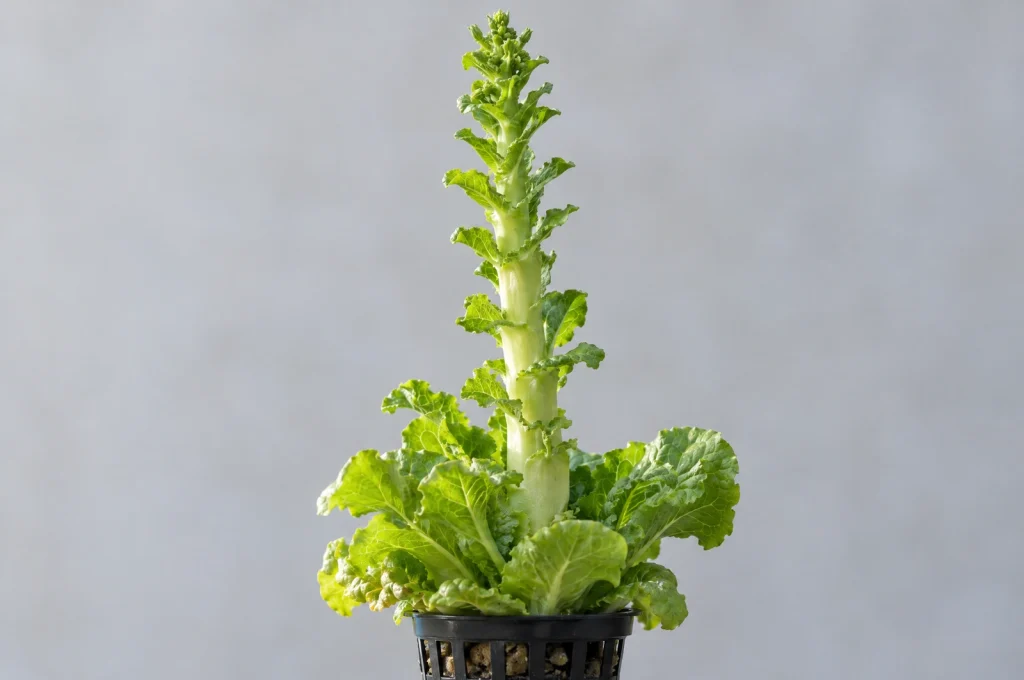
Our lettuce page tells you that above roughly 75F (24C) lettuce bolts and turns bitter. That is sound, and the Florida trial shows what it leaves out.
Those plants were not kept cool. Air temperature inside the greenhouse went above 110F every day during the August crop and sat at 95 to 100F during the October one. The only thing held steady was the solution, chilled to 72F overnight and drifting to about 85F in the afternoon, against the 90F and more an unchilled summer reservoir reaches in that climate.
Eleven of the fifteen cultivars still came in at medium or low. Heat is necessary for the bitterness people complain about and it is not sufficient, because it needs a variety willing to answer it. The authors are careful on exactly this point, noting that the correlation between heat exposure and bitterness holds in some published work and fails to hold in other work.
The useful reading for a home system is that reservoir temperature is the lever you actually have, because you cannot easily cool the room the system stands in. Keeping the tank out of direct sun is doing the same job that chiller did, and it is the same discipline that keeps tipburn down.
The clock starts at the cut
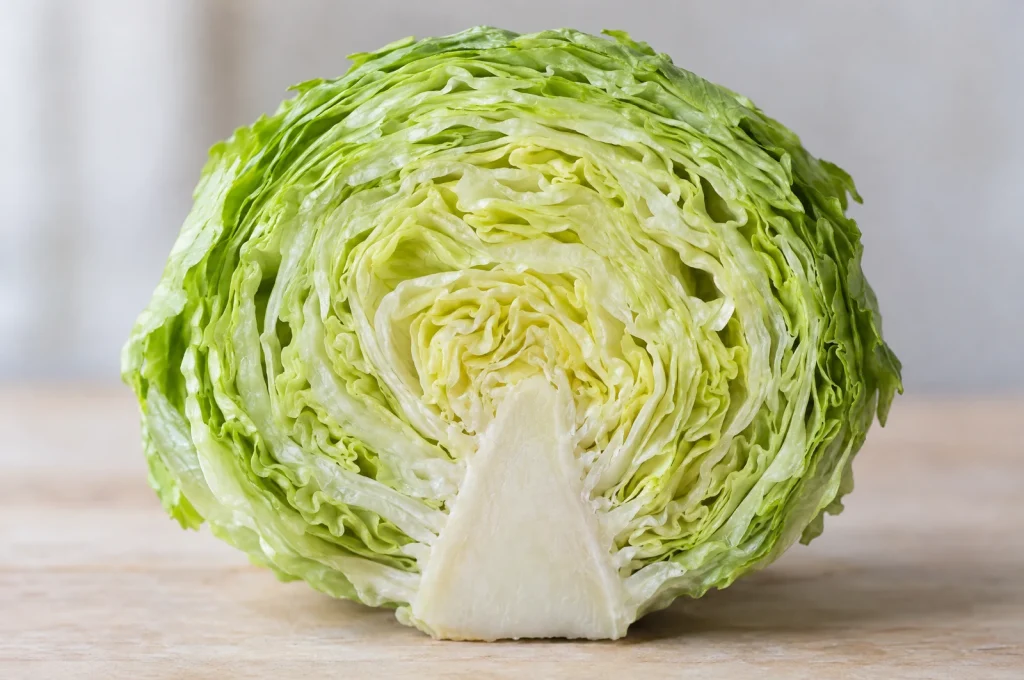
A Japanese group followed the question past the harvest, which is where most lettuce actually spends its life. They cut crisphead lettuce from one field in Gunma on a single day in June, sixty plants at four in the morning at 55F (13C) and sixty more at four in the afternoon at 72F (22C), then held everything at 48F (9C) and sampled it across nine days.
Cichorioside B, which they found to be the dominant bitter compound in the core of the head, climbed steadily in storage in both groups. It climbed about 1.7 times faster in the lettuce cut in the afternoon. The authors describe that rate as nearly double.
Our article on when to harvest already tells you to cut in the morning, on the grounds that the leaves have rehydrated overnight and keep better. Here is a second reason for the same instruction, running on a completely different mechanism.
Hold the finding loosely. The paper ran no sensory panel, so nobody tasted anything and the link between the chemistry and perceived bitterness is assumed rather than shown. Two of the compounds were measured without authentic standards and are only semi quantitative. It is one cultivar, from one field, on one day. What it does establish is that the bitter chemistry keeps moving after the head is in the fridge, which is an uncomfortable thought for anybody comparing a lettuce cut this morning against one that travelled, and a reminder that what you do between the cut and the plate matters more than it sounds. Whether the leaves need washing at all is a separate question we have already been through.
The part you will not like
Put the three studies together and the answer to the question in the title is yes, slightly, in favour of hydroponics, for a reason nobody selling a system advertises.
The hydroponic lettuce was preferred because it had less of something in it. Less chlorogenic acid, less lactucopicrin, fewer sesquiterpene lactones across the board. Those are phenolics and terpenoids, which is to say they are precisely the compounds that health writing about leafy greens spends its time praising. The authors name the bargain themselves and call it a trade between sensory quality and phytochemical content.
That sits alongside what the nutrition question turned up rather than against it. The minerals in a correctly mixed reservoir were never the weak point. The compounds a plant manufactures for itself are the ones that move, and in this comparison they moved down, and the panel liked the result. Which way round that counts as good news is yours to decide.
Where this comes from
The fifteen cultivar trial is Hochmuth and colleagues, Yield, Market Quality, and Bitterness of Lettuce Cultivars Grown Hydroponically in a North Florida Greenhouse during the Summer, in the Proceedings of the Florida State Horticultural Society, volume 130, 2017, and the bitterness bands are its Table 7. The hydroponic against substrate comparison is Li and colleagues in Food Chemistry, volume 512, 2026, article 148837. The post harvest work is Kamata, Okada and Ohta, Diurnal and Daily Changes in the Levels of Sesquiterpene Lactone and Other Components in Lettuce Post-Harvest, in Molecules, volume 31, 2025. The bolting temperature and the morning harvest advice are sourced on the pages where they appear. None of this is our own tasting, because a household cannot run a coded panel against a caffeine reference, which is most of the point.
Found this useful? Tell Google to show you more of it.
Add to Preferred Sources