Tap Water for Hydroponics, and Why Chlorine Is the Wrong Worry
Almost certainly yes. The more useful answer is that the thing everyone tells you to worry about is not the thing that will cause you trouble, and the standard fix for it does not work on most modern water supplies anyway. Chlorine gets all the attention. Alkalinity is what actually decides whether your pH will sit still, and it is the one nobody mentions.
The overnight trick, and when it does nothing
You will be told to stand your water out overnight so the chlorine evaporates. For free chlorine that is roughly true. It is a dissolved gas and it leaves over about a day in an open container.
The problem is that a great many suppliers no longer use free chlorine. They use chloramine, which is chlorine bound to ammonia, specifically because it is more stable and survives the long trip through the pipes. That stability is the entire point of it, and it is also why standing the water out achieves nothing. Chloramine persists in an open container for days. Boiling does not shift it either.
So the first thing to establish is which one you have, and you do not need a test kit for that. Your supplier publishes an annual water quality report and it will say. If it names chloramine, every piece of advice you have read about leaving a bucket out overnight is simply inapplicable to your tap.
If you do decide to remove it, know that it is harder than removing chlorine. Ordinary activated carbon is much less effective against chloramine and needs far more contact time, so the cartridge that handles chlorine on your kitchen tap is not doing the same job here. Catalytic carbon is the version sold for it. Ascorbic acid neutralises both quickly and is the cheap option for a holding tank, though published dosing rates are aimed at drinking water rather than irrigation.
Does it even matter at tap strength
Here is the part that reframes the whole question. When extension services list what a grower should test their irrigation water for, Penn State’s minimum is pH, alkalinity, conductivity, hardness, chloride and sodium.
Chlorine residual is not on that list. Neither is chloramine. The people who advise commercial growers for a living, who will tell you precisely how many parts per million of sodium is too many, do not ask you to measure the thing the hobby worries about most.
That is not proof it never matters. The concern usually raised is for beneficial microbes rather than for the plant, which is a real consideration if you are running a biological product. But as a reason to treat your water before a first grow, it does not survive contact with what the guidance actually prioritises.
Alkalinity is the real one
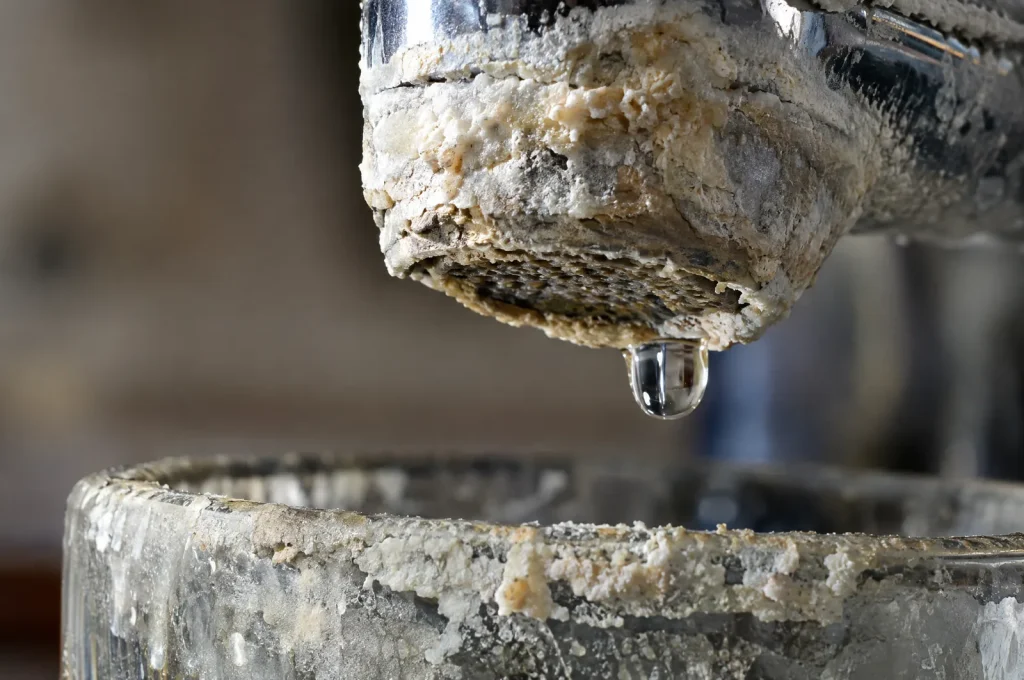
Alkalinity is not pH. It is the water’s capacity to resist a change in pH, and it is mostly carbonates and bicarbonates dissolved out of rock on the way to you. pH tells you where the water is now. Alkalinity tells you how hard it will fight you when you try to move it.
This is the actual cause of the single most common complaint in hydroponics. You adjust the reservoir down to 5.8, come back the next morning, and it is at 6.6 again. You add more acid. It climbs again. Nothing is wrong with your meter and nothing is wrong with your technique. Your water simply carries a large buffer, and every drop of acid you add is being spent neutralising it rather than moving the pH.
There is a second effect that is slower and nastier. In a recirculating system, bicarbonate cannot be taken up by roots the way nutrients are, so it accumulates while calcium and magnesium are slowly consumed. The total reading creeps up because of what is building rather than what is being fed, which is the same trap described in the article on changing your reservoir. Hard water makes that drift arrive faster.
Published targets vary a little. Penn State gives an ideal of roughly 30 to 100 mg/L, with up to 150 workable for many plants, and sets 100 as the recommended upper limit. UMass calls 30 to 60 optimum and 0 to 100 desirable. Take anything above about 150 as a supply that will need managing rather than ignoring. The figure is normally reported as calcium carbonate, so look for mg/L of CaCO3 on the report.
What you do about it depends on how far out you are. Up to about 150 you adjust as normal and accept that you will be adding more acid than someone on soft water. Beyond that, diluting with rainwater or reverse osmosis is easier and cheaper than fighting it with acid every day, and a nutrient line formulated for hard water will do some of the work for you by carrying less calcium to begin with.
Chloride is not chlorine
Worth separating these two, because the test list above contains one of them and almost every article about tap water is about the other.
Chlorine is the disinfectant, added deliberately, present at a few parts per million, and gone from an open container in a day if it is the free kind. Chloride is a dissolved salt that was in the water already or arrived with a softener, and it does not go anywhere. It stays in your reservoir, concentrates every time you top up, and adds to the total salt load the plant has to work against.
They sound the same and behave nothing alike. One is the question people ask. The other is on the list of six things a commercial grower is told to measure. If you only remember one sentence from this article, that contrast is a reasonable candidate.
What to use
| Source | Use it | Watch for |
|---|---|---|
| Tap | Usually | Alkalinity |
| Softened | Never | Sodium |
| Rain | Yes | Debris |
| Well | Test | Sodium |
| RO | Yes | Cal-mag |
The short version. Each of these has a sentence below that is worth more than the row.
Never softened water
This is the one unqualified rule in the article. A domestic softener does not take hardness out, it trades it. Calcium and magnesium are exchanged for sodium, which means softened water hands your plants a dose of the one element you least want and takes away two you actually need.
The limits make it plain. UMass puts the sodium target at 0 to 20 mg/L and the acceptable ceiling below 50. Penn State warns that above 50 you risk toxicity in sensitive plants, and says so with particular reference to recirculating systems, which is exactly what you are running. Softened water routinely clears that with room to spare.
Worse, it does not even solve the problem you softened the water for. Softening removes the calcium and magnesium but generally leaves the bicarbonate behind, so the alkalinity that was making your pH drift is still there. If your house is softened, find the tap that is plumbed before the unit, which is usually the outside tap or the kitchen cold.
Rain, wells and reverse osmosis
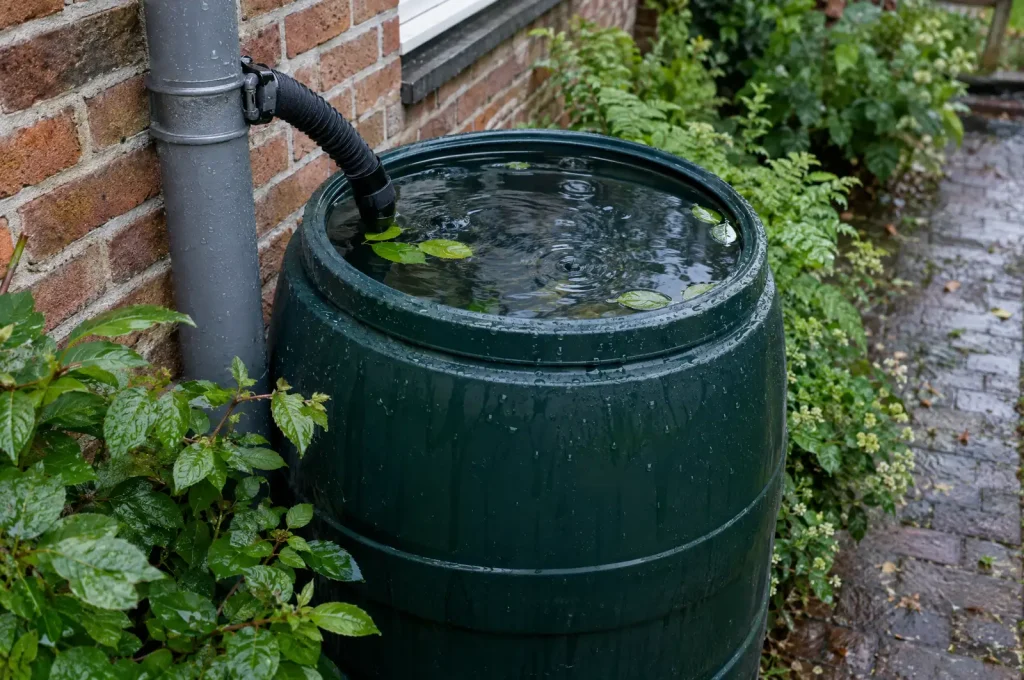
Rainwater is naturally soft and very low in alkalinity, which makes it close to ideal and free. The caution is everything it collected on the way into the barrel. Keep it covered, take it from a clean roof rather than from anything treated or mossy, and do not let it stand warm and open for weeks, because an open barrel of warm water is exactly the conditions algae wants.
Well water is the one that genuinely needs testing rather than guessing. It can be excellent and it can be very hard or carry sodium, and the only way to know is a report. Extension services in many regions will test it, and the sample needed is about a pint in a clean container.
Affiliate disclosure: some links below are affiliate links. We may earn a commission if you buy through one, at no extra cost to you. As an Amazon Associate I earn from qualifying purchases. Full disclosure.
Reverse osmosis strips nearly everything, which solves alkalinity and sodium at a stroke. The catch is that it also removes the calcium and magnesium your nutrients were quietly counting on your tap water to supply. Most one-part and two-part formulations assume some hardness in the source water, so growing in pure RO usually means adding a cal-mag supplement. Going to RO is a decision to feed more deliberately, not a decision to stop thinking about water.
A practical middle path for very hard supplies is to cut tap water with RO or rainwater rather than replacing it. You pull the alkalinity down into range and keep some of the calcium.
One thing none of these changes is how often you empty the tank. Source water affects how fast the solution drifts, not whether it drifts, so a reservoir change on a schedule is still the thing holding the system together. Soft water buys you an easier pH, not a longer interval.
Find out what you have
Two things, and the first is free.
- Read the supplier’s annual report. It gives you chloramine or chlorine, hardness and usually alkalinity and sodium, for nothing. That is most of the answer before you buy anything.
- Put a meter in a glass of your tap water. A plain EC reading tells you how much is already dissolved in there before you add a single nutrient. If your tap reads a meaningful fraction of your target strength, that is part of your budget already spent, and on things you did not choose.
Our PPM and EC chart covers what those readings mean, and the pH guide has the detail on adjusting and on why the water you start with determines how much of that you will be doing.
Where this comes from
The alkalinity and sodium figures and the minimum list of what to test are from Penn State Extension’s guidance on interpreting irrigation water tests and its greenhouse water quality toolkit, and from the UMass greenhouse best management practices manual. The bicarbonate accumulation effect in recirculating solution is from the same greenhouse research referenced in our article on reservoir changes. The chlorine and chloramine behaviour is from water treatment sources rather than horticultural ones, and is given here as water chemistry rather than as a finding about plants. Note that the extension figures are several years old and differ between institutions, which is why ranges are quoted rather than single numbers.
Found this useful? Tell Google to show you more of it.
Add to Preferred Sources