
12 best plants for hydroponic beginners, ranked by success rate
Start with winners. These crops are fast, forgiving, and hard to kill, which is exactly what you want from a first grow.
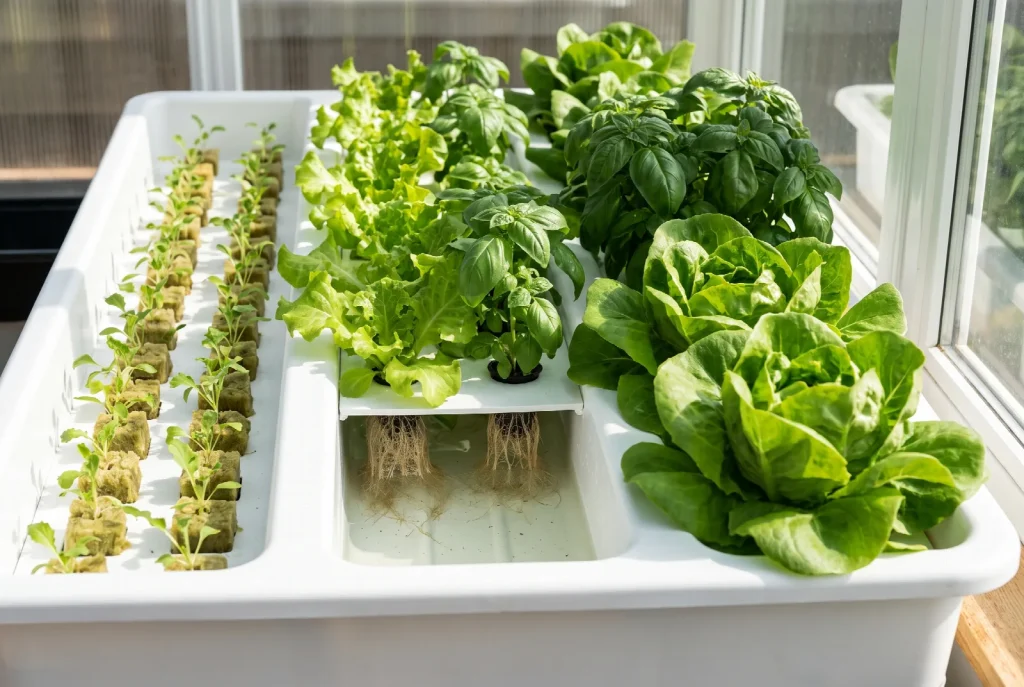
The single biggest predictor of whether someone sticks with hydroponics is whether their first plant survived. So pick something that wants to live. Everything on this list grows fast enough to reward you within a month and tolerates the mistakes every beginner makes.
| # | Plant | Harvest | Why it is forgiving |
|---|---|---|---|
| 1 | Leaf lettuce | 3 to 5 weeks | Grows visibly every day, tolerates pH drift, and regrows after cutting. |
| 2 | Basil | 2 to 4 weeks | Fast, aromatic, and bounces back from almost any early error. |
| 3 | Mint | 3 to 4 weeks | Nearly impossible to kill. The problem is stopping it, not growing it. |
| 4 | Spinach | 4 to 6 weeks | Happy in cool rooms, and baby leaves are pickable from three weeks. |
| 5 | Kale | 5 to 7 weeks | Extremely tough, and a single plant produces for months. |
| 6 | Swiss chard | 5 to 7 weeks | Cut-and-come-again for months, and it looks striking. |
| 7 | Cilantro | 3 to 4 weeks | Fast and cheap from seed. Bolts in heat, which is its only fault. |
| 8 | Parsley | 5 to 7 weeks | Slow to germinate, then very steady and long-lived. |
| 9 | Bok choy | 4 to 6 weeks | Quick, tolerant of cool conditions, and rarely troubled by pests indoors. |
| 10 | Arugula | 3 to 4 weeks | One of the fastest crops there is. Peppery and productive. |
| 11 | Watercress | 3 to 4 weeks | Actively wants to live in water. Almost unfailable. |
| 12 | Cherry tomatoes | 8 to 12 weeks | The one step up worth trying early, though it needs support and patience. |
What to avoid on your first attempt
- Root vegetables. Carrots, radishes, potatoes and beets need depth and a loose medium. They are genuinely easier in soil.
- Full-size tomatoes. Heavy feeders that need staking, pruning, and 14 weeks of attention before you get anything.
- Melons, squash, pumpkins. Enormous, thirsty, and they need pollination.
- Corn. Wind-pollinated, tall, and it produces a couple of cobs per plant. Not worth the space.
Need a system to grow it in?
Every plan on this site is free and costs under $50 to build.