Algae in Hydroponics, How to Get Rid of It for Good
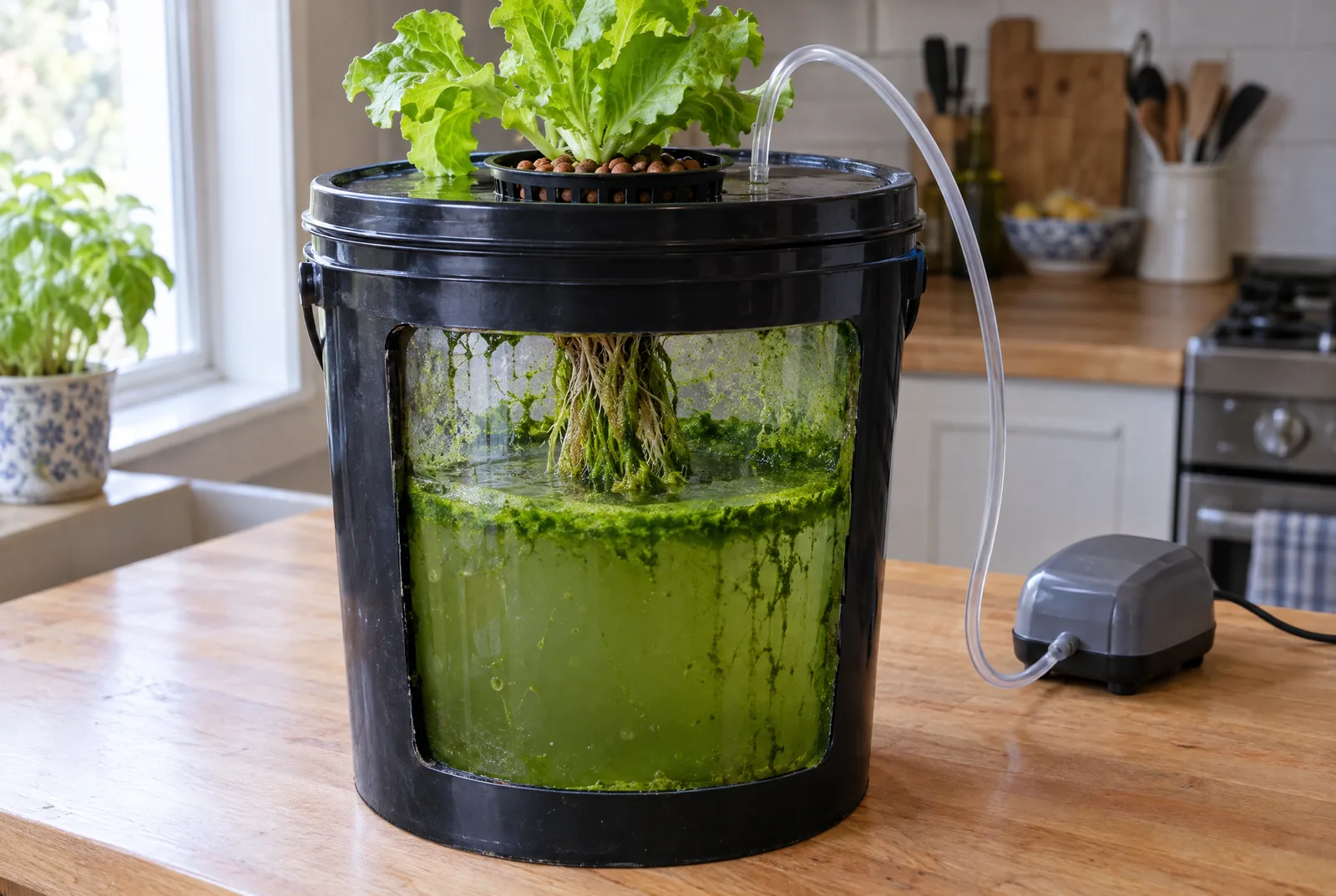
Algae needs three things. Water, fertiliser and light. Your reservoir has all three, which is why it turns green. Two of those you cannot take away. The third one you can, and that is the entire fix.
Most advice online skips straight to pouring something in. Before you do that, it is worth knowing what the research actually found when somebody tested that approach properly.
Is it actually hurting your plants
Less than you have probably been told. Cornell’s CEA handbook says algae will not directly harm the crop. It is mostly a nuisance and a symptom. Here is what holds up and what does not.
Real problems
- It clogs things. Pumps, filters, drip emitters and the narrow channels in NFT systems. This is the best documented harm and the one you will actually notice.
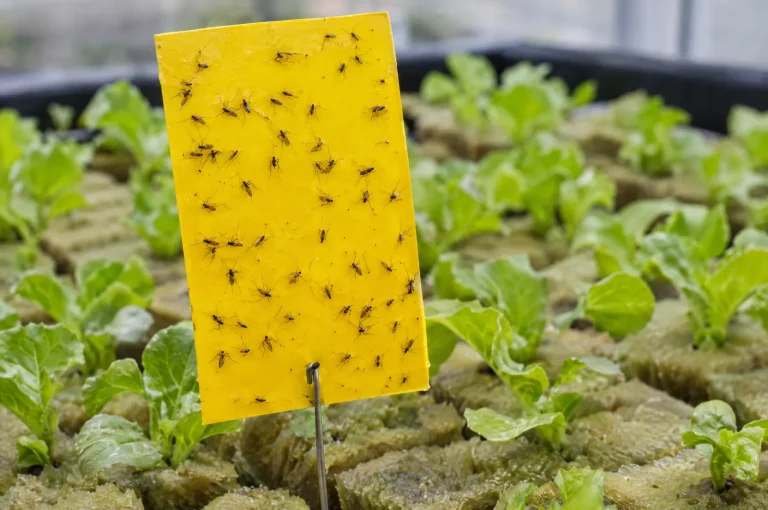
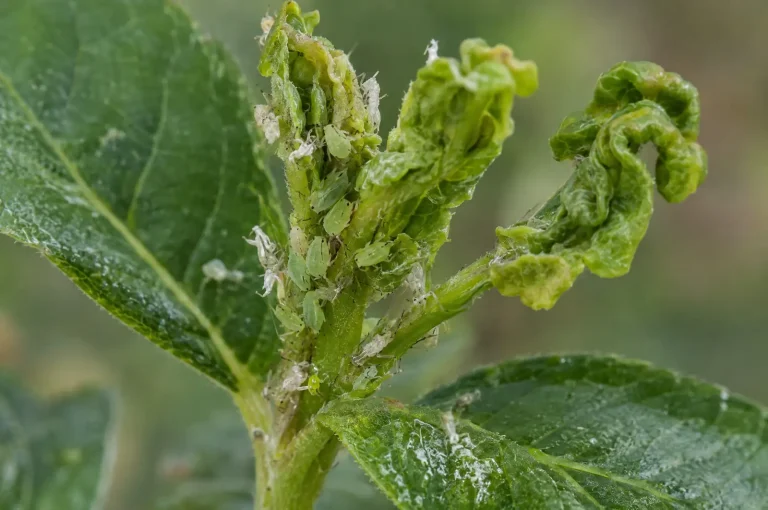
- It breeds shore flies. Algae is their food source and their nursery. If you have small dark flies around the system, algae is why.
- Mats create dead spots. A thick surface mat blocks light and creates oxygen depleted pockets underneath.
- Biofilm harbours pathogens. The slime layer can hold Pythium and Fusarium. That is the film on the walls, not the green tint in the water.
- It competes for nutrients. Documented as a phenomenon. Nobody has measured how much a five gallon bucket actually loses, so do not panic that your plants are starving.
Folklore worth ignoring
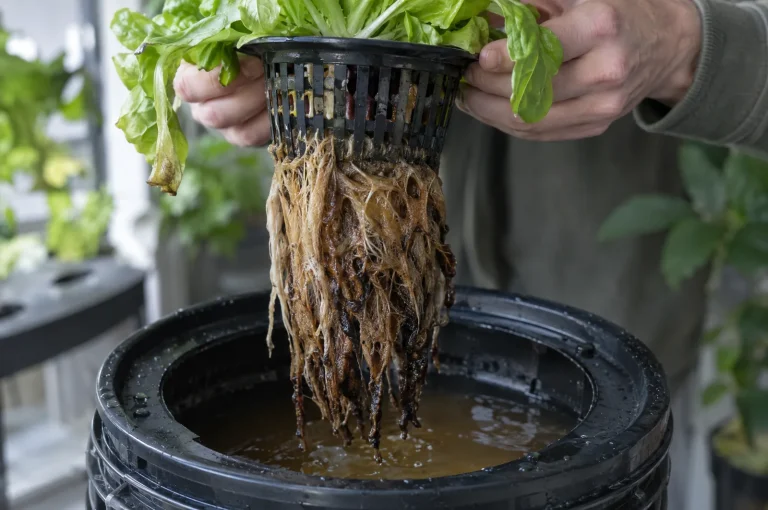
Algae does not cause root rot. This gets repeated everywhere and it is wrong. Algae is not a plant pathogen. What is true is that algae and Pythium like the same conditions, which are warm, stagnant, oxygen poor water. So they turn up together because they share a cause, not because one creates the other. The e-GRO guide to Pythium in hydroponic basil lists the risk factors and does not mention algae once.
If you have brown slimy roots and algae at the same time, fix the water temperature and the aeration. Scrubbing the green off will not save the roots. If the leaves have yellowed with it, work through why hydroponic lettuce turns yellow as well.
You will also see claims about algae poisoning your plants with toxins, releasing growth inhibiting compounds, and crashing your dissolved oxygen overnight. The oxygen mechanism is real in ponds and lakes. In a bucket with an air pump running, the pump is doing the work and nobody has measured a meaningful swing. The other two are unsourced.
Find the light leak
Cornell’s advice for commercial growers is light exclusion and nothing else. Shade the tanks, the pipes and every wet surface. That is the whole method. Oregon State says the same for deep water culture, cover the surface with opaque material and size the raft so there are no gaps.
Green means light is getting in somewhere. Take a torch and check these five places.
- The reservoir itself. A translucent white tote or bucket passes light. Hold it up to a lamp and you will see. Opaque is not the same as white.
- The gap around each net pot. The commonest leak by far. A net pot in an oversized hole is a window.
- Clear tubing. Every run of clear line between pump and system is a lit water column.
- The lid seam. A lid that rests rather than seals lets a rim of light in all the way round.
- The top of the growing medium. Wet clay pebbles under a grow light are a perfect algae bed.
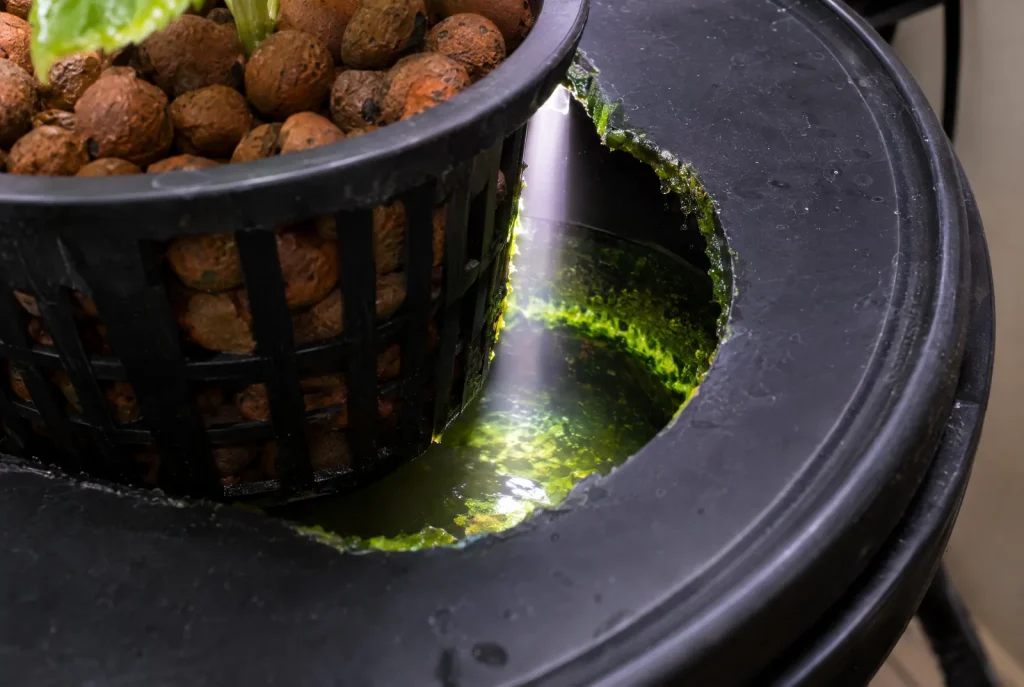
For fixing them, black on the inside and light on the outside is the order you want. Black outside absorbs heat under a grow light and warms your solution, which helps algae rather than hurting it. Panda film does both jobs in one. A second coat of paint on a translucent tote is usually what it takes. Foil works but tears and traps condensation.
Cleaning out what is already there
Do this between crops, with the system empty. Physical removal comes first every time, because organic matter deactivates whatever you clean with afterwards.
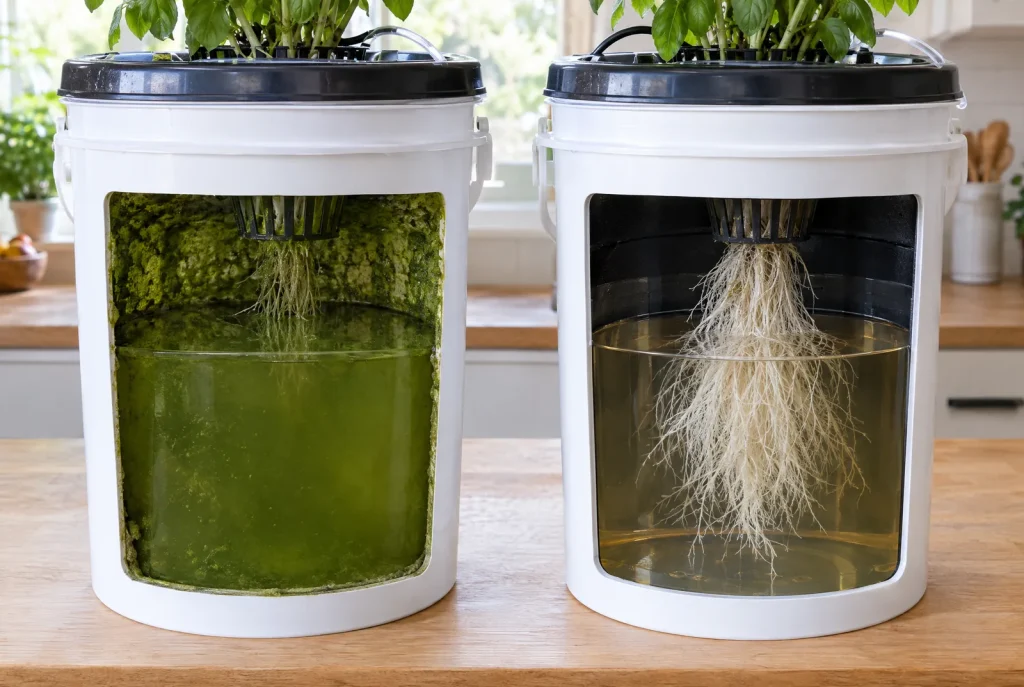
- Drain completely.
- Scrub every surface with a brush and warm soapy water. Walls, lid, net pots, tubing, pump housing.
- Refill and add one tablespoon of household bleach at 5.25 to 6 percent per gallon. That lands around 150 to 200 PPM, which is the rate Minnesota Extension gives for flushing a hydroponic reservoir and lines. Run it through the system.
- Drain, refill with plain water, and run a rinse cycle for two to three hours. This step is not optional.
- Mix bleach fresh each time. It loses half its strength in about two hours, and repeated use is corrosive to plastic and metal.
Vinegar has one job here and it is dissolving mineral scale on equipment. It is not an algaecide. Do not put it in a reservoir and never mix it with bleach or peroxide.
Hydrogen peroxide, what it does and what it does not
This is the advice everyone reaches for, so here is what the research found.
Researchers ran a proper trial on basil and lettuce in a 40 gallon ebb and flow system, dosing weekly with 3 percent peroxide and with two commercial peroxide products at four rates each. Their conclusion was blunt. Algae growth was not significantly controlled by any treatment, measured by count, by weight or by spectrometer. Individual species dropped. Total algae did not.
The high rates did do something. They stunted the lettuce. Plant height, leaf count and root dry weight all fell at the strongest doses.
The reason it fails is simple chemistry. In a reservoir full of roots and organic matter, hydrogen peroxide has a half life somewhere between one and five hours. It is largely gone by the afternoon and completely gone by the next day. There is no residual protection, so the algae simply grows back between doses.
If you use it anyway
It is a reasonable knockdown when the reservoir has gone green and you cannot tear the system down today. Use standard 3 percent from the pharmacy.
- Dose. 1 to 2 mL of 3 percent per gallon, which is 0.3 to 0.5 mL per litre, or between a quarter and a scant half teaspoon per gallon. That matches both Oklahoma State Extension and the rate in the trial that left lettuce yield untouched.
- Frequency. Once a week at most. Never daily and never with every top off.
- Ceiling. Growth damage showed up well before 130 PPM, and one study found shorter roots at around 37 PPM when dosed three times a week. Stay low.
- Beneficial microbes. Peroxide is not selective. If you run Hydroguard, Great White or any inoculant, you are paying for microbes and then killing them. Pick one strategy, and whether the microbe half of that choice is worth making is a question we have now answered separately.
You will find guides recommending 10 mL of 3 percent per litre for algae. That is roughly 300 PPM, more than double the concentration that restricted lettuce growth in the only published trial. Do not.
And it does not oxygenate your roots in any useful sense. Dissolved oxygen spikes on dosing day then falls straight back. An air pump does that job continuously for about fifteen dollars and does not damage anything.
Five things not to put in your reservoir
- Pond or aquarium algaecide. The dangerous one. Most are copper based, and copper starts suppressing growth in hydroponics somewhere around 0.25 to 0.5 PPM, which is a hundred times lower than the threshold in peat. A pond dose lands squarely in crop damage territory, and copper accumulates. You cannot top it back out.
- Bleach in a running system. Commercial growers do chlorinate continuously, at 1 to 2 PPM free chlorine with test kits and injection control. You cannot measure that at home. Bleach is for the empty system only.
- Peroxide at 29 or 35 percent. It causes irreversible eye damage, it is corrosive to skin, and concentrated peroxide can ignite on contact with organic material. There is no benefit over the 3 percent bottle for a home grower.
- Grapefruit seed extract. Still recommended in places as the natural option. Published analysis found the antimicrobial activity in commercial extracts comes from synthetic preservatives, benzethonium and benzalkonium chloride, not from grapefruit. Those are surface disinfectants. Getting one into your reservoir under an organic label is worse than knowing what you added.
- Barley straw. Purdue reviewed the US research and found it inconsistent at best. The rates are pond scale, it takes weeks, and it drops decomposing organic matter into a system where biofilm is already your problem.
Two mixing rules. Never combine peroxide with bleach. Never combine peroxide with vinegar.
Keeping it gone
- Run an opaque reservoir, not a translucent one.
- Seal the lid and close the gaps around net pots.
- Cover clear tubing and any exposed wet fitting.
- Keep the solution moving and aerated. Stagnant shallow water is where mats form.
- Do not overfeed. Overfertilising is directly linked to algae in NFT channels. Mix to the numbers in the PPM and EC chart rather than eyeballing it.
- Keep the solution below 25C. That one change helps algae, oxygen and root disease at the same time.
- Top off with plain water between reservoir changes, not more nutrient.
- Clean and sanitise between crops.
- Once a week, take a torch to the reservoir. A green tint on the walls or on the roots at the waterline means light is getting in. Find the leak instead of reaching for a bottle.
It comes down to one line. Algae needs light on wet fertiliser. Take away the light and the problem stops on its own.
Where this comes from
Light exclusion guidance from the Cornell CEA Lettuce Handbook, Oregon State Extension, University of Minnesota Extension and UNH Extension. Harm and pest links from UConn IPM and UMass greenhouse fact sheets. The peroxide trial is Hendrickson and colleagues, published in Horticulturae in 2022. Peroxide half life and safety from the USDA AMS technical report. Bleach rates from Minnesota Extension. Copper thresholds from published hydroponic research. Barley straw findings from Purdue Extension.
Found this useful? Tell Google to show you more of it.
Add to Preferred Sources