
The complete guide to growing hydroponic lettuce
Seed to salad in about 30 days. Lettuce is the crop hydroponics was practically designed for, and the best possible confidence builder.
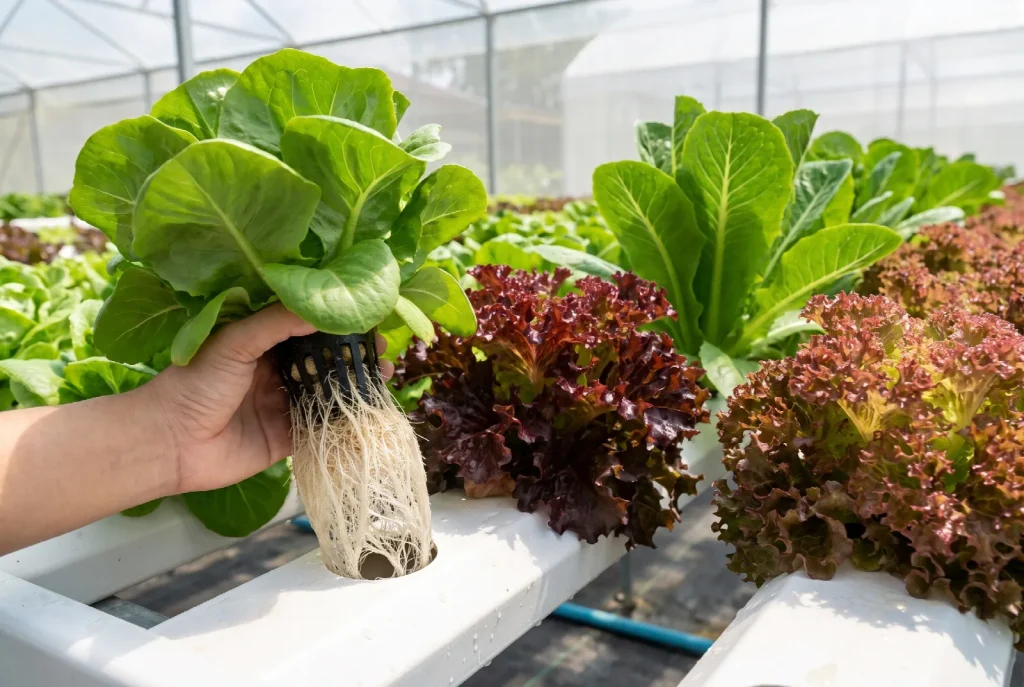
Lettuce is fast, shallow-rooted, and undemanding, which is why almost all commercial hydroponic produce is leafy greens. It also gives you visible progress every single day, which matters more than people expect when you are learning.
| Target | Value |
|---|---|
| Time to harvest | 3 to 5 weeks from transplant |
| pH | 5.5 to 6.5, ideally 6.0 |
| EC | 1.4 to 1.8 mS/cm |
| Air temperature | 60 to 70F (15 to 21C) |
| Light | 10 to 14 hours per day |
| Spacing | 6 to 8 inches between plants |
EC figures are meter readings taken with your tap water already in the reservoir, not the fertiliser contribution on its own. Targets by crop and stage are in the PPM and EC chart.
Best varieties
- Buttercrunch. The classic hydroponic lettuce. Reliable, tender, and forgiving.
- Black Seeded Simpson. Extremely fast loose-leaf. Often pickable in under three weeks.
- Romaine (Parris Island). Slower but sturdy, and it holds up in a sandwich.
- Salanova and oakleaf mixes. Attractive, and they regrow well after cutting.
- Avoid iceberg. Slow, needs to head up tightly, and much fussier about temperature.
Cut and come again
This is where lettuce earns its place. Rather than pulling the whole plant, cut the outer leaves about an inch above the base with clean scissors and leave the growing centre intact. New leaves push from the middle and you can repeat this two or three times over several weeks from one plant. That growing centre is also the only place tipburn shows up, so it is worth a look every time you cut.
Stopping bolt
Other greens on the same settings
Arugula, bok choy, chard and mizuna all run happily on the numbers in the table above, and chard simply takes a couple of weeks longer and then produces for months. Spinach and kale are the two to watch, because our own chart starts both of them at 1.8 where lettuce finishes, so they meet lettuce at a single value rather than sharing a range. Spinach is also a harder crop than this list makes it look, and watercress turns out to want a stronger solution than lettuce.
Need a system to grow it in?
Every plan on this site is free and costs under $50 to build.