
Nutrient film technique: how it works and how to build one
A thin, continuous film of solution runs past the roots and back to a reservoir. Very water-efficient, very compact, and less forgiving than it looks.
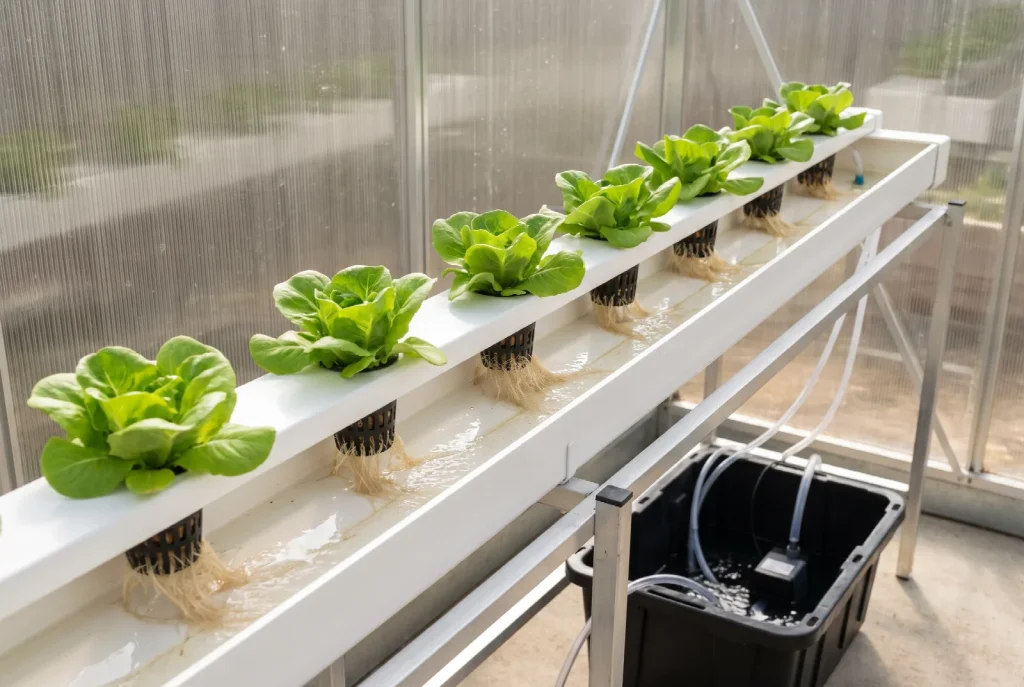
NFT is what most commercial lettuce is grown in. A shallow stream of solution, only a few millimetres deep, runs down a gently sloped channel. Roots sit in the channel with their tips in the film and the rest of the root mass in humid air above it.
The two numbers that matter
Slope: about one inch of drop for every four feet of channel. Flatter than that and solution pools around the roots, which suffocates them. Steeper and the film moves past too quickly to feed properly.
Flow rate: roughly one to two litres per minute per channel. You want a film, not a stream. If you can see the water rippling deeply, the pump is too strong.
What it does well
- Uses less water and nutrient than any other recirculating design
- Very high plant density in a small footprint
- Easy to inspect and harvest, because plants lift straight out
- Scales neatly by adding parallel channels
Where it struggles
- A pump failure dries the roots within a few hours
- Root mass can block the channel and cause overflows
- Poorly suited to heavy fruiting crops
- Needs a level, stable mounting structure
The failure mode to plan for
What to grow
Lettuce, spinach, kale, chard, basil, mint, and strawberries. Avoid tomatoes and peppers: their root mass eventually dams the channel.
Build one
Our $50 PVC pipe plan is a six to eight plant NFT build, including the slope setup and the plain-water test run we recommend before you plant anything.
Not sure which system to build?
Compare all six side by side on cost, difficulty, and what they grow best.
Answer five questions about your budget, space, experience and what you want to grow, and our system comparison tool ranks all six against your answers — with the reasoning shown, and an honest “nothing fits” when nothing does.