
The Kratky method: set it and forget it hydroponics
No pump. No timer. No electricity bill. The simplest hydroponic technique ever invented, and the one we tell every beginner to start with.
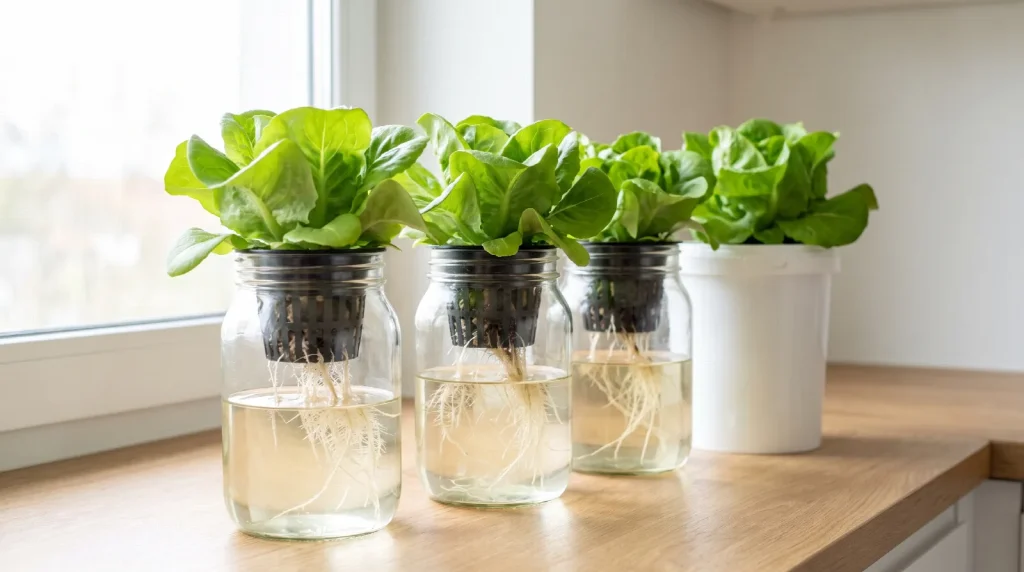
Dr Bernard Kratky at the University of Hawaii published the method in 2009 as a way to grow vegetables without pumps or electricity. It is now the default recommendation for beginners worldwide, because it removes every component that can fail.
How it works
A sealed container holds nutrient solution. A net pot sits in the lid with its base just touching the water. As the plant drinks, the level falls away from the net pot, and the roots left in the gap become air roots that take oxygen directly from the humid space. The roots still reaching the water carry on feeding.
The plant builds its own two-zone root system as it grows. There is nothing to switch on and nothing to maintain.
What it does well
- No electricity, so nothing to fail while you are out
- Cheapest possible entry, roughly $10
- Almost no maintenance between planting and harvest
- Silent, which matters in a kitchen or bedroom
Where it struggles
- One crop per fill, then you empty and restart
- Not suited to long-season fruiting plants
- A container that runs dry cannot be rescued
- Scales by adding jars rather than by growing bigger
What to grow
Lettuce, basil, cilantro, spinach, kale, mint, and parsley all finish comfortably within a single reservoir. Anything that takes longer than about eight weeks or grows tall enough to need staking is a poor fit.
The mistake everyone makes
Build one today
Our $10 mason jar plan is the fastest way in: 15 minutes, one trip to a supermarket, and no tools. The soda bottle version is cheaper still and holds twice the solution.
Not sure which system to build?
Compare all six side by side on cost, difficulty, and what they grow best.
Answer five questions about your budget, space, experience and what you want to grow, and our system comparison tool ranks all six against your answers — with the reasoning shown, and an honest “nothing fits” when nothing does.