
Hydroponic lighting: how much light your plants actually need
Light is usually the real limit on indoor growth, not nutrients. Here is how to tell whether yours is enough, and what to do if it is not.
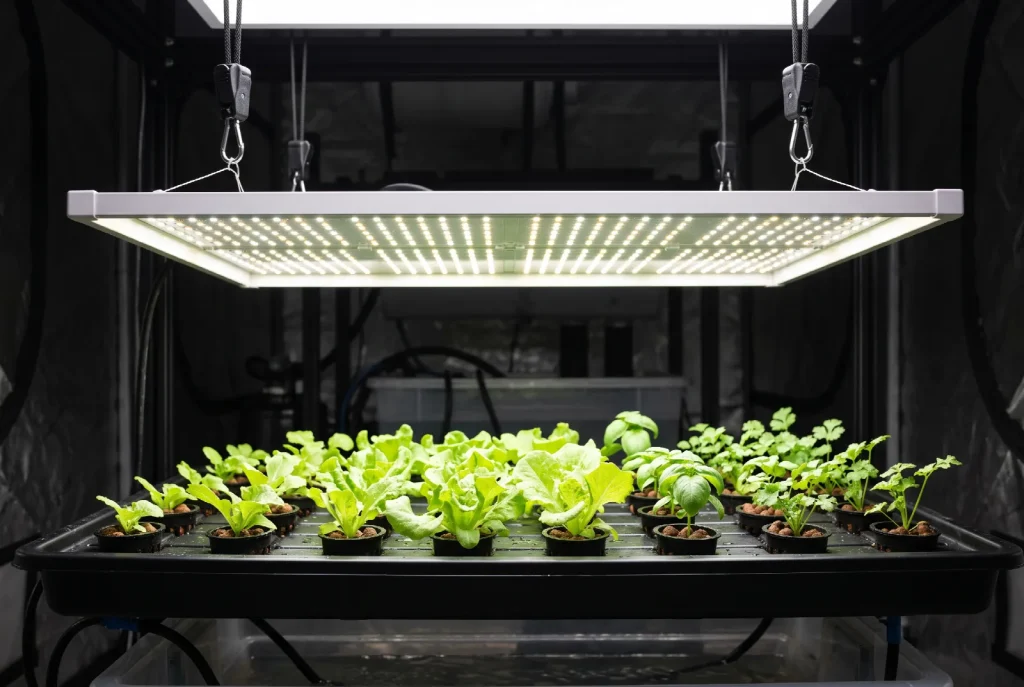
When an indoor grow underperforms, light is the cause far more often than nutrients. Human eyes adjust so well that a room we call bright can be a tenth of what a plant considers usable.
How much do different crops need?
| Crop | Hours per day | Intensity needed |
|---|---|---|
| Lettuce and leafy greens | 10 to 14 | Low. A bright windowsill is often enough. |
| Herbs | 12 to 16 | Low to medium. |
| Strawberries | 12 to 16 | Medium. |
| Tomatoes and peppers | 14 to 18 | High. A dedicated grow light is effectively required. |
Hours of light per day. Two crops on different rows here cannot comfortably share one timer, which is one of the constraints worked through in what can share a reservoir.
Is your windowsill bright enough?
Two quick tests, no meter needed:
- The shadow test. At midday, hold your hand a foot above the spot. A sharp, well-defined shadow means good direct light. A soft, fuzzy shadow means indirect light, which is enough for herbs and greens but not for fruiting crops. In winter that same windowsill can fall far below what greens need, which is the subject of growing through winter and the light gap. No visible shadow means you need a lamp.
- The direction test. South-facing windows (in the northern hemisphere) give the most hours. East and west give a useful half day. North-facing windows are not enough on their own for anything productive.
Getting the distance right
For a typical small LED panel, keep it 6 to 12 inches above the canopy and raise it as the plants grow. Too far and plants stretch, going tall, pale and floppy. Too close and you get bleached, crisped patches on the top leaves directly under the light.
Use a timer, always
Plants do not need a dark period in order to respire, which this page used to say they did. What a shorter day actually controls is the light dose, and the dose is what the crop responds to. Whether you can run a light round the clock turns out to depend on the crop, but for a fixed output panel the answer is almost always no, because leaving it on raises the dose instead of spreading it. A $5 mechanical timer removes the decision permanently. Set it once and stop thinking about it.
Wondering what those hours actually cost? Our grow light running cost calculator works it out per day, month, year and harvest using average electricity rates for your state.
See our grow light recommendations
The Weekly Grow
Get weekly growing tips in your inbox
One email per week. No spam. Just practical tips, new plans, and honest gear guides.
Unsubscribe anytime. We respect your inbox.