
Growing hydroponic tomatoes and peppers
The step up from leafy greens. Longer, heavier, and more demanding, but a truly ripe tomato you grew indoors in winter is worth the effort.
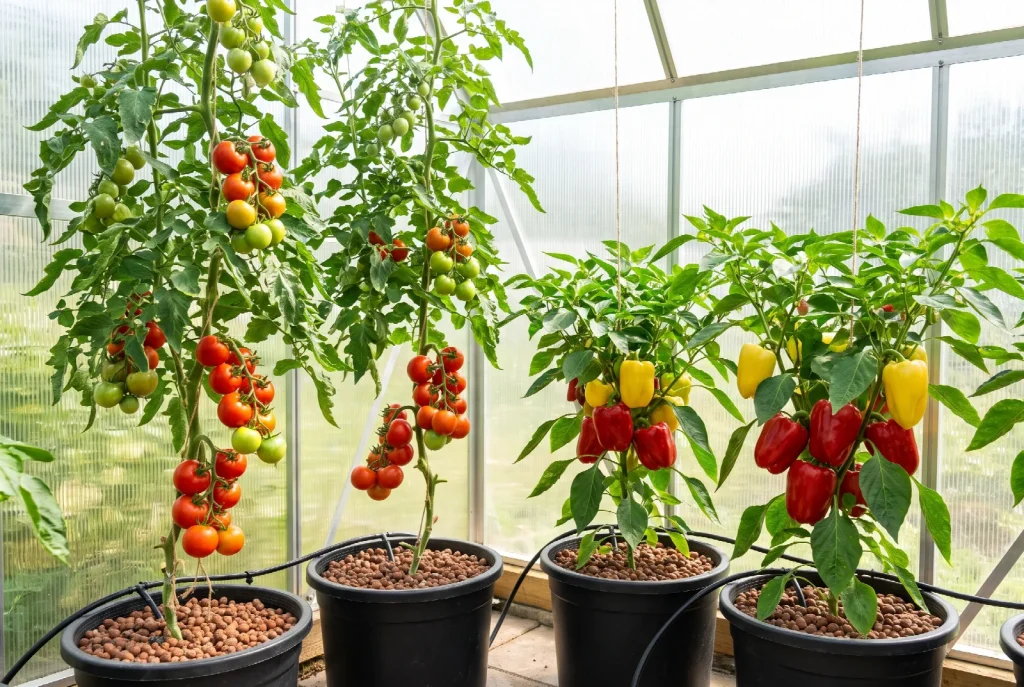
Fruiting crops are a genuine step up. They take three times as long as lettuce, they need physical support, they usually need you to pollinate them by hand indoors, and their nutrient needs change partway through. None of that is difficult, but it is a different kind of growing.
| Target | Tomatoes | Peppers |
|---|---|---|
| First harvest | 8 to 12 weeks | 10 to 14 weeks |
| pH | 5.8 to 6.3 | 5.8 to 6.3 |
| EC | 2.0 to 3.5 mS/cm | 1.8 to 2.8 mS/cm |
| Temperature | 65 to 80F (18 to 27C) | 70 to 85F (21 to 29C) |
| Light | 14 to 18 hours | 14 to 18 hours |
| Best systems | DWC (one per bucket), drip, ebb and flow | Drip, ebb and flow |
Choose determinate or dwarf varieties
Indeterminate tomatoes grow indefinitely and will reach the ceiling. Indoors you want determinate or dwarf types that stop at a set height: Tiny Tim, Red Robin, Bush Early Girl, or any cherry variety labelled patio or container. For peppers, most compact varieties work well, and chillies are generally easier than large bell peppers.
Hand pollination
Outdoors, wind and insects shake pollen loose. Indoors, nothing does, so flowers drop without setting fruit. This is the single most common reason indoor tomatoes produce nothing.
The fix takes ten seconds a day: once flowers open, flick each one gently with a finger, or touch an electric toothbrush to the stem behind the flower cluster for a second. Do it around midday when pollen is driest.
Change the feed at flowering
Support it from the start
A fruiting tomato is heavy and its stem will snap. Put a stake or a string trellis in place when you transplant, not when it starts leaning. Tie loosely and re-tie as it grows.
Need a system to grow it in?
Every plan on this site is free and costs under $50 to build.