
How hydroponics works, explained so simply anyone can understand
No biology degree needed. Here is the whole mechanism, using plain English and a glass of water.
Put a stick of celery in a glass of coloured water and the colour climbs the stalk. That is the entire principle behind hydroponics: plants drink, and whatever is dissolved in the water goes with it.
Soil was never the point
Soil does four jobs for a plant: it holds water, it holds nutrients, it holds the plant upright, and it holds air pockets so roots can breathe. Notice that none of those jobs require dirt specifically. They just require something that does them.
Hydroponics splits those four jobs up and does each one deliberately. Water and nutrients come from the reservoir. Support comes from a net pot filled with clay pebbles. Air comes from an air pump, or from the air gap that opens up as the plant drinks.
The three things you are actually managing
The solution
Water with plant food dissolved in it. You mix it once at the strength on the label. That is the plant’s entire diet.
The pH
How acidic the water is. Roots can only absorb nutrients between roughly 5.5 and 6.5. Outside that window the food is present but the plant cannot take it up, which is why a starving plant in a full reservoir is the classic beginner puzzle.
The oxygen
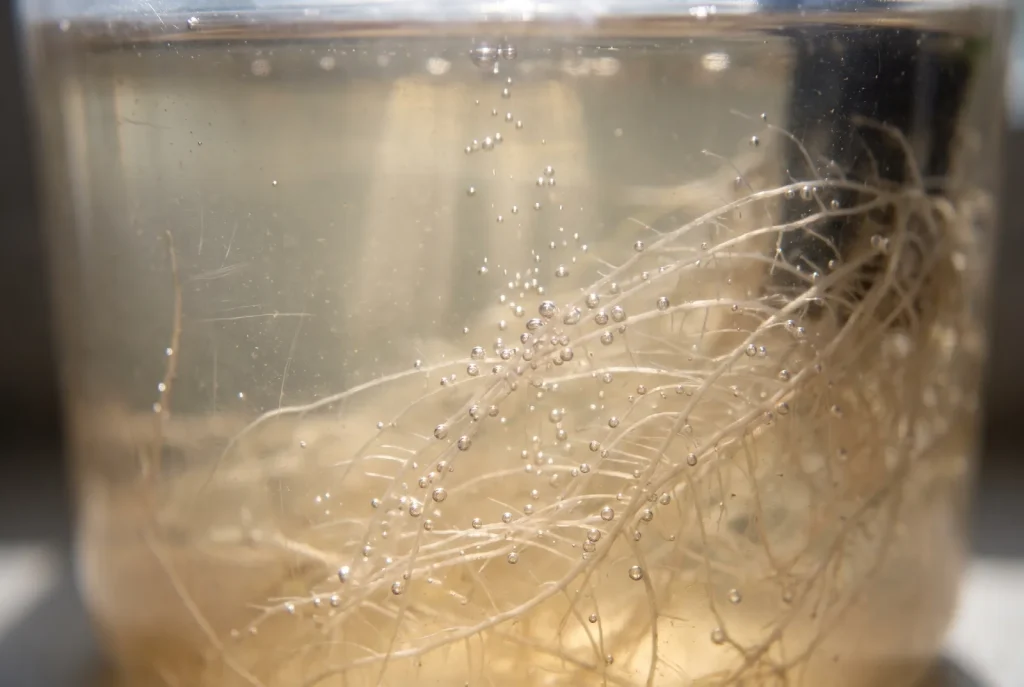
Roots respire. Drowned roots suffocate and rot. Every hydroponic system is really just a different answer to the question “how do I keep roots wet and breathing at the same time?”
What a plant does with all that
Roots pull water and dissolved minerals upward. Leaves take in carbon dioxide and catch light. Photosynthesis combines them into sugars, which build new leaves and stems. Faster nutrient access at the root end means the whole chain runs quicker, which is the entire reason hydroponic plants outpace soil-grown ones.
Everything else, the pumps and meters and net pots, is plumbing around that one process.
Now build one
Fifteen minutes, about $10, and you will understand this better than any article can teach you.